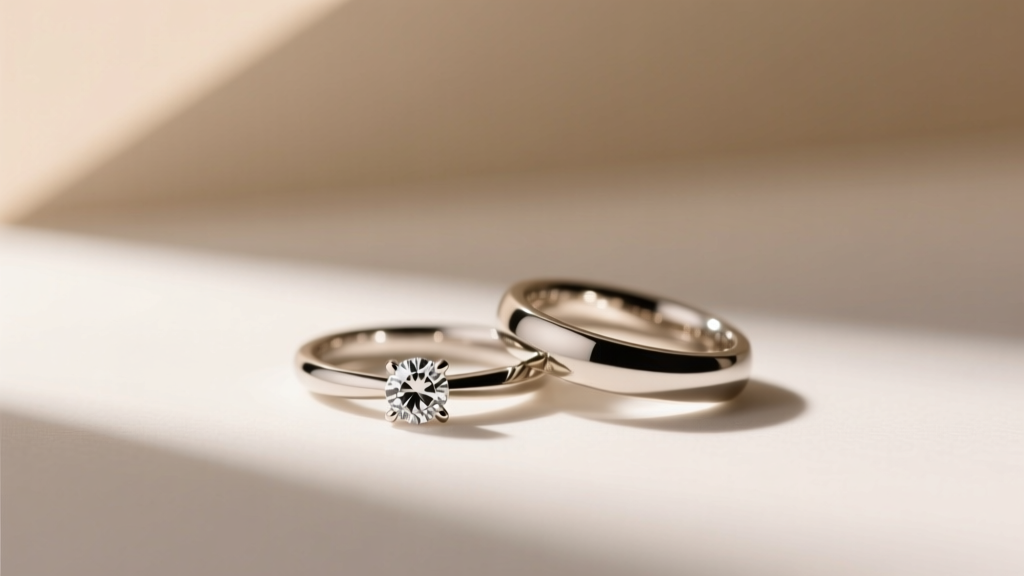
How to Pair Engagement and Wedding Rings Together
Shopping for an engagement ring is exciting—shopping for the wedding band that sits beside it can be surprisingly tricky. The two rings will be worn together every day, so they need to look intentional, feel comfortable, and hold up to real life. A beautiful pair isn’t just about matching metals; it’s about balancing shape, height, sparkle, and durability so the set looks cohesive from every angle.
Couples often assume the wedding band is a simple afterthought, then discover their engagement ring doesn’t sit flush, the stones snag, or the styles compete instead of complementing each other. This guide breaks down how jewelers think about pairing engagement rings and wedding bands—covering styles, metals, gemstones, settings, and practical buying tips—so you can build a ring stack that’s both timeless and personal.
Start With the Engagement Ring: Shape, Height, and Setting
Your engagement ring sets the “architecture” for the wedding band. Before you try on bands, get clear on these three details:
1) Center stone shape and outline
The stone shape influences which band silhouettes look natural beside it:
- Round brilliant: The most versatile—pairs well with straight bands, pavé bands, or curved bands.
- Oval: Trend-forward and elongating; often looks best with delicate bands, micro-pavé, or a soft contour band that follows the oval outline.
- Emerald cut: Clean lines and “hall of mirrors” sparkle; pairs beautifully with crisp baguette bands, channel-set bands, or a simple polished band.
- Princess cut: Angular and bright; works well with straight bands, channel-set bands, or geometric diamond bands.
- Pear or marquise: These create a strong direction on the finger; V-shaped (chevron) bands can frame them elegantly.
- Cushion: Soft square shape; looks great with pavé, vintage-inspired milgrain bands, or a contoured band.
2) Setting style and side stones
The setting affects both the look and how tightly the rings can sit together:
- Solitaire (prong-set): Classic and flexible; most bands pair easily.
- Halo: Adds width and sparkle; many halos look best with a thin, simple band or a band that echoes the halo’s pavé.
- Three-stone: Gives a wider footprint on the finger; consider a band with a clean profile to avoid a crowded look.
- Cathedral: Raised shoulders can create a gap with straight bands; contour bands often fit best.
- Pavé or micropavé: Gorgeous sparkle but more maintenance; pairing with another pavé band can look luxe, but consider comfort and durability.
3) Ring height (how high the center stone sits)
A higher setting may allow a straight wedding band to sit flush. Lower-profile settings can force a gap unless you choose a curved or notched band. Ask for the ring’s center setting height and whether a standard band will sit flush.
Choose a Pairing Strategy: Match, Complement, or Contrast
Most great engagement ring and wedding band sets follow one of three design approaches:
Perfectly matched
This is the classic “bridal set” look—same metal, similar detailing, and a coordinated silhouette. If your engagement ring has pavé diamonds, a matching pavé wedding band creates a seamless sparkle line.
Complementary (most popular for modern couples)
Complementary sets share one or two elements—like metal color or stone shape—without being identical. Example: an oval diamond solitaire with a thin pavé band in the same metal, or an emerald cut with a clean channel-set band that respects the geometry.
Intentional contrast
Mixing textures or metals is a current jewelry trend, and it can look sophisticated when done thoughtfully. Example: a platinum engagement ring with a yellow gold wedding band for a two-tone stack. The key is repeating at least one detail (like similar band width or stone size) so it looks curated, not accidental.
Wedding Band Styles That Pair Well (and When to Choose Them)
Straight classic band
A polished straight band is timeless and comfortable. It works best when your engagement ring allows a flush fit. If you like minimalism, consider a 2mm–3mm comfort-fit band for everyday wear.
Pavé diamond band
Pavé bands deliver sparkle, but they require good craftsmanship: tight bead setting, even stone matching, and a sturdy base. For daily wear, many couples prefer French pavé or shared prong styles with a slightly thicker band for strength. If your engagement ring is already pavé, consider a simpler pavé band (smaller diamonds) to avoid overpowering the center stone.
Channel-set diamond band
Channel settings protect diamond edges by securing stones between metal walls—great for active lifestyles. This style pairs especially well with princess, round, or baguette diamonds and looks sharp next to emerald cuts and other clean-lined engagement rings.
Contour, curved, or shadow band
If your engagement ring has a halo, a low basket, or protruding side stones, a contour band follows the shape so the two rings sit neatly together. A shadow band is designed to “outline” the engagement ring and can create a custom, locked-in look.
Chevron (V-shaped) band
Chevron bands are a modern favorite for pairing with pear, marquise, and oval shapes. Wear the V point up to frame the center stone or down for a more subtle stacked look.
Eternity vs. half-eternity
Eternity bands have diamonds all the way around—maximum sparkle but difficult to resize. Half-eternity bands place diamonds across the top portion—more comfortable, easier to size, and often better value for everyday wear.
Metal Pairing: What Works Best for Durability and Color
Metal choice affects appearance, maintenance, and how well the rings wear together.
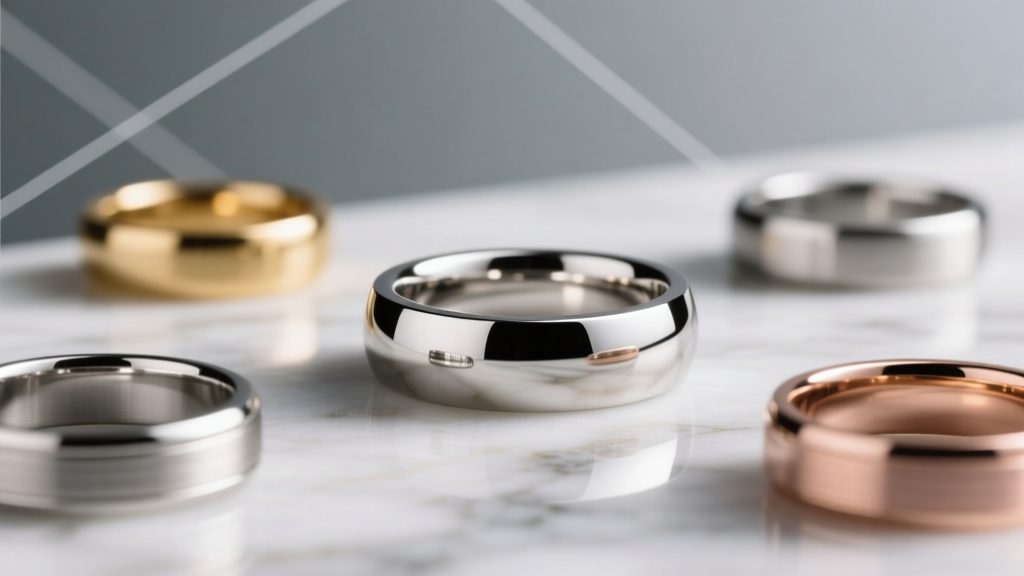
Platinum
- Look: Naturally white, luxurious weight.
- Wear: Develops a patina over time; metal displaces rather than wears away as quickly.
- Best for: Prong security (excellent for holding diamonds), sensitive skin, long-term durability.
White gold (typically 14K or 18K)
- Look: Bright white finish due to rhodium plating.
- Wear: Rhodium may need re-plating every 12–36 months depending on wear.
- Best for: A crisp white look with a more accessible price than platinum.
Yellow gold
- Look: Warm and classic; very on-trend for vintage-inspired and minimalist sets.
- Wear: Scratches show more readily on high-polish finishes; easy to polish.
- Best for: Timeless stacks, warm skin tones, and pairs well with diamonds and colored gemstones.
Rose gold
- Look: Romantic blush tone; flattering and modern.
- Wear: Durable due to copper content; may not suit very sensitive skin.
- Best for: Soft, feminine sets or mixing metals for a contemporary look.
Mixing metals tip: If you mix metal colors, keep the band widths similar and consider adding a small design bridge—like a diamond band that works as a “neutral” between tones.
Gemstones and Diamond Details: Matching Sparkle the Smart Way
Diamond cut and sparkle style
Not all sparkle reads the same. A round brilliant center has fiery, scattered scintillation; an emerald cut has broad flashes. Pair the band to support the center stone’s personality:
- Round center stone: Pavé, eternity bands, or round melee diamonds blend seamlessly.
- Emerald or Asscher: Consider baguette or step-cut accents for a cohesive, architectural look.
- Oval: Elongated shapes pair well with petite pavé and clean, thin bands to keep the silhouette sleek.
Color and clarity matching for band diamonds
Band diamonds (melee) are tiny, but mismatched color can still show next to a bright center stone. Many jewelers aim for band diamonds within one color grade of the center (for example, a G center pairs well with F–H melee). Clarity for melee is often VS–SI because inclusions are hard to see at that size—focus more on cut quality and secure setting work.
Colored gemstone engagement rings
Sapphires, rubies, and emeralds create striking bridal sets. A few pairing ideas:
- Sapphire engagement ring: Looks timeless with a diamond half-eternity band or a simple polished band for a royal, classic feel.
- Emerald center stone: Choose protective settings (bezel or sturdy prongs) and consider a smoother band to reduce chipping risk.
- Moissanite: Pairs beautifully with pavé bands; consider a slightly thicker band to support daily wear.
Quality and Craftsmanship: What to Check Before You Buy
- Flush fit vs. gap: A small gap is not “wrong,” but make sure it’s intentional and comfortable.
- Prong and pavé security: Look for even prongs, symmetrical beadwork, and no sharp edges.
- Band thickness: For longevity, many jewelers recommend at least 1.8mm–2.0mm thickness for diamond bands and 2.0mm+ for daily wear if you’re hard on rings.
- Comfort fit interior: Slightly rounded inner edges improve everyday comfort, especially for wider bands.
- Finish and details: Milgrain and engraving are beautiful but can wear down over time—choose well-executed detailing and expect occasional refinishing.
Practical Buying Tips for the Perfect Ring Stack
- Bring the engagement ring when shopping: Always try bands next to the actual ring (or order the band from the same vendor using exact measurements).
- Think about lifestyle: If you work with your hands, consider low-profile settings, channel-set bands, or half-eternity designs.
- Decide on your final stack: Will you add an anniversary band later? If yes, keep the wedding band slightly simpler so future stacking stays balanced.
- Match band widths thoughtfully: A delicate 1.6mm engagement ring can be overwhelmed by a 4mm wedding band. Many sets look best when widths are within a close range.
- Ask about resizing: Eternity bands are difficult to resize; half-eternity gives more flexibility.
Care and Maintenance: Keep Both Rings Looking Their Best
- Clean regularly: Soak in warm water with mild dish soap, gently brush with a soft toothbrush, rinse, and dry with a lint-free cloth. Avoid harsh chemicals and abrasive toothpaste.
- Schedule inspections: Have prongs and pavé checked every 6–12 months, especially for diamond bands.
- Remove for rough tasks: Take rings off for heavy lifting, gardening, gym workouts, and cleaning with chemicals to prevent bending and stone loss.
- Store properly: Keep rings in a fabric-lined box or separate pouch to avoid scratching (especially important for mixed-metal stacks).
- Re-plate white gold when needed: Rhodium re-plating restores brightness if the warmer undertone starts to show through.
Price Range and Value Tips
Wedding bands range widely based on metal, diamond content, and craftsmanship. Here are realistic price considerations:
- Plain metal bands: Often the best value. Expect a lower price range depending on metal type and width; platinum generally costs more than 14K gold.
- Diamond half-eternity bands: Mid-range, with cost driven by total carat weight, cut quality, and setting labor.
- Full eternity bands: Higher due to more diamonds and more setting work; also factor in limited resizing options.
- Custom contour bands: Pricing reflects design time and labor. Custom can be excellent value if it solves fit issues and prevents long-term wear problems.
Value tip: If your budget is tight, prioritize a well-made setting and durable band thickness over maximum diamond coverage. A comfortable, sturdy half-eternity band often outperforms a fragile micro-pavé eternity band for everyday wear.
Common Mistakes to Avoid When Pairing Engagement and Wedding Rings
- Ignoring fit and comfort: The most beautiful set won’t be worn if it pinches, spins, or snags.
- Buying a band without the engagement ring present: Small differences in height and shape can create big problems.
- Going too thin for daily wear: Ultra-slim bands can bend over time, especially with pavé.
- Overmatching details: Two highly detailed rings can look busy together. Let one ring be the star—usually the engagement ring.
- Forgetting future resizing: Eternity bands and intricate designs can be difficult or costly to resize.
- Mixing metals without a plan: Two-tone stacks work best when the proportions and finishes are intentional.
FAQ: Pairing Engagement Rings and Wedding Bands
Do engagement and wedding rings have to match?
No. Matching metals and styles is a classic choice, but complementary or contrasting sets are very popular. The goal is cohesion—similar proportions, compatible profiles, and a comfortable fit.
What if my wedding band doesn’t sit flush with my engagement ring?
A small gap is normal with some settings. If it bothers you, look for a contour/curved band, a shadow band, or a custom notched band designed to fit around the setting.
Can I mix platinum and gold rings together?
Yes. Two-tone ring stacks are on-trend and can be timeless when done well. Keep band widths balanced and consider periodic polishing, since mixed metals can show wear differently.
Is an eternity band a good wedding ring choice?
Eternity bands are stunning, but they’re harder to resize and can feel less comfortable for some people. Many couples choose half-eternity for daily wear and long-term flexibility.
How do I choose the right wedding band width?
Start by comparing it to your engagement ring’s band width and the size of your center stone. Many people like a wedding band that’s similar or slightly slimmer than the engagement ring for a balanced look, but comfort and finger size matter just as much.
What wedding band style is most durable for everyday wear?
A plain metal band or a channel-set diamond band is typically very durable. For pavé styles, choose a slightly thicker band and commit to regular stone checks.
Your Next Step: Build a Set You’ll Love Wearing Every Day
The best way to pair engagement and wedding rings is to treat them as a team: align the profiles, choose a metal strategy, and balance sparkle with practicality. Whether you love a timeless solitaire and classic band, a trendy mixed-metal stack, or a contour band that fits like it was made for your ring, focus on comfort, craftsmanship, and a look that feels like you.
For more expert guidance on engagement rings, wedding bands, gemstones, metals, and ring care, explore more jewelry guides on weddingsift.com.
More Articles
 Engagement Ring Trends 2026 | What's In and Out
 Engagement Ring Insurance: What to Know
 Claddagh Ring Pronunciation Guide (2026)
 Men's Wedding Band Weight: Grams by Metal & Fit (2026)
 What Is a Wedding Ring and Why Does It Really Matter
 Wedding Ring Fit: The 7-Second Sizing Test (2026)
 Engagement Ring Trends 2026 | What's In and Out
 Do You Wear Wedding Band On Top Or Bottom (2026)
 How to Choose an Engagement Ring With a Pave Band
 What Is a Size 7 Ring in Millimeters? (2026)