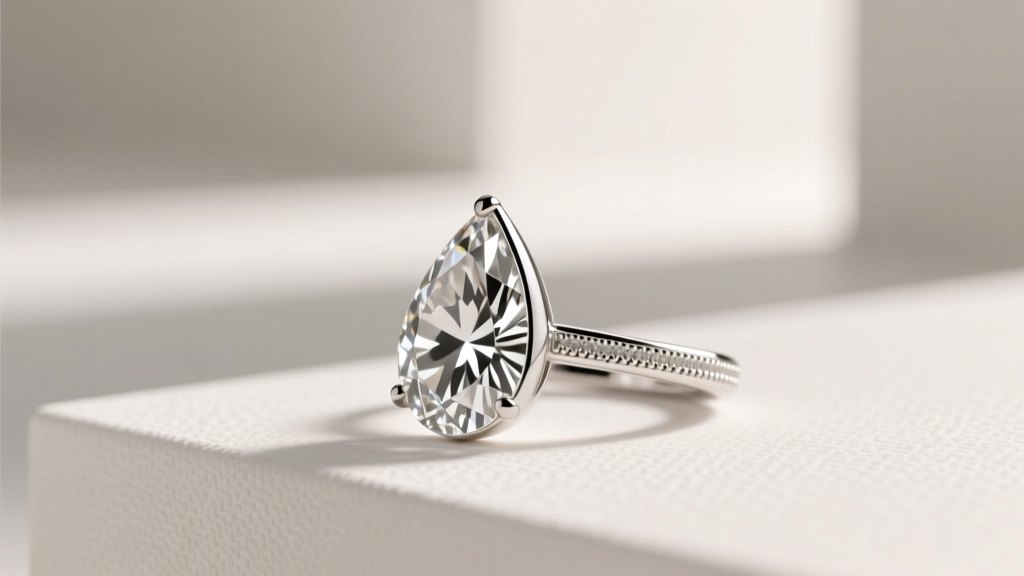
Pear-Shaped Diamonds Teardrop Elegance
The pear-shaped diamond—also called a teardrop diamond—has a way of looking romantic without trying too hard. One end is softly rounded, the other tapers to a point, creating a silhouette that feels both classic and a little unexpected. For couples shopping for an engagement ring or coordinating wedding bands, the pear cut delivers something special: it can look larger than its carat weight, flatter many hand shapes, and feel instantly recognizable while still standing out.
Pear-shaped engagement rings have also become a modern favorite thanks to celebrity influence and current trends toward elongated diamond cuts. At the same time, the shape has been around for centuries, which means you’re not buying a “moment”—you’re choosing a cut with heritage. The key is understanding how to select a pear diamond with beautiful symmetry, smart proportions, and a setting that protects its delicate tip.
This guide breaks down pear-shaped diamond quality, popular settings and metals, how to pair wedding bands, what prices to expect, and the common mistakes that trip up first-time shoppers.
What Makes a Pear-Shaped Diamond Unique?
The cut: part round, part marquise
The pear shape is essentially a hybrid of a round brilliant and a marquise. It’s a brilliant-cut diamond, so it’s designed for sparkle (fire and scintillation), but its elongated outline creates an elegant, finger-lengthening effect. Many shoppers also love that a well-cut pear can face up larger than a round diamond of the same carat weight because the surface area spreads outward.
Orientation: point up or point down?
Pear-shaped diamonds can be set with the point facing the fingertip (most common) or facing the hand. Point-up looks sleek and elongating; point-down can feel more vintage or artistic. Neither is “right”—the best choice is the one that matches your partner’s style and how they want the ring to feel on the hand.
Quality Factors for Pear-Shaped Diamonds (The 4Cs, Plus Shape-Specific Details)
Cut quality: the biggest driver of beauty
Pear shapes don’t receive a universal cut grade from many labs the way round diamonds often do, so you’ll evaluate cut through proportions and visual performance. Look for:
- Symmetry: Both “shoulders” (the rounded sides) should match, and the point should align with the centerline.
- Polish: Higher polish helps the facets reflect crisply, improving sparkle.
- Light return: Ask for videos, ASET/Ideal Scope images, or view in multiple lighting conditions.
Bow-tie effect: manage it, don’t fear it
Many pear-shaped diamonds show a shadowy shape across the center known as a bow-tie. A slight bow-tie is common and can be acceptable; a strong, dark bow-tie can make the diamond look dull. The best way to judge is with a rotating video or in-person viewing—look for even brightness across the stone.
Proportions: length-to-width ratio
Pear diamonds range from chubby to slender. Most buyers gravitate to a length-to-width ratio around 1.45–1.65 for a balanced look. Below that can feel rounder; above that can feel more dramatic and elongated. Choose what suits the wearer’s taste and finger shape—there’s no one “correct” ratio.
Color: where you can be strategic
Pear shapes can show color more noticeably near the point. For white metals like platinum or white gold, many couples aim for G–I color for a bright look with strong value. For yellow or rose gold settings, you can often go slightly warmer (for example H–J) and still enjoy a beautiful result, especially if the diamond is well cut.
Clarity: prioritize eye-clean over paper-perfect
Because pears have brilliant faceting, they can hide inclusions fairly well. Many shoppers find excellent value in VS2–SI1 clarity if the diamond is eye-clean. Watch the tip area—an inclusion near the point can be more vulnerable to chipping, so confirm with your jeweler that the stone is durable and well protected by the setting.
Carat: a shape that “wears bigger”
For the same carat weight, a pear often looks larger than a round diamond. If you’re comparing options, focus on millimeter measurements (length and width) rather than carat alone. That’s the most honest way to compare finger coverage.
Popular Pear-Shaped Engagement Ring Styles
Solitaire settings: timeless and trend-proof
A pear-shaped diamond solitaire highlights the silhouette and keeps the look clean—perfect for couples who want a classic engagement ring that won’t compete with a wedding band. Consider:
- Prong solitaire: Minimal and elegant; typically 3–6 prongs.
- V-prong at the tip: Highly recommended to protect the point.
Halo settings: extra sparkle and finger coverage
A halo engagement ring can make a pear look larger and add shimmer from every angle. Modern halos tend to be thinner and more refined than older, bulkier styles. Look for tight, even micro-pavé work and consistent stone size around the pear outline.
Three-stone rings: balanced and symbolic
A pear center diamond with side stones (round brilliants, tapered baguettes, or half-moons) creates a beautiful spread and a “past-present-future” story. This style also helps visually balance the point and can make the center stone feel more substantial.
Vintage-inspired details: milgrain and delicate engraving
For couples drawn to heirloom charm, a pear center with milgrain edges, filigree, or engraved shoulders blends old-world detail with a flattering modern shape. Pair this with warm metals like yellow gold or rose gold for a romantic feel.
Best Metals for Pear-Shaped Diamond Rings and Wedding Bands
Platinum
Platinum is durable and naturally white, making it a top choice for engagement rings worn daily. It’s heavier and typically more expensive than gold, but it holds prongs securely—especially valuable for protecting a pear’s pointed tip.
14K and 18K gold (white, yellow, rose)
- 14K gold: Excellent durability and value; ideal for active lifestyles.
- 18K gold: Richer color, slightly softer; a luxurious classic.
- White gold: Bright and modern; may require periodic rhodium replating to maintain its icy finish.
- Yellow gold: Timeless and currently trending; looks stunning with pears in both modern and vintage settings.
- Rose gold: Romantic and flattering; pairs beautifully with pear halos and delicate pavé.
Choosing the Right Setting: Protecting the Tip and Maximizing Sparkle
V-prong protection
The most common durability issue with pear-shaped diamonds is chipping at the point. A V-prong (a prong shaped like a protective “V” around the tip) is the gold standard for safeguarding that area. If a ring design doesn’t include one, ask your jeweler whether it can be added.
Bezel and half-bezel settings
A bezel wraps metal around the diamond’s edge for maximum security and a sleek, modern feel. A half-bezel or bezel-with-prongs hybrid keeps the look lighter while still protecting vulnerable areas. Bezel settings are also excellent for active hands and low-maintenance wear.
Low-profile vs high-profile
Low-profile pear engagement rings sit closer to the finger, reducing snagging and making stacking with a wedding band more practical. Higher settings can show off the diamond but may catch on fabric. If your partner loves a dramatic look, consider a slightly higher head with a secure gallery and sturdy prongs.
Pairing Wedding Bands with a Pear-Shaped Engagement Ring
Pear shapes can create a gap with straight wedding bands depending on the setting. The best band choice depends on your desired look and how the engagement ring sits:
- Curved or contour wedding band: Designed to nest around the pear and sit flush.
- Chevron (V-shaped) band: A modern favorite that mirrors the point and looks intentional.
- Eternity or pavé band: Adds sparkle; confirm durability and comfort for daily wear.
- Classic plain band: Timeless and comfortable; accept a small gap or choose a custom contour.
Current trends lean toward mixed-metal stacks (for example, a yellow gold engagement ring with a white gold or platinum diamond band) and slim, minimal bands that keep the center stone as the focal point. Timeless classics—like a simple 2mm gold band—never go out of style and are easy to wear for decades.
Price Range and Value Tips for Pear-Shaped Diamonds
Pear-shaped diamonds are often priced lower per carat than round brilliants, which can be a value win. Price varies widely based on carat weight, color, clarity, and how “in-demand” the proportions are. As a general shopping guide:
- 0.70–1.00 carat: Often a sweet spot for presence and budget flexibility.
- 1.00–1.50 carats: Popular for engagement rings; pricing jumps at the 1.00 carat mark.
- 1.50–2.00+ carats: Statement territory; prioritize cut quality and symmetry for a high-end look.
Value tips that work in real shopping situations:
- Consider “just under” benchmark weights (0.90ct instead of 1.00ct, 1.40ct instead of 1.50ct) for similar visual size at a better price.
- Choose eye-clean clarity instead of chasing flawless grades.
- Prioritize cut and shape appeal—a beautiful pear will outshine a higher-grade stone with poor light performance.
- Lab-grown vs natural diamonds: Lab-grown pear-shaped diamonds can offer much larger size for the budget, while natural diamonds hold traditional rarity appeal. Decide based on your priorities, not pressure.
Practical Buying Tips (What to Ask and What to Check)
- Request a 360° video to evaluate the bow-tie and overall sparkle.
- Check symmetry by looking for even shoulders and a centered point.
- Confirm tip protection with a V-prong or bezel.
- Ask about return/upgrade policies—many couples appreciate flexibility after proposing.
- Match the band width to lifestyle: ultra-thin bands look delicate but may not suit very active wearers; consider at least ~1.8–2.2mm for daily durability depending on design.
- Ensure comfortable fit: comfort-fit bands and smooth pavé edges matter more than people expect.
Care and Maintenance for Pear-Shaped Diamond Rings
- Clean regularly: Warm water, mild dish soap, and a soft brush will remove lotion and oil that dulls sparkle—especially under the diamond.
- Avoid harsh chemicals: Chlorine and strong cleaners can damage metals and loosen settings over time.
- Store safely: Keep your ring separate from other jewelry to prevent scratches, especially if you have multiple diamond pieces.
- Schedule inspections: Have prongs checked every 6–12 months. The tip prong is priority #1.
- Remove for impact-heavy activities: Gym weights, gardening, moving furniture, and sports are common causes of chips and bent prongs.
Common Mistakes to Avoid When Shopping for Pear-Shaped Diamonds
- Buying by carat weight alone: Always compare millimeter size and proportions.
- Ignoring the bow-tie: A strong bow-tie can make even a high-carat diamond look lifeless.
- Skipping tip protection: A pear’s point is vulnerable; the setting should respect that.
- Choosing a band that won’t stack: If a flush fit matters, plan the wedding band early (or choose a matching set).
- Overpaying for clarity: Eye-clean is the goal; let sparkle and design carry the look.
- Not considering daily comfort: Sharp pavé edges and tall settings can irritate fingers and snag clothing.
FAQ: Pear-Shaped Diamond Engagement Rings
Do pear-shaped diamonds look bigger than round diamonds?
They often do. Pear shapes can have a larger face-up area for the same carat weight, and the elongated outline makes the diamond appear more substantial on the finger.
What length-to-width ratio is best for a pear-shaped diamond?
Many people like 1.45–1.65 for a balanced teardrop look. Lower ratios look fuller and rounder; higher ratios look slimmer and more dramatic. Choose what matches your style preferences.
Is the bow-tie effect avoidable?
A slight bow-tie is common in pear-shaped diamonds. The goal is to avoid a heavy, dark bow-tie that stays prominent in most lighting. Videos and light-performance images help you choose wisely.
What’s the safest setting for a pear-shaped diamond?
A setting with a V-prong on the tip is a smart baseline. For maximum protection, a full bezel is extremely secure, while still looking modern and refined.
Can I wear a straight wedding band with a pear-shaped engagement ring?
Sometimes, but many pear settings create a small gap. If you want a flush look, consider a curved/contour band or a custom-fitted wedding band designed to nest with your engagement ring.
Are pear-shaped diamonds a trend or a classic?
Both. Elongated cuts are trending right now, but the pear shape has a long history and remains a timeless choice—especially in solitaire and three-stone engagement ring styles.
Next Steps: Choosing Your Teardrop Diamond with Confidence
If you want an engagement ring that feels romantic, flattering, and a little distinctive, a pear-shaped diamond is an excellent choice. Focus on symmetry, light performance, and tip protection, then select a metal and setting that matches your partner’s lifestyle—whether that’s a timeless solitaire in platinum, a delicate pavé halo in white gold, or a warm yellow-gold vintage-inspired design.
When you’re ready, explore more engagement ring and wedding band guides on weddingsift.com to compare styles, metals, diamond shapes, and pairing ideas for your perfect set.
More Articles
 Brittany Mahomes’ Wedding Ring: Carat Weight & Cost (2026)
 How to Choose an Engagement Ring for Long Fingers
 Garnet Engagement Rings January Birthstone Deep Red
 Tourmaline Engagement Rings Rainbow Color Options
 Clean Wedding Ring at Home: 5 Safe Methods (2026)
 How to Wear Your Wedding Band Set (2026)
 How To Match Base Metals With Value
 Amethyst Engagement Rings February Birthstone Beauty
 How to Wear Wedding Set: 7 Rules You’re Breaking
 How to Choose a Wedding Ring for Wide Fingers