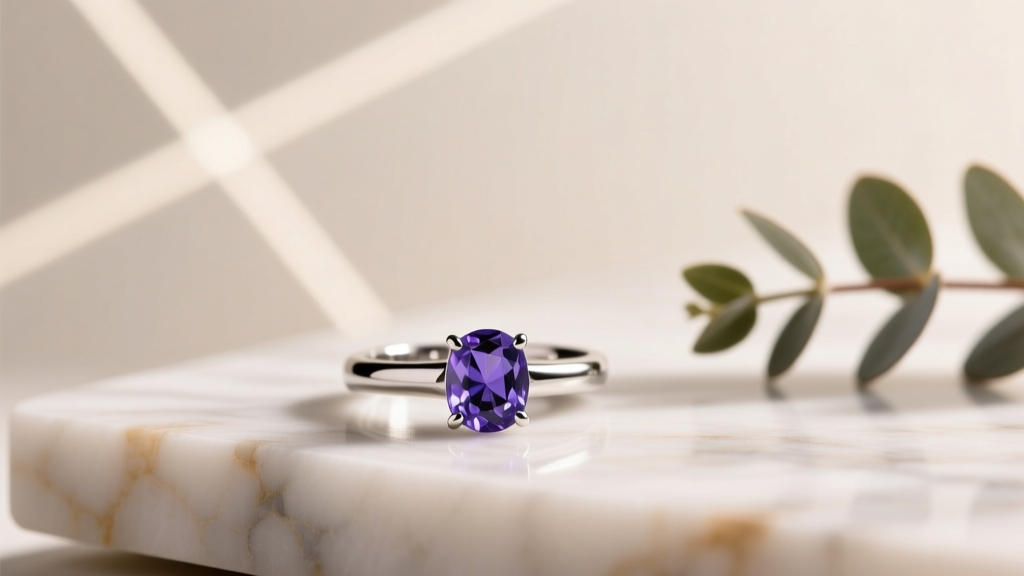
Iolite Engagement Rings Violet Blue Cordierite
If you love the look of sapphire but want something more unexpected, iolite engagement rings deserve your attention. Iolite—also called cordierite—has a naturally romantic violet-blue color that shifts with the light, giving it a moody, modern feel that still looks timeless next to a wedding band.
Couples are increasingly choosing alternative gemstones for engagement rings: stones that feel personal, ethically conscious, and budget-smart without sacrificing beauty. Iolite fits that sweet spot. With the right cut, setting, and metal choice, a violet-blue cordierite ring can look refined, elevated, and uniquely “you”—whether your style is minimalist, vintage-inspired, or bold.
This guide breaks down what iolite is, how to judge quality, the best ring styles and settings, price expectations, and how to avoid the most common shopping mistakes—so you can buy confidently and wear it proudly for years.
What Is Iolite (Cordierite)?
Iolite is the gem-quality variety of the mineral cordierite. It’s known for its deep blue to violet-blue tones, sometimes with hints of gray, indigo, or even a soft denim look. Historically, iolite is nicknamed the “Viking’s Compass” because thin slices can show a polarization effect that may have helped determine the sun’s position.
The Signature Look: Pleochroism (Color Shift)
The most defining feature of iolite is pleochroism—it can show different colors depending on the viewing angle. In many stones, you may see violet-blue from one direction and a paler blue-gray or even slightly yellowish tone from another. This isn’t a flaw; it’s part of the gem’s character. A skilled cutter will orient the rough to emphasize the most beautiful face-up color.
How Durable Is Iolite for an Engagement Ring?
Iolite typically measures about 7 to 7.5 on the Mohs hardness scale. That makes it reasonably durable, but not as tough as sapphire (9) or diamond (10). For everyday wear, iolite can work well when set thoughtfully—especially with protective settings and mindful wear habits. If your lifestyle is very hands-on (gym, gardening, healthcare work), consider a bezel or halo setting for extra protection, or reserve iolite for a special-occasion ring paired with a sturdier wedding band.
Why Choose an Iolite Engagement Ring?
- Violet-blue color with depth: Elegant like sapphire, but more offbeat and artistic.
- Excellent value: Larger center stones are often attainable at a fraction of the cost of sapphires or tanzanites.
- Unique “something blue”: A natural fit for wedding symbolism and bridal styling.
- Trend-forward yet classic: Alternative gemstone engagement rings are a major trend, and iolite still looks timeless in traditional settings.
Iolite Quality Factors: What to Look For
Color: Aim for Saturated Violet-Blue
Color is the primary value driver. The most desirable iolite shows a rich violet-blue or inky blue with good saturation and minimal gray. Because iolite can appear lighter or darker depending on light source, ask to see photos or video in multiple lighting conditions (daylight, indoor warm light).
Clarity: Eye-Clean Is the Goal
Most iolite is eye-clean or close to it, though you may see minor inclusions. Look for a stone that appears clean when viewed from the top at normal distance. Avoid stones with obvious fractures or cloudy areas that dull sparkle.
Cut: The Difference Between “Pretty” and “Wow”
Iolite can look sleepy if the cut is too shallow or the orientation doesn’t favor the best color. Prioritize:
- Well-proportioned facets for brightness
- Good symmetry for balanced sparkle
- Smart orientation to minimize washed-out angles from pleochroism
Carat Size: How Big Should You Go?
Iolite is commonly available in 1–3 carats, with larger stones possible. A 1.5–2.5 carat iolite can look substantial without an extreme price jump. If you’re choosing a very large center stone, a protective setting becomes even more important.
Best Cuts and Ring Styles for Violet-Blue Cordierite
Popular Cuts
- Oval cut: Elongates the finger and shows color beautifully; very popular in current engagement ring trends.
- Cushion cut: Soft, romantic shape that pairs perfectly with halos and vintage details.
- Round cut: Classic and sparkly; great for timeless solitaires.
- Emerald cut: Sleek and modern; highlights depth and color zoning if present—choose carefully for a clean look.
- Pear cut: Elegant and distinctive; looks stunning with a simple band or halo.
Trending & Timeless Settings
- Bezel setting: A modern favorite and one of the best protective options for iolite.
- Halo setting (diamond or moissanite): Adds brilliance and makes color pop; a strong choice for a bridal “wow” factor.
- Three-stone ring: Symbolic and balanced; pair iolite with diamonds or white sapphires for contrast.
- Vintage-inspired (milgrain, filigree): Enhances iolite’s old-world charm, especially in yellow or rose gold.
- Classic prong solitaire: Clean and timeless; choose sturdy prongs and a slightly higher-quality cut for best sparkle.
Choosing the Right Metal: Yellow Gold, White Gold, Platinum, or Rose Gold?
Metal choice changes how iolite reads on the hand:
- 14K or 18K yellow gold: Warm contrast that makes violet-blue look richer. Great for vintage-inspired engagement rings and classic solitaires.
- 14K white gold: Crisp, bright look that leans modern. Consider rhodium plating maintenance over time.
- Platinum: Premium, durable, naturally white; ideal for secure prongs and long-term wear—often the best “heirloom build” option.
- Rose gold: Romantic and on-trend; the blush tone can bring out iolite’s purple side beautifully.
For everyday practicality, many couples choose 14K gold for a balance of durability and price, or platinum for maximum longevity and security.
How Much Do Iolite Engagement Rings Cost?
Iolite offers strong value, especially compared with sapphire, tanzanite, or natural blue diamonds. Typical price ranges vary by craftsmanship, metal, and accent stones:
- Simple iolite solitaire in sterling silver or 10K gold: roughly $150–$600
- 14K gold solitaire or minimalist bezel: roughly $500–$1,500
- Halo or three-stone with diamond/moissanite accents in 14K/18K gold: roughly $1,200–$3,500+
- Platinum settings or designer-level craftsmanship: roughly $2,500–$6,000+
Value Tips
- Spend on the setting: For iolite, a secure, well-made setting is more valuable long term than chasing maximum carat size.
- Consider moissanite accents: Moissanite side stones offer high brilliance at a lower cost than diamonds.
- Prioritize cut quality: A well-cut 1.5 ct iolite often looks better than a poorly cut 3 ct stone.
Practical Buying Tips for Iolite Engagement Rings
- Ask for real-life photos/videos: Iolite changes color in different lighting; request daylight and indoor images.
- Choose protective designs: Bezel, halo, and low-profile settings reduce the chance of edge chipping.
- Confirm stone treatment disclosures: Iolite is commonly untreated, but always verify what you’re buying.
- Match your wedding band early: If you want a flush fit, consider a contoured band or a setting designed for stackability.
- Check return/resize policies: Especially for custom rings or intricate vintage-style settings.
Care and Maintenance: Keeping Iolite Beautiful
With sensible care, iolite can stay luminous for decades.
- Cleaning: Use warm water, mild dish soap, and a soft toothbrush. Rinse well and pat dry with a lint-free cloth.
- Avoid harsh chemicals: Remove your ring for cleaning products, chlorine, and beauty treatments (hair dye, bleach, acetone).
- Skip ultrasonic cleaners: Especially if the stone has inclusions or the ring has delicate setting work.
- Store separately: Keep in a fabric-lined box or pouch to prevent scratches from harder gemstones like diamond.
- Routine checks: Have prongs and settings inspected every 6–12 months, particularly for prong-set solitaires.
Common Mistakes to Avoid
- Buying based on one photo: Studio lighting can exaggerate saturation. Always view multiple lighting conditions.
- Choosing a fragile setting: Very thin bands and exposed corners can be risky for daily wear.
- Assuming all “blue” iolite looks the same: Tone and saturation vary widely; compare stones side-by-side if possible.
- Ignoring lifestyle fit: If you’re hard on jewelry, opt for a bezel, a lower profile, or consider iolite as an accent stone.
- Overpaying for size alone: A big stone with dull color or poor cut won’t deliver the look you want.
FAQ: Iolite Engagement Rings
Is iolite a good gemstone for an engagement ring?
Yes, for many couples—especially if you choose a protective setting and you’re willing to remove the ring for rough activities. With a Mohs hardness around 7–7.5, iolite is wearable but benefits from thoughtful design and care.
Does iolite look like sapphire?
Iolite can resemble sapphire at first glance, especially in deeper blue stones. The difference is iolite’s pleochroism and often a slightly softer, more violet or gray-blue tone. It’s ideal if you want a sapphire-like vibe with a more distinctive personality.
What metal looks best with violet-blue cordierite?
Yellow gold and rose gold enhance iolite’s warmth and violet tones, while white gold and platinum create a crisp, modern contrast. If you’re stacking with a wedding band, choose a metal that complements your band or select a mixed-metal stack intentionally.
Are iolite rings expensive?
Compared with sapphire, ruby, or diamond engagement rings, iolite is generally more budget-friendly. You can often allocate more of your budget to craftsmanship, secure settings, and accent stones while still getting a larger center gem look.
How can I tell if an iolite is good quality?
Look for a rich violet-blue color, good brilliance (not dull), minimal visible inclusions, and a cut that doesn’t “wash out” from certain angles. Request daylight photos or videos to confirm the face-up color.
Will iolite fade over time?
Iolite is generally stable in color for normal wear. The bigger risk is surface wear or chipping from impact, which is why protective settings and routine inspections matter more than worries about fading.
Choosing Your Ring with Confidence
If you want an engagement ring that feels romantic, a little unconventional, and genuinely beautiful, iolite is a standout alternative gemstone. Choose a saturated violet-blue stone, prioritize a well-made setting (bezel, halo, or sturdy prongs), and pick a metal that fits your style—whether that’s timeless yellow gold, modern platinum, or trendy rose gold.
Explore more engagement ring and wedding band guides on weddingsift.com to compare gemstones, settings, and metal options—so your final choice feels as lasting as the commitment it represents.
More Articles
 Damascus Steel Wedding Bands Unique Patterns
 Best Places to Find Artisan Wedding Bands
 How to Resize a Wedding Ring Without Damaging It
 Wedding Ring Sizing: 5 Safe, Permanent Methods (2026)
 How to Remove Super Glue from Wedding Ring Safely
 How to Choose an Engagement Ring on a Budget
 How to Maintain the Shine of Your Wedding Jewelry
 How to Choose a Wedding Ring for Wide Fingers
 Emerald Cut Diamonds Step Cut Elegance
 Wedding Band Thickness: The Science-Backed Sweet Spot