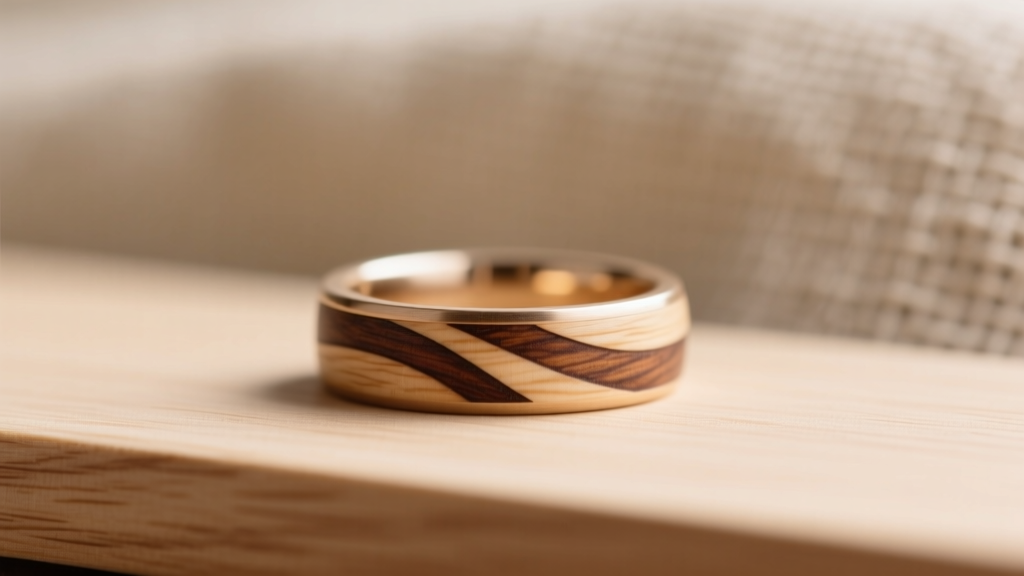
Wood Inlay Wedding Bands Natural and Organic
Wood inlay wedding bands have become a favorite for couples who want something that feels personal, grounded, and a little outside the traditional jewelry box. The mix of natural wood grain and precious metal creates a ring that looks warm and organic, yet still refined enough for a lifelong symbol.
Beyond the look, wood inlay bands speak to meaning—growth, roots, resilience, and a connection to nature. They also pair beautifully with modern engagement rings, from minimalist solitaires to alternative gemstone styles. If you’re considering a wood inlay wedding ring, understanding the materials, construction, and care will help you choose a band that stays beautiful through daily wear.
What Is a Wood Inlay Wedding Band?
A wood inlay wedding band is typically a metal ring (the “core”) that features a channel or groove filled with a strip of real wood. The wood can be left visible and protected under a clear resin or set flush with the metal and sealed for durability. The result is a two-material design: the strength of a metal wedding band with the distinctive grain and color of natural wood.
Inlay vs. Full Wood Rings
- Wood inlay rings use metal as the primary structure, with wood as an accent. This is generally the best option for long-term durability.
- Full wood rings are made primarily from wood and are more prone to cracking, swelling, or warping with moisture and impact.
Wood Types: The Beauty (and Personality) of Each Grain
The wood species you choose affects color, grain pattern, and how the ring “reads” from a distance. Many couples select a wood that reflects a shared story—an outdoor engagement, a meaningful location, or even a family tradition.
Popular Woods for Inlay Wedding Bands
- Koa: A classic in wood inlay wedding bands. Warm honey-to-caramel tones with dramatic grain movement. Excellent for couples who want a rich, natural look.
- Walnut: Deep chocolate-brown with subtle grain. A timeless, understated option that pairs well with yellow gold, rose gold, or black tungsten.
- Rosewood: Reddish-brown hues and a refined, tight grain. Often chosen for its bold, romantic warmth.
- Maple: Light, creamy color with clean grain. Great for modern, minimalist ring styles and high-contrast pairings with dark metals.
- Ebony: Nearly black with sleek, luxurious appeal. Pairs beautifully with platinum or white gold for a crisp, contemporary look.
- Oak: Traditional and familiar, with a visible grain that feels rustic and heritage-inspired.
Trend watch: Current wedding ring trends lean toward meaningful materials—wood, meteorite, dinosaur bone, and alternative gemstones. Wood inlay remains one of the most wearable “natural material” trends because it can be protected and stabilized inside a metal ring.
Metal Choices for the Band: Strength Meets Style
The metal you select determines weight, scratch resistance, maintenance needs, and how the ring complements an engagement ring. For couples shopping for matching wedding band sets, metal choice also affects how well the pair will sit together visually.
Best Metals for Wood Inlay Wedding Bands
- Titanium: Lightweight, strong, and comfortable. A popular choice for active lifestyles. Usually more affordable than precious metals.
- Tungsten carbide: Highly scratch-resistant and substantial in feel. Ideal for those hard on their hands. Note: tungsten can crack under severe impact and is difficult to resize.
- Stainless steel: Budget-friendly and durable with a clean, modern look. A practical entry point for wood inlay styles.
- 14K/18K gold (yellow, white, rose): Timeless and valuable. Gold offers a classic wedding band feel and is typically more resize-friendly than alternative metals. 14K is more scratch-resistant than 18K due to higher alloy content.
- Platinum: Premium, naturally white metal known for longevity. It can develop a soft patina over time (a classic look many love). Great for heirloom-minded buyers.
- Palladium: A lighter, naturally white precious metal (availability varies). Often chosen as a lower-weight alternative to platinum.
Finish Options That Change the Whole Look
- High polish: Bright, reflective, formal. Complements classic solitaire engagement rings.
- Brushed/satin: Soft, matte sheen. One of the most popular modern finishes for men’s wedding bands and gender-neutral styles.
- Hammered: Artisan texture that pairs naturally with wood grain. Great for couples who like handcrafted detail.
- Black finishes (often PVD-coated over titanium or steel): Bold and contemporary, but coatings can show wear over time.
Craftsmanship and Quality: What Makes a Wood Inlay Ring Last?
A wood inlay ring is only as durable as its construction. Because wood is organic, it responds to moisture, temperature changes, and impact differently than metal. High-quality makers use stabilization methods and protective finishes to reduce movement and wear.
Key Quality Factors to Look For
- Stabilized wood: Wood that has been impregnated with resin or otherwise treated for strength and moisture resistance. This is a major durability upgrade.
- Sealed inlay: Look for a smooth, sealed surface—often protected by jewelry-grade resin—so the wood isn’t exposed to daily water contact.
- Clean, flush edges: The transition between metal and wood should feel seamless. Gaps can trap moisture and debris.
- Comfort-fit interior: A slightly rounded inner profile makes the ring easier to wear all day, especially in wider band styles (6mm–8mm).
- Inlay depth and symmetry: A deeper, even channel generally protects the wood better and looks more refined.
Style Ideas: From Minimalist to Statement-Making
Wood inlay wedding bands span a wide range—from subtle, classic designs to bold modern combinations. Couples often choose a style that complements their engagement ring’s metal color and overall vibe.
Timeless Classics
- Single wood inlay + polished gold band: Elegant and versatile, especially in 14K yellow gold with walnut or koa.
- Brushed titanium with a narrow wood stripe: Clean, modern, and understated.
- Domed profile with centered inlay: A traditional silhouette with a natural twist.
Current Trends Couples Love
- Mixed inlays: Wood paired with meteorite, opal, or crushed stone for a textured, galaxy-meets-forest look.
- Offset or angled inlays: Asymmetry adds a designer feel without being too loud.
- Matte black metal + warm wood: High contrast and very contemporary.
Adding Gemstones: Small Details With Big Impact
Some wood inlay wedding rings include gemstones set into the metal (not typically into the wood). Popular choices include:
- Diamonds: Usually round brilliant melee stones in a flush setting (also called gypsy setting) for a smooth, durable finish.
- Sapphires: Especially blue or white sapphire for a durable alternative to diamonds (excellent for daily wear).
- Moissanite: Bright sparkle and strong durability, often used as an alternative stone in modern wedding band designs.
Settings to consider: Flush settings and bezel settings are the most secure for active lifestyles, while pavé can be more delicate and require more maintenance.
Buying Tips: Getting the Right Fit, Finish, and Lifestyle Match
- Prioritize wearability: If you work with your hands, consider titanium or tungsten with a sealed, stabilized wood inlay and a brushed finish to disguise fine scratches.
- Ask about resizing: Tungsten and many inlay designs are difficult or impossible to resize. If your size may change, choose gold or platinum when possible and confirm the maker’s resizing policy.
- Check the ring width: 6mm is a versatile standard; 8mm reads bolder and shows off more grain. Narrower widths (4mm–5mm) can look sleek and pair well with delicate engagement rings.
- Match metal color to your engagement ring: For a cohesive bridal set, stick to the same metal tone (yellow, white, rose). Mixing metals can look stylish too—just do it intentionally.
- Request close-up photos: Wood grain varies naturally. A reputable seller will show the actual ring or provide realistic examples of grain variation.
Care and Maintenance: How to Keep Wood Inlay Rings Looking New
Wood inlay wedding bands are low-maintenance when properly sealed, but they still benefit from common-sense care.
- Remove for prolonged water exposure: Showering occasionally is usually fine for sealed inlays, but frequent hot tubs, swimming pools, and long soaks can stress finishes over time.
- Avoid harsh chemicals: Household cleaners, chlorine, and solvents can dull metal finishes and damage sealants.
- Clean gently: Use mild soap, lukewarm water, and a soft cloth. Avoid ultrasonic cleaners unless the jeweler confirms it’s safe for the specific inlay and resin.
- Store smart: Keep your ring in a soft pouch or ring box to prevent scratches from other jewelry.
- Schedule occasional checkups: If your band has gemstones, have a jeweler inspect stone security periodically.
Price Ranges and Value Tips
Wood inlay wedding band prices vary widely based on metal type, craftsmanship, brand, and whether gemstones or multiple inlays are used.
- Budget-friendly ($75–$250): Stainless steel or basic titanium with wood inlay. Great for style on a budget, but verify sealing quality and warranty.
- Mid-range ($250–$800): Higher-quality titanium or tungsten, better stabilization, comfort-fit profiles, and improved finishing. Many best-value options land here.
- Fine jewelry ($800–$2,500+): 14K/18K gold or platinum cores, precision inlay work, and optional diamond/sapphire accents. Best for heirloom value and future servicing.
How to Get Better Value
- Choose 14K gold over 18K if you want better scratch resistance while keeping the classic gold look.
- Skip unnecessary complexity (too many inlay materials) if durability is your priority—one high-quality wood inlay can age more gracefully.
- Look for warranties or repair policies covering inlay separation or sealant issues.
Common Mistakes to Avoid
- Assuming all wood inlays are equally durable: Stabilization and sealing matter more than the wood species alone.
- Buying tungsten without understanding resizing limits: If your size changes, you may need a replacement instead of a resize.
- Choosing a ring solely by photos: Wood grain and color can vary. Confirm what variation is normal and what you’ll receive.
- Ignoring lifestyle: If you’re frequently in water, chemicals, or high-impact work, ask for the most protective construction and a practical finish.
- Not checking engagement ring pairing: Wider bands or tall profiles can create a gap with certain engagement ring settings (especially low-set solitaires or halos).
FAQ: Wood Inlay Wedding Bands
Are wood inlay wedding bands durable enough for everyday wear?
Yes—when the ring has a strong metal core and the wood is stabilized and sealed. For daily wear, prioritize a well-finished, flush inlay and consider scratch-resistant metals like tungsten or practical options like titanium.
Can a wood inlay ring get wet?
A properly sealed wood inlay ring can handle occasional water contact, but frequent soaking (pools, hot tubs, long baths) can shorten the life of the sealant. Removing the ring for prolonged water exposure is a smart habit.
Do wood inlay bands scratch easily?
The metal portion will scratch based on the metal type (gold scratches more easily than tungsten). The wood itself is protected by a clear sealant in quality rings, but that surface can still show wear over years and may need refinishing depending on construction.
Can wood inlay wedding bands be resized?
Some can, some can’t. Tungsten is generally not resizable, and certain inlay constructions limit resizing even in gold. If resizing is important, ask before buying and consider a precious metal ring designed with resizing in mind.
What engagement ring styles pair best with wood inlay wedding bands?
They pair well with solitaire engagement rings (especially classic round brilliant, oval, or cushion cuts), bezel-set diamonds, and nature-inspired settings. For a seamless look, match the metal color; for contrast, combine wood with a clean white metal engagement ring.
Next Steps: Choosing a Ring That Feels Like You
Wood inlay wedding bands are one of the best choices for couples who want a wedding ring that feels natural, meaningful, and still built for real life. Focus on a durable metal core, stabilized and sealed wood, a comfortable fit, and a style that matches your daily routine as much as your personal taste.
If you’re comparing wedding band styles, metal types, or engagement ring pairings, explore more jewelry guides on weddingsift.com for expert tips on finding a ring you’ll love wearing every day.
More Articles
 Wedding Ring Stacking Rules (2026)
 Engagement Ring Appraisal How Often Do You Need One
 Wedding Band Metals: Gold vs Platinum 2026
 Diamond Color Grade: When It Really Matters
 How to Choose an Engagement Ring With Colored Accent Stones
 Wedding Ring Resizing Limits: Avoid Cracks & Damage
 Engagement Ring Trends Predictions for Next Year
 How to Choose a Wedding Band With a D-Shaped Profile
 Bridal Jewelry Guide 2026: Necklace, Earrings & Bracelet
 How to Keep Wedding Rings Together Without Soldering