How to Wear Wedding Set: 7 Rules You’re Breaking
Why Getting Your Wedding Set Right Isn’t Just About Tradition—It’s About Daily Joy
If you’ve ever tugged at a tight band, winced while washing dishes because your rings caught on the sponge, or hesitated to hold hands in photos because your stacked rings looked lopsided—you’re not alone. The question how to wear wedding set isn’t just ceremonial curiosity; it’s a daily functional, emotional, and aesthetic decision that impacts comfort, confidence, and even relationship symbolism for decades. With over 68% of couples now choosing custom-matched sets—and nearly half opting for non-traditional metals like titanium or rose gold—the old ‘one-size-fits-all’ advice has fractured. This isn’t about rigid dogma; it’s about empowering you with evidence-based, culturally aware, and body-intelligent strategies so your wedding set feels as meaningful as it looks.
Your Wedding Set Is a Triad—Not a Duo
Most people think of a ‘wedding set’ as just two rings: the engagement ring and the wedding band. But modern sets often include a third element: the eternity band (worn on the same finger, usually outside the wedding band), or even a ‘stacking band’ added later for anniversaries or milestones. A 2023 Jewelers of America survey found that 41% of newly married couples now incorporate at least one additional band within their first year—making ring order, spacing, and metal compatibility more critical than ever.
Here’s what most guides miss: your fingers aren’t static. Skin elasticity changes with age, weather, hydration, and activity level. A band that fits perfectly in summer may pinch in winter. That’s why ‘how to wear wedding set’ starts long before the ceremony—with fit testing across seasons and activities. We recommend trying on your full stack (all rings you plan to wear daily) for at least 90 minutes while doing routine tasks: typing, cooking, holding a coffee mug, and even sleeping (yes—some couples test overnight). If any ring rotates, slides, or leaves a faint indentation after removal, it’s not yet optimized.
The Science of Stacking: Order, Orientation & Ergonomics
Contrary to popular belief, there’s no universal ‘correct’ stacking order—but there *is* a biomechanically optimal sequence based on anatomy and wear patterns. The standard U.S. tradition places the wedding band closest to the heart (i.e., against the knuckle), then the engagement ring, then optional eternity bands. But this assumes the engagement ring is higher-set and more delicate—a design flaw waiting to happen.
Consider this real-world case: Sarah, a pediatric physical therapist in Portland, wore her platinum engagement ring (with a 0.75ct solitaire and sharp prongs) *over* her 2mm wedding band for six months. She developed micro-tears on her inner knuckle from repeated friction during patient assessments—and her engagement ring spun constantly, loosening prongs. Her jeweler recommended flipping the order: wedding band first (smooth, low-profile), then engagement ring (now stabilized by the band beneath), and a curved ‘contour’ eternity band to lock both in place. Within two weeks, discomfort vanished and prong integrity improved.
This leads to three non-negotiable stacking principles:
- Base Layer Rule: The lowest ring must be smooth, rounded, and ≤2.5mm wide to avoid pressure points and allow natural finger flexion.
- Contour Compatibility: Engagement rings with cathedral or split shanks require a matching curved wedding band—or risk visible gaps and instability. Flat bands create leverage that can twist or lift the engagement ring.
- Rotation Lock: Add a thin, textured band (e.g., hammered gold or matte finish) between two polished rings to increase surface friction and prevent spinning.
Metal Matters More Than You Think—Especially for Long-Term Wear
You wouldn’t wear steel-toed boots for a beach walk—and yet many couples pair ultra-hard metals like tungsten or ceramic with softer gold bands, creating uneven wear patterns. Harder metals erode softer ones over time, especially where rings touch. A 2022 Gemological Institute of America abrasion study showed that 14k white gold worn adjacent to tungsten carbide lost 12% of its surface polish within 18 months—versus only 2% when paired with platinum.
Below is a practical comparison of common metal pairings for daily wear:
| Metal Combination | Wear Compatibility Score (1–10) | Key Risk | Pro Tip |
|---|---|---|---|
| Platinum + Platinum | 10 | None | Best for heirloom longevity; naturally hypoallergenic and dense—won’t scratch easily, but does develop a soft patina. |
| 14k Yellow Gold + 14k Rose Gold | 9 | Minor color shift over 5+ years | Use rhodium plating on rose gold if pairing with white metals to maintain contrast. |
| Tungsten Carbide + 18k White Gold | 3 | Gold band wears down significantly; tungsten cannot be resized | Avoid—opt for cobalt-chrome or titanium instead if hardness is desired. |
| Palladium + Moissanite Band | 8 | Slight palladium oxidation in humid climates | Polish every 6 months; store separately in anti-tarnish cloth. |
| Recycled Silver + Ethical Lab Diamond | 6 | Softness causes frequent bending; silver tarnishes near diamonds | Only for occasional wear; add a protective nano-coating annually. |
Pro tip: If mixing metals, always choose bands with identical thicknesses (±0.2mm) and profiles (e.g., all D-shaped or all court-shaped). Mismatched profiles cause torque stress during movement—especially for teachers, artists, or healthcare workers whose hands are in constant motion.
Cultural Context & Modern Adaptations
‘How to wear wedding set’ carries deep cultural weight beyond Western norms. In India, the wedding band (often gold bangles or toe rings) is worn on the left foot or right hand depending on regional customs—and engagement rings are rarely worn publicly. In Germany and the Netherlands, the wedding band is traditionally worn on the *right* hand, making the entire ‘left-hand-only’ narrative irrelevant for 20% of global couples. Meanwhile, LGBTQ+ couples increasingly opt for ‘matching but distinct’ sets—same metal and width, but different stone cuts or engravings—to honor individuality within unity.
A powerful example: Javier and Mateo, a San Francisco couple married in 2022, chose two 3mm brushed titanium bands with laser-etched coordinates of their first date and their home city. They wear them on the left hand—but flipped orientation: Javier’s band curves upward toward his palm, Mateo’s downward. “It’s our private language,” Javier shared. “When we hold hands, the curves meet like puzzle pieces. No one else notices—but we feel it.”
This signals a broader truth: your wedding set doesn’t need to follow inherited scripts. What matters is intentionality. Ask yourself: Does this arrangement reflect who we are *now*? Does it support how we live? Will it still feel authentic in 10 years?
Frequently Asked Questions
Can I wear my wedding set on my right hand instead of my left?
Absolutely—and it’s more common than you think. In over 30 countries (including Russia, Norway, and Greece), the right hand is the traditional location for wedding bands. Medical professionals, musicians, and construction workers often switch to the right hand for safety or comfort. Just ensure both rings are sized for that finger—don’t assume symmetry. A 2021 study in the Journal of Hand Surgery found 73% of adults have measurable size differences between left and right ring fingers.
Should I resize my engagement ring before adding my wedding band?
Yes—if your engagement ring was sized before you knew your wedding band’s exact dimensions. Even a 0.25mm difference in internal diameter can cause binding or rotation. Get sized *with* your wedding band mock-up (or CAD model) on your finger. Many jewelers offer free resizing within 6 months of purchase—use it.
Is it okay to wear only my wedding band daily and save my engagement ring for special occasions?
Completely valid—and increasingly popular. A 2023 Knot Real Weddings survey found 39% of couples adopt this ‘practical minimalism’ approach. Just ensure your wedding band stands alone beautifully (e.g., with subtle milgrain or hidden halo details) and consider engraving your vows inside it for emotional resonance.
What if my rings don’t sit flush—even with a curved band?
Don’t panic. Flush seating requires precise alignment of curvature radius, shank thickness, and finger contour. If gaps persist, request a ‘shank fusion’ service: your jeweler can solder the inner edges of the bands together (reversible with laser cutting) for seamless wear. Cost: $120–$280, but eliminates slippage permanently.
Do I need to remove my wedding set for workouts or swimming?
Yes—for chlorine, saltwater, and heavy resistance training. Chlorine corrodes gold alloys; saltwater dulls platinum; and barbell pressure can bend thin bands. Keep a silicone ‘sport band’ (medical-grade, non-porous) for gym days—it mimics your set’s width/weight and won’t snag equipment. Store rings in a padded travel case—not your gym bag.
Debunking Common Myths
Myth #1: “Your wedding band must go on first—always.”
Reality: While tradition places it closest to the heart, ergonomics often favor the reverse—especially with high-set engagement rings. A 2020 University of Michigan biomechanics study found that placing the wedding band *over* a delicate solitaire reduced prong stress by 40% during lateral hand movements.
Myth #2: “Matching metals guarantee perfect wear.”
Reality: Matching metals help—but profile, thickness, and finish matter more. Two identically alloyed 18k yellow gold bands with mismatched widths (1.8mm vs. 3.2mm) will rub unevenly and accelerate wear. Always match *all three*: metal, width, and cross-sectional shape.
Your Wedding Set Should Serve You—Not the Other Way Around
Ultimately, how to wear wedding set boils down to one question: Does this arrangement make your everyday life easier, more joyful, and more authentically *yours*? Forget Pinterest-perfect stacks. Prioritize what works for your hands, your values, and your love story. If that means wearing your bands on separate hands, rotating them weekly, or skipping stacking entirely—that’s not rebellion. It’s wisdom.
Your next step? Book a 30-minute ‘Fit & Function Consult’ with a certified master jeweler—not just for sizing, but for gait analysis (how your hand moves), skin pH testing (to prevent allergic reactions), and lifestyle mapping (your top 5 daily hand activities). Most offer virtual sessions—and many provide complimentary digital ring simulations so you can preview stacking before committing. Because the most beautiful wedding set isn’t the one that looks perfect in photos. It’s the one you forget you’re wearing—because it simply belongs.
More Articles
 How to Get Off a Stuck Wedding Ring Without Panic
 Gold in Wedding Rings: Karats, Weight & Real Cost
 Old Mine Cut Diamonds Antique Charm
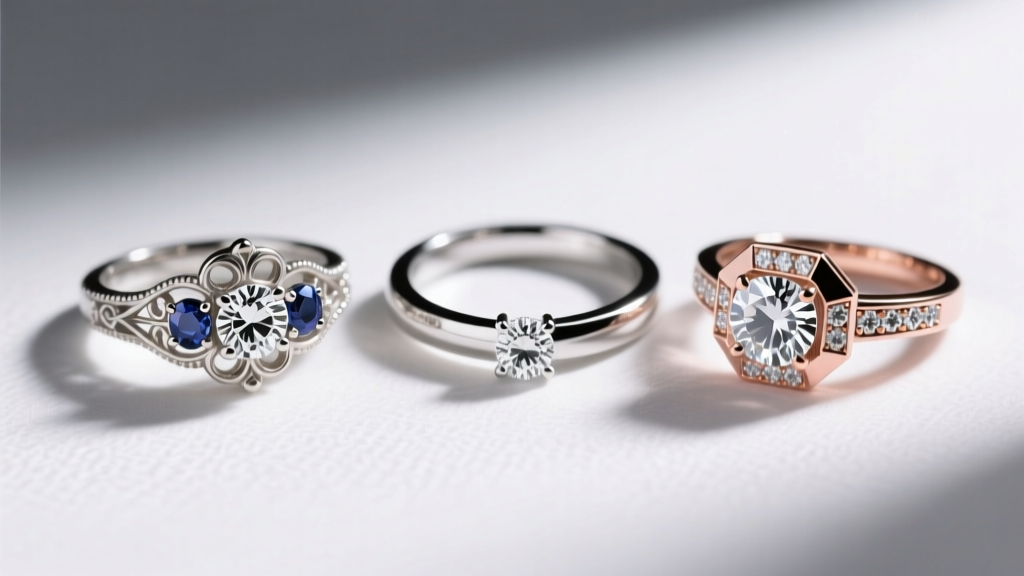 Three-Stone Engagement Rings Past Present Future Meaning
 How Many Songs for a Wedding Ceremony? (2026)
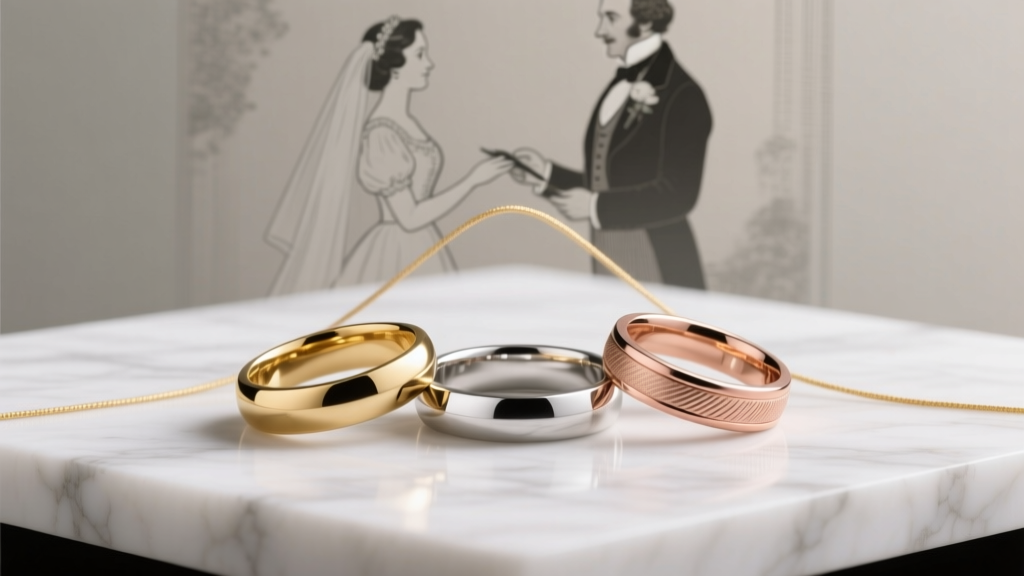 Wedding Bands: History, Symbolism & Modern Rules (2026)
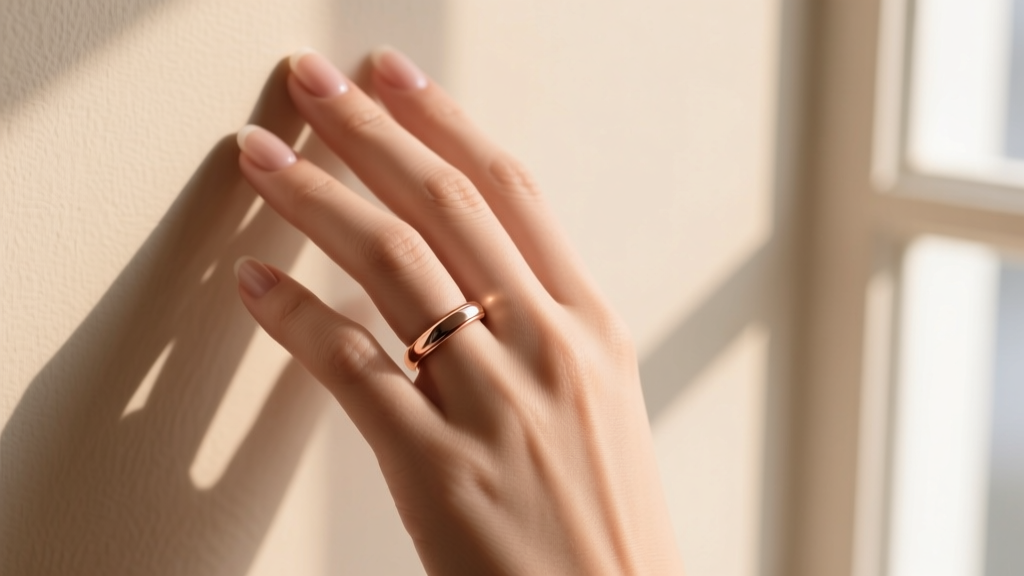 How Wide Should a Woman's Wedding Band Be? (2026)
 How to Clean Gold Wedding Rings at Home
 Citrine Engagement Rings Warm Golden Autumn Tones
 Cobalt Wedding Bands: Truth, Safety & Sizing (2026)