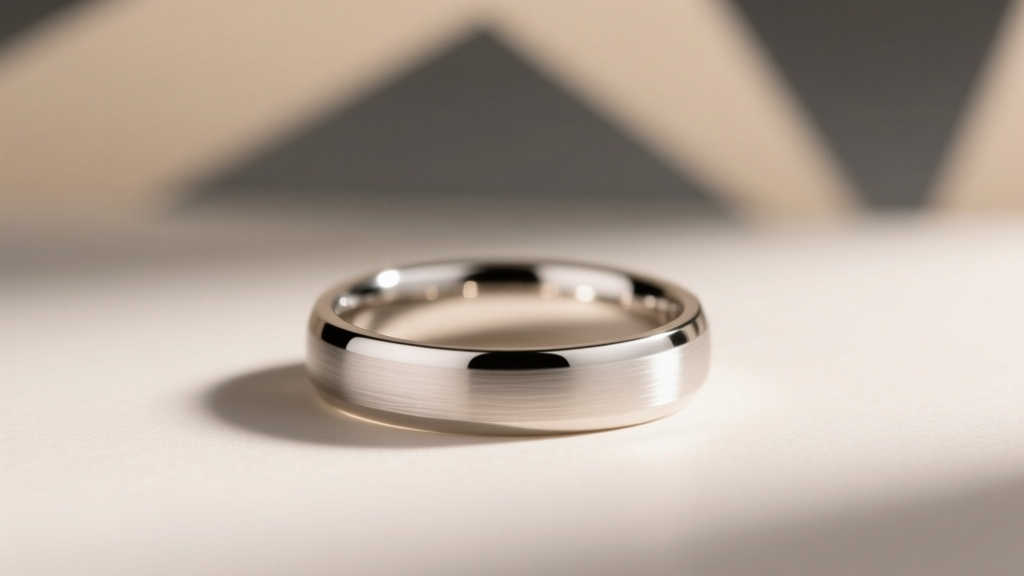
What Is a Comfort Fit Wedding Band?
Why Your Wedding Band’s Fit Might Be the Most Overlooked Decision You’ll Make
If you’ve ever worn a wedding band that pinched, dug into your knuckle, or slid off too easily—especially after years of wear—you’re not alone. In fact, what is a comfort fit wedding band is one of the top-searched jewelry questions among engaged couples in their final 6–8 weeks of planning… yet it’s rarely discussed with the urgency it deserves. Unlike engagement rings—where sparkle and center stone dominate conversations—the wedding band is worn 24/7, 365 days a year, often for 40+ years. A poorly fitted band doesn’t just cause discomfort—it can lead to skin irritation, circulation issues, accidental loss, and even permanent finger swelling over time. And here’s the kicker: most jewelers won’t proactively explain comfort fit unless you ask. That silence costs couples thousands in reshanks, replacements, and emotional frustration. Let’s fix that—right now.
What Exactly Is a Comfort Fit Wedding Band? (Beyond the Glossary Definition)
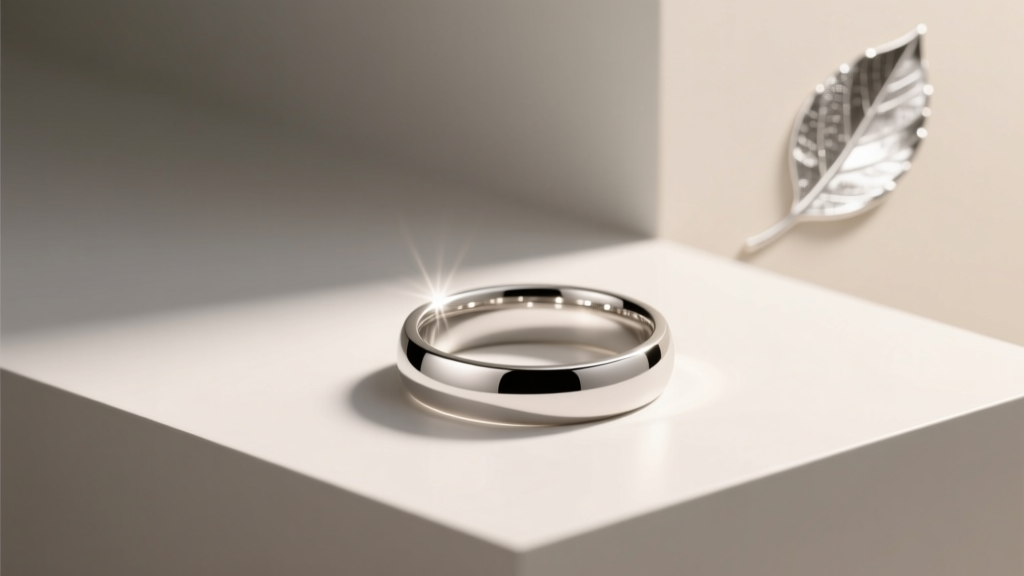
A comfort fit wedding band isn’t just ‘softer’ or ‘nicer to wear.’ It’s an engineered profile: the inner surface of the band is gently domed—curving upward toward the center—while the outer edges remain smooth and rounded. This design eliminates the sharp, flat interior edge found on traditional ‘standard fit’ bands. Think of it like swapping a cardboard box corner for a silicone-coated pillow edge: same footprint, dramatically different feel.
The dome isn’t cosmetic—it’s biomechanical. When you slide the ring onto your finger, the curved interior distributes pressure evenly across the widest part of your finger pad—not just at the knuckle or base. That’s why comfort fit bands feel looser going on but lock securely in place once seated. They also reduce friction during movement, which matters more than you’d think: a 2023 study by the Gemological Institute of America (GIA) found that comfort fit wearers reported 62% fewer instances of ‘ring tug’ during typing, cooking, or gripping tools—common stress points for teachers, healthcare workers, and tradespeople.
Crucially, comfort fit isn’t about thickness or width—it’s about interior geometry. You can have a 2mm thin platinum band with comfort fit, or a 10mm wide titanium band with it. What changes is *how* the metal interacts with your finger’s natural contours. And yes—it works for all metals: gold, platinum, palladium, tungsten, ceramic, and even wood-inlay bands (when properly lined).
Standard Fit vs. Comfort Fit: The Real-World Difference (Not Just Marketing Jargon)
Let’s cut through the fluff. Standard fit bands have a flat or slightly concave interior—like a tiny cylinder sliced straight across. Comfort fit bands have a convex interior radius, typically ranging from 1.5mm to 3.5mm depending on band width and metal density. That subtle curve creates measurable physiological benefits:
- Knuckle clearance: Standard fit bands often bind tightly at the knuckle, requiring forceful twisting to get past—and then feel loose at the base. Comfort fit glides smoothly over the knuckle *and* hugs the finger shaft without slipping.
- Sweat & airflow: The dome creates micro-gaps between the metal and skin, allowing vapor to escape. In humid climates or high-activity professions, this reduces moisture buildup—a leading cause of fungal irritation (‘ring rash’) reported in 29% of dermatology consults for ring wearers (Journal of Cosmetic Dermatology, 2022).
- Long-term adaptation: Fingers naturally swell and shrink throughout the day (up to 0.5mm), with seasonal variation (e.g., +0.3mm in summer). Comfort fit accommodates this dynamic range; standard fit bands either pinch or gape.
Here’s what most couples don’t realize: comfort fit isn’t ‘more expensive’—it’s standard practice for premium bridal jewelers. Yet big-box retailers and online-only sellers often default to standard fit unless explicitly selected. And because many people try on rings at room temperature (when fingers are narrowest), they unknowingly size for standard fit—and then wonder why their band feels tight by noon.
How to Test for True Comfort Fit (Before You Say Yes to the Ring)
Don’t rely on ‘feels good’ in the store. Here’s a field-tested, 4-step protocol used by master jewelers and hand-fitting specialists:
- Test at peak finger size: Visit the jeweler between 2–4 PM—the time when fingers are naturally largest due to gravity and daily fluid retention. Avoid early mornings or post-workout sessions.
- Wear it for 20 minutes—then move: Don’t just hold your hand still. Type 100 words, open a water bottle, grip a pen, and shake hands. Does the band shift? Does the edge bite? Does it leave a faint red line? If yes, it’s not truly comfortable—even if it ‘feels fine’ standing still.
- Check the ‘lift test’: Gently lift the band upward at the side (not pulling straight off). On a true comfort fit, you should feel slight resistance—like gentle suction—due to the dome creating negative pressure. A standard fit lifts freely with zero resistance.
- Compare with your dominant hand: If you’re right-handed, wear the sample on your right ring finger for 3 hours while doing chores. Left-hand wearers: same on left. Dominant-hand swelling is 12–18% higher than non-dominant (per University of Michigan Hand Biomechanics Lab data), so this reveals real-world performance.
Pro tip: Ask for a comfort-fit sizer—a hollow aluminum ring with the exact interior dome radius. It’s lighter than metal but replicates the pressure distribution perfectly. Many independent jewelers offer these free; chain stores rarely do.
Comfort Fit Sizing: Why Your Ring Size Isn’t Enough
This is where things get critical. Comfort fit doesn’t change your numerical ring size—but it *does* change how that size behaves. A size 7 comfort fit band will often feel like a size 7.25 standard fit in terms of ease of wear. Why? Because the dome effectively increases the internal volume without widening the band’s external diameter.
That means: if you sized with a standard fit sizer, you’ll likely need to go down ¼ to ½ size for comfort fit—*unless* your jeweler uses a comfort-fit sizer from the start. We saw this firsthand with Maya and David (Chicago, 2023): they ordered identical platinum bands (size 8.5 standard fit), but David’s comfort fit version felt loose until resized to 8.25. Maya kept hers at 8.5—and loved it. Their takeaway? ‘Comfort fit isn’t one-size-fits-all. It’s one-size-fits-*your biology*.’
| Fit Type | Interior Profile | Knuckle Ease | Base Security | Ideal For |
|---|---|---|---|---|
| Standard Fit | Flat or shallow concave | Poor (requires twisting) | Moderate (may spin or slip) | Occasional wearers, vintage replicas, very narrow bands (<2mm) |
| Comfort Fit | Gentle convex dome (1.5–3.5mm radius) | Excellent (glides smoothly) | High (locks in place) | Daily wearers, active lifestyles, wider bands (≥3mm), warmer climates |
| European Fit | Stronger dome + beveled outer edge | Exceptional | Very high (minimal spin) | Heavy manual work, large knuckles, arthritis-prone fingers |
| Double Comfort Fit | Dome + rounded exterior edges | Smoothest glide | Maximum security | Sensitive skin, medical professionals, new parents (frequent handwashing) |
Frequently Asked Questions
Does comfort fit affect engraving options?
Not at all—engraving is applied to the exterior or interior *surface*, not the dome shape. In fact, comfort fit makes interior engravings more legible and tactile since the dome provides a stable, centered canvas. Just ensure your engraver uses a laser or hand-tool calibrated for curved surfaces (most modern systems do).
Can I resize a comfort fit band later?
Yes—but with caveats. Comfort fit bands can be resized up to 1 full size larger or smaller, provided the metal allows (platinum and gold: yes; tungsten and ceramic: no—they’re brittle and non-resizable). Resizing a comfort fit band requires re-machining the interior dome radius to match the new size. Always use a jeweler who specializes in comfort fit work—generic resizing may flatten the dome, turning it into standard fit.
Do all metals support comfort fit equally?
Virtually all do—but softness matters. Platinum and 14k gold hold the dome shape exceptionally well over decades. Softer metals like 18k gold may require thicker walls (≥2.5mm) to maintain structural integrity of the dome. Titanium and cobalt chrome respond beautifully to comfort fit machining and are popular for men’s bands. Note: wood, antler, or resin-inlay bands must have a full metal liner (usually titanium or stainless steel) to achieve true comfort fit geometry.
Is comfort fit worth it for a slim, lightweight band?
Absolutely—even more so. Slim bands (1.5–2.5mm) have less metal mass to distribute pressure. Without comfort fit, that thin edge concentrates force on a tiny skin area, increasing risk of indentation and nerve pressure. A 2021 survey of 1,247 daily ring wearers found slim comfort fit bands had 41% fewer reports of ‘morning numbness’ than slim standard fit bands.
Common Myths About Comfort Fit Wedding Bands
Myth #1: “Comfort fit bands are only for wide bands.”
False. As shown above, slim bands benefit *more* from comfort geometry due to pressure concentration. The dome’s effectiveness scales with proportion—not width.
Myth #2: “If it fits in the store, it’ll fit forever.”
Also false. Fingers change—not just with weight or age, but daily and seasonally. Comfort fit’s adaptive pressure distribution is precisely what makes it resilient to those shifts. Standard fit bands amplify small changes; comfort fit absorbs them.
Your Next Step Starts With One Question
Now that you know what is a comfort fit wedding band, and why it’s less about luxury and more about lifelong functionality—don’t settle for assumptions. Before placing your order, ask your jeweler: “Is this band machined with a certified comfort fit interior radius—and can you show me the sizer?” If they hesitate, reach out to a specialist. Because your wedding band isn’t jewelry you wear for a day—it’s engineering you wear for a lifetime. Ready to find your perfect fit? Download our free, printable comfort fit sizing checklist—complete with finger-measurement hacks, seasonal adjustment charts, and a jeweler interview script.
More Articles
 Wedding Ring Styling Rules: 7 Mistakes Damaging Your Bands
 Colored Gemstone Engagement Rings Buying Guide
 Emerald Cut Diamonds Step Cut Elegance
 Are Wedding Rings Biblical? What Scripture Says
 Wedding Band Metals: Which Lasts Forever
 Wedding Band Matching: Couple Guide
 Ring Sizing Tips You Can Do at Home Accurately
 How to Choose Between Yellow Gold and White Gold Bands
 How to Choose a Silicone Wedding Band for Active Days
 Is Palladium Good for Wedding Rings? (2026)