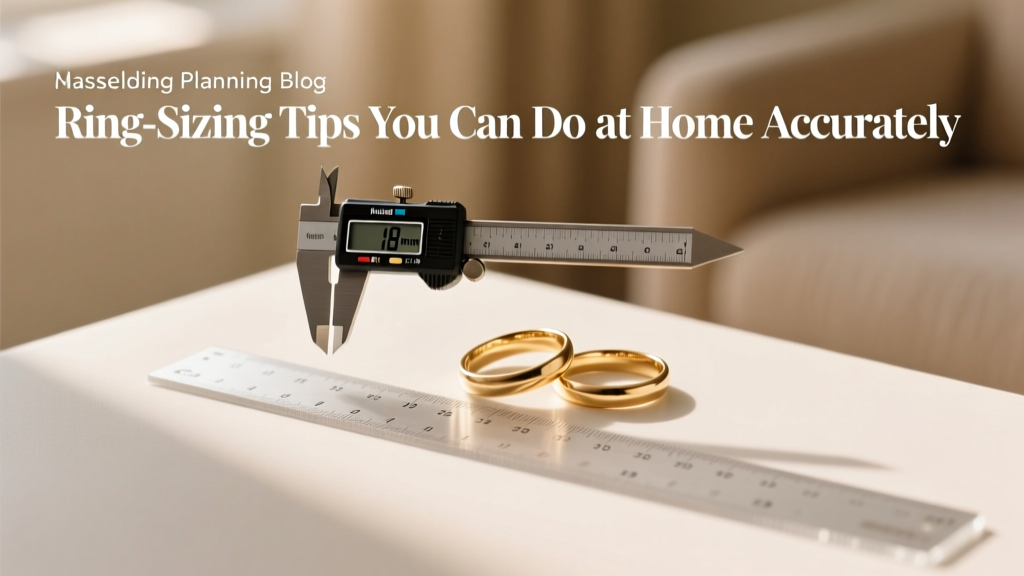
Ring Sizing Tips You Can Do at Home Accurately
Buying an engagement ring or wedding band is one of the most meaningful purchases you’ll make as a couple—and one of the easiest places to get tripped up is ring size. A gorgeous oval diamond solitaire or a classic comfort-fit gold band won’t feel “right” if it spins constantly, pinches at the knuckle, or can’t slide over the finger at all.
Accurate ring sizing at home is absolutely doable, but it requires the right method, the right timing, and a realistic understanding of how ring style, metal choice, and setting design affect fit. The goal isn’t just to find a number—it’s to find a size that’s comfortable in daily life, secure for precious gemstones, and aligned with the band width and craftsmanship you’re choosing.
This guide breaks down reliable, at-home ring sizing tips for couples shopping for engagement rings and wedding bands, plus practical advice on how trends like wider bands, stacked rings, and mixed-metal sets can change what “true to size” really means.
Why Ring Size Matters More Than You Think
Ring sizing affects comfort, security, maintenance, and even the long-term condition of your ring. A ring that’s too loose is more likely to fall off (especially with top-heavy settings like halos or larger center stones). A ring that’s too tight can cause discomfort, restrict circulation, and make removal difficult—especially during travel, workouts, pregnancy, or warmer months.
Many couples also build a set over time: an engagement ring now, a wedding band later, then anniversary bands or stackable rings. Starting with the right size makes future additions smoother and reduces resizing costs, which can be limited depending on metal type or setting style.
Best Time and Conditions to Measure Your Finger
Measure at the Right Time of Day
Fingers change size throughout the day. For the most accurate at-home ring size:
- Measure in the late afternoon or evening when fingers are at a “normal” size.
- Avoid measuring first thing in the morning when fingers may be smaller.
- Avoid measuring after exercise or a hot shower when fingers may swell.
Watch Temperature and Hydration
Cold weather can shrink fingers; heat can swell them. If you’re shopping for a wedding ring you’ll wear year-round, take multiple measurements on different days. Hydration and sodium intake can also affect swelling—another reason to measure more than once.
Consider Your Knuckle
If your knuckle is wider than the base of your finger, you need a size that passes comfortably over the knuckle without spinning once it’s seated. In these cases, comfort-fit bands, sizing beads, or a subtle euro-shank (a squared bottom) can improve stability without going too small.
Accurate At-Home Ring Sizing Methods
Method 1: Use a Ring Sizer Tool (Best Overall)
The most accurate DIY method is a plastic ring sizer belt or a set of ring sizing loops. Many jewelers and online ring retailers offer these for a small cost or free. Look for a tool that includes half sizes if you’re shopping in US sizing.
How to do it:
- Slide the sizer onto your finger and tighten until it’s snug but comfortable.
- Make sure it can pass over the knuckle with a gentle twist—no forcing.
- Wear it for a few minutes; your “true” size shouldn’t pinch or leave a deep mark.
- Repeat 2–3 times over a day to confirm consistency.
Pro tip: If you’re ordering a wider wedding band (6mm+), test the snugness slightly more than you would for a thin band. Wider bands feel tighter due to more skin contact.
Method 2: Measure an Existing Ring with a Printable Sizing Chart (Good if You Have a Ring)
If your partner already wears a ring on the correct finger (and you can borrow it), a printable ring sizing chart can work well—if printed accurately.
How to do it:
- Print the chart at 100% scale (no “fit to page”).
- Verify the scale using the chart’s reference line or coin guide.
- Place the ring over the printed circles until the inside edge matches perfectly.
- Measure the ring’s internal diameter if the chart provides mm-to-size conversion.
Common issue: Printing scale errors are the #1 reason this method fails. If your printer settings are uncertain, use the internal diameter method with a ruler marked in millimeters.
Method 3: String or Paper Strip Measurement (Use with Caution)
This is the most common “DIY” approach and the least accurate because string stretches and paper can compress. If it’s your only option, do it carefully and treat it as a starting point.
How to do it:
- Cut a thin strip of non-stretchy paper (or use dental floss that doesn’t stretch).
- Wrap it around the base of the finger where the ring will sit.
- Mark where the strip overlaps (use a fine pen).
- Measure the length in millimeters and convert using a reputable ring size chart.
Accuracy tip: Repeat three times and average the results. If you’re between sizes, the better choice depends on band width and style (more on that below).
How Ring Style, Setting, and Band Width Affect Fit
Band Width: Thin vs. Wide
Band width changes perceived tightness. A 1.5–2mm pavé band (a popular modern engagement ring trend) often feels looser than a 6–8mm classic men’s wedding band in the same numerical size.
- Thin bands (1.5–2.5mm): Usually comfortable at true size, but may spin with top-heavy settings.
- Medium bands (3–5mm): Often true to size, but borderline sizes may feel snugger.
- Wide bands (6mm+): Frequently require going up a quarter to half size for comfort.
Comfort Fit vs. Standard Fit
Comfort-fit rings have a slightly rounded interior, making them easier to slide over the knuckle and more comfortable for daily wear. This is a timeless classic for wedding bands, especially in platinum, yellow gold, and tungsten alternatives.
Standard-fit rings have a flatter interior and may feel tighter at the same size. If you’re choosing a standard-fit wide band, consider sizing up slightly.
Engagement Ring Settings and Stability
Settings influence how a ring behaves on the finger:
- Solitaire settings (prong): Classic and timeless, but a larger center stone (round, oval, emerald cut) can add top weight and encourage spinning.
- Halo settings: Trend-forward and sparkly; can create a broader top surface that may also rotate if the band is too loose.
- Bezel settings: Sleek, modern, and secure—great for active lifestyles. Bezel-set diamonds and gemstones often feel slightly heavier and stable, but the band still needs proper sizing.
- Pavé or micro-pavé bands: Beautiful craftsmanship, but resizing can be limited because changing size may disturb stone alignment.
Gemstones and Cuts: Why They Matter for Sizing Decisions
The gemstone doesn’t change your finger size, but it affects wearability and resizing options. Diamonds (hardness 10 on the Mohs scale) are durable, while popular alternatives like sapphires (9) are also excellent for daily wear. Softer gems—like opal, pearl, or turquoise—are not typical for daily wedding ring wear and require extra care, especially if resizing or frequent removal is expected.
Trendy elongated cuts like oval, pear, and emerald cut diamonds are popular in engagement rings right now. These shapes can look larger per carat and may sit “taller,” increasing the chance of spinning if the ring is even slightly loose.
Metal Choice and Resizing Reality Check
Metal choice affects not only style and durability, but also how easily you can resize later:
- 14K/18K yellow gold and white gold: Traditional, durable, and generally easy to resize. White gold often has rhodium plating that may need re-plating after resizing.
- Platinum: Premium and naturally white; dense and durable. Resizing is usually possible, but workmanship matters and can cost more.
- Rose gold: Romantic and on-trend, especially for vintage-inspired settings. Resizing is typically possible; color matching can vary slightly after repairs.
- Titanium, tungsten, and many ceramic rings: Often not resizable. If you choose one of these modern materials for a wedding band, accurate sizing is crucial.
Practical Buying Tips for Couples Ordering Rings Online
- Confirm the sizing system: US, UK, and EU sizes differ. Double-check conversion charts before ordering.
- Ask about resize policies: Many jewelers offer one free resize within a certain window, but pavé bands or eternity rings may be excluded.
- Plan for stacking: If your engagement ring and wedding band will sit flush and be worn together, the combined feel can be snugger. Some people prefer a quarter-size up for stacked sets.
- Consider a temporary try-on: If you’re unsure, order inexpensive try-on sizers or a simple sterling silver band in nearby sizes to test comfort.
- Match lifestyle to design: For hands-on work or active lifestyles, a low-profile setting (like bezel or low prong) plus a secure fit prevents snagging and rotation.
Care and Maintenance: Keeping the Fit Comfortable
- Clean regularly: Lotion, soap, and debris can build up inside the band, making a ring feel tighter. Clean with warm water, mild dish soap, and a soft brush (avoid harsh chemicals for delicate gemstones).
- Remove strategically: Take rings off for weight training, heavy lifting, gardening, or using harsh cleaners—especially with prong or pavé settings.
- Schedule inspections: For diamond engagement rings, prongs should be checked at least annually. A loose stone can be mistaken for a sizing problem because the ring starts to shift oddly.
- Store properly: Use a ring box or soft pouch to prevent scratches, especially with gold bands and softer gemstones.
Price Range Considerations and Value Tips
At-home ring sizing can save time and avoid resizing fees, but it’s also part of getting the best value from your purchase.
- Ring sizer tools: Typically $5–$20 and worth it for accuracy—especially if you’re investing in platinum, a diamond engagement ring, or a custom wedding band.
- Resizing costs: Simple gold band resizing may be modest, while platinum can be higher. Rings with pavé diamonds, channel settings, or intricate engraving can cost more or be limited.
- Eternity bands: Full-eternity diamond wedding bands are often not resizable. If you love this timeless-luxe look, prioritize precise sizing or consider a half-eternity style for flexibility.
- Value tip: If you’re choosing a more elaborate setting (halo, pavé, hidden halo, cathedral), it’s smarter to invest in accurate sizing upfront to avoid stressing small stones during resizing.
Common Ring Sizing Mistakes to Avoid
- Measuring once and ordering immediately: Take measurements across multiple times/days.
- Using stretchy string or guessing from a photo: These methods are unreliable and lead to frequent returns.
- Ignoring band width: Wider wedding bands often need a slightly larger size for comfort.
- Forgetting the knuckle factor: A ring must pass over the knuckle without pain.
- Assuming all rings fit the same: Comfort-fit, thick metals, and top-heavy gemstone settings can change the feel.
- Ordering non-resizable metals without certainty: Tungsten and many titanium rings can’t be adjusted—get it right the first time.
FAQ: Ring Sizing at Home
How snug should a wedding band feel?
A wedding band should slide on with mild resistance and come off with a gentle twist. It should feel secure at the base of the finger without pinching or leaving a deep indentation after a few minutes.
What if I’m between ring sizes?
Band width and style decide the best move. For a thin engagement ring (around 2mm), many people choose the smaller size. For a wider wedding band (6mm+), sizing up is often more comfortable. If your knuckle is prominent, sizing up slightly may prevent getting stuck.
Do engagement rings and wedding bands need to be the same size?
Not always. A wider wedding band can feel tighter, and stacked rings can change how snug the set feels. Some couples choose a wedding band a quarter-size larger for comfort—especially with comfort-fit designs or thicker bands.
Can ring size change over time?
Yes. Temperature, lifestyle, pregnancy, weight changes, and even certain medications can affect finger size. If you’re buying far ahead of the wedding date, recheck size closer to purchase—especially for non-resizable metals or eternity bands.
Is a printable ring sizer accurate?
It can be accurate if printed at 100% scale and verified using the chart’s scale guide. If the scale is even slightly off, the size can be wrong—so confirm the print settings and measure twice.
Are there ring styles that are harder to resize later?
Yes. Full-eternity diamond bands, micro-pavé settings, intricate vintage engraving, and certain alternative metals (tungsten, many titanium styles) can be difficult or impossible to resize. If you love these styles, prioritize precise sizing now.
Your Next Step: Size Smart, Then Shop Confidently
For the most accurate at-home ring sizing, a dedicated ring sizer tool beats string, paper strips, and guesswork every time. Once you’ve confirmed your size across a few measurements, consider how band width, comfort-fit interiors, metal choice (gold vs. platinum vs. alternative metals), and setting style (solitaire, halo, bezel, pavé) will affect the real-world feel.
If you’re building a matching engagement ring and wedding band set, plan for stacking and choose a size that stays comfortable through everyday life—not just a single moment. Explore more practical jewelry guides, engagement ring tips, and wedding band advice on weddingsift.com to keep your shopping experience stress-free and beautifully informed.
More Articles
 Diamond Bezel Settings Protection and Modern Appeal
 Jewelry Explained for Party: What to Wear, Why It Works, and How to Avoid Common Mistakes
 Best Venues for Performance: A Metalsmith’s Practical Guide to Stage, Studio, and Public Exhibition Spaces
 Engagement Ring Upgrade Options for Anniversaries
 DIY Wedding Flower Arrangements: Save $2,000 (2026)
 How to Choose an Engagement Ring With a Twisted Band
 Do You Wear Wedding Band On Top Or Bottom (2026)
 Diamond Certification GIA vs IGI vs EGL Explained
 Smart Care and Maintenance: A Precision Guide for Long-Term Jewelry Integrity
 How to Choose a Wedding Band With a Polished Finish