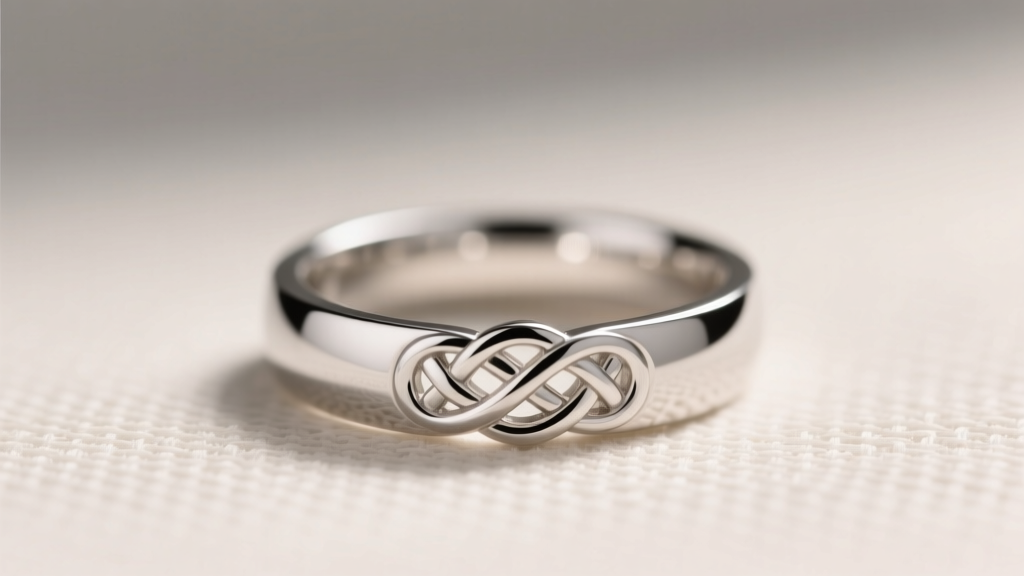
How to Choose a Wedding Band With a Celtic Knot Design
Celtic knot wedding bands have a rare mix of meaning and wearability. The interlaced pattern—often shown with no visible beginning or end—has long been associated with eternity, connection, and the idea that two lives can weave together while still remaining strong on their own. For many couples, that symbolism feels more personal than a plain metal band, yet more timeless than a trend-driven design.
At the same time, choosing a Celtic knot ring isn’t only about the motif. The knotwork itself can be bold or subtle, carved or cast, flat or sculpted. Add in metal choices, finish options, comfort-fit details, and how the band will sit next to an engagement ring, and you have a purchase where a little guidance makes a big difference.
This guide breaks down the materials, styles, craftsmanship, and practical buying tips that help you choose a Celtic knot wedding band you’ll love wearing every day—whether you’re shopping for matching wedding bands, a men’s Celtic wedding band, a women’s Celtic wedding band, or a coordinated bridal set.
What Makes a Celtic Knot Wedding Band Different?
A Celtic knot design is defined by continuous, interlaced lines—often braided or woven—engraved, carved, or formed into the ring’s surface. Common motifs include:
- Trinity knot (Triquetra): Three interlocking loops associated with unity and enduring bonds.
- Endless knot / eternity knot: A continuous pattern with no start or end, symbolizing everlasting love.
- Braid or weave: A linear, woven look that reads modern and classic at the same time.
- Claddagh-inspired elements: Sometimes blended with knotwork; traditionally represents love, loyalty, and friendship.
Unlike smooth bands, knotwork introduces texture, shadows, and edges. That means you’ll want to think about comfort, durability, and long-term maintenance a bit more carefully—especially if you prefer crisp, high-contrast details.
Choose the Right Metal for Your Lifestyle and Style
The metal you select affects the ring’s color, weight, durability, and how well the knot pattern stays crisp over time. For Celtic knot wedding rings, detail retention and serviceability matter.
Platinum: Best for longevity and security
Platinum (typically 950 platinum) is naturally white, dense, and highly durable. It tends to develop a soft patina rather than losing material. If you want a Celtic knot band with fine engraving that holds up for decades—and you like a substantial feel—platinum is a top-tier choice. It’s also a great option for secure gemstone settings because prongs are less likely to wear thin quickly.
White, yellow, and rose gold: Classic, customizable, and easy to service
14K gold is often the sweet spot for daily wear: it balances durability and rich color while keeping the cost more approachable than platinum. 18K gold offers a deeper, more luxurious tone but is softer, so heavily raised knotwork may show wear sooner. If you love intricate engraving, 14K is usually the more practical pick.
- White gold: Bright, modern look; typically rhodium-plated for extra whiteness. Expect occasional replating to keep it bright.
- Yellow gold: Timeless and warm; scratches blend into a softer, classic patina.
- Rose gold: Romantic and on-trend; its copper content improves durability, but can be more reactive for very sensitive skin.
Palladium: A lighter alternative to platinum
Palladium is naturally white and lighter than platinum. It can be a strong choice if you want a white metal without rhodium plating, though availability and sizing/repair services can vary by jeweler.
Titanium and tungsten: Modern and budget-friendly, with trade-offs
Titanium and tungsten carbide bands are popular for men’s wedding bands and minimalist couples’ sets. They resist scratching (especially tungsten), but they’re harder to resize and refinish. If your knotwork is deeply carved, you may not need frequent polishing—but if you ever want adjustments or restoration, precious metals are typically easier to service.
Pick a Celtic Knot Style That Fits Your Engagement Ring
Many couples shop for wedding bands as part of an engagement ring and wedding band set. The most common challenge is how the knotwork band sits against the engagement ring’s center setting.
Band profile: Flat, dome, or beveled
- Flat profile: Modern and clean; shows knot engraving clearly and pairs well with contemporary engagement rings.
- Comfort-fit dome: Rounded interior for easier daily wear; a smart choice for wider Celtic bands (6mm+).
- Beveled edges: Adds a tailored look and helps protect engraved edges from chipping or softening.
Width matters: 3mm to 8mm (and beyond)
For many women’s Celtic knot wedding bands, 3mm–5mm is a popular range—detailed enough for knotwork without overpowering a solitaire engagement ring. Men’s Celtic wedding bands often look balanced at 6mm–8mm, especially in matte finishes or with deeper carving.
Matching vs. complementary sets
Matching his-and-hers bands are a timeless classic, but a current trend is coordinated sets: the same knot motif interpreted differently (for example, a 4mm engraved braid band for one partner and a 7mm carved knot band with a brushed finish for the other). You get a shared story without identical rings.
Consider a contour or notched band for a flush fit
If your engagement ring has a low-set center stone or an elaborate basket, a straight Celtic band may leave a gap. A contour (curved) wedding band or a notched band can hug the engagement ring for a cleaner look—especially popular with halo settings and cathedral solitaires.
Gemstones in Celtic Knot Wedding Bands: Subtle Sparkle or Statement Detail
Celtic knot bands can be all-metal, or they can incorporate gemstones for added meaning and light. If you want sparkle, focus on stones and settings that won’t interrupt the knot’s flow.
Popular gemstone choices
- Diamonds: The classic for wedding bands; look for round brilliant melee for maximum sparkle in small sizes.
- Sapphires: A favorite for Celtic designs—especially deep blue. Also available in white, green, peach, and more for personal color stories.
- Emeralds and rubies: Stunning but typically softer and more inclusion-prone; best in protected settings and for careful wearers.
- Moissanite: Bright, durable, and budget-friendly; great for accent stones with strong fire.
Best settings for daily wear
- Flush (gypsy) setting: Stone sits level with the band—excellent for active lifestyles and reduces snagging.
- Bezel setting: Metal rim protects the stone; works beautifully when placed at knot intersections.
- Channel setting: A clean line of stones; pairs well with braid motifs but needs solid craftsmanship to avoid looseness over time.
For accent diamonds, ask about total carat weight, color clarity range (often G-H / SI is a smart value), and whether stones are natural or lab-grown. Lab-grown diamonds are a current trend that can stretch your budget while keeping the traditional diamond look.
Craftsmanship and Quality Checks for Knotwork
Celtic designs rely on crisp geometry. Small differences in craftsmanship are easy to see once the ring is on your hand.
Engraved vs. carved vs. cast knotwork
- Engraved: Lines cut into the surface. Looks elegant and refined; may soften slightly with years of polishing.
- Carved / hand-finished: Often deeper and more dimensional; premium look and better long-term definition.
- Cast relief: Pattern raised from the surface. Beautiful when done well, but raised edges can catch and show wear faster if not designed thoughtfully.
Look for these details before buying
- Clean intersections: Knot crossings should be sharp, symmetrical, and consistent all the way around.
- Comfort-fit interior: Especially important for wider bands and textured designs.
- Even finishes: Brushed, satin, or high polish should be uniform with no “dead” patches.
- Secure stone setting: No rattling, no snagging, and no visible gaps around bezels or channels.
Buying Tips: Getting the Right Size, Fit, and Finish
- Size for width: Wider bands often feel tighter. Many people size up by a quarter to half size for 6mm+ rings.
- Choose a finish that matches your maintenance style: High polish shows scratches quickly but is easy to repolish; brushed finishes hide wear but may need rebrushing to stay crisp.
- Ask about resizing policies: Intricate knot patterns can complicate resizing, and some alternative metals can’t be resized easily.
- Check how it pairs with your engagement ring: Bring the engagement ring (or request a matching-fit recommendation) so the band doesn’t rub prongs or leave an unwanted gap.
Care and Maintenance: Keeping Knot Details Sharp
A Celtic knot wedding band can last a lifetime, but textured designs benefit from routine care.
- Clean at home weekly: Use warm water, mild dish soap, and a soft toothbrush to lift lotion and soap from engraving and around stones.
- Avoid harsh chemicals: Chlorine and abrasive cleaners can damage finishes and weaken some alloys over time.
- Schedule professional checkups: For gemstone bands, have settings inspected every 6–12 months to prevent lost stones.
- Plan for refinishing: Polishing can soften engraving if done aggressively. Ask for light polishing and targeted detailing to preserve the knotwork.
Price Range and Value Tips
Celtic knot wedding bands span a wide range depending on metal, width, and whether gemstones are included. Typical price expectations:
- Titanium or tungsten: often $100–$400 (great value, limited resizing/refinishing)
- 14K gold Celtic knot band: often $500–$1,800 depending on width and detail
- 18K gold: often $800–$2,500+
- Platinum: often $1,200–$3,500+
- Gemstone accents: add cost depending on total carat weight and setting style; lab-grown diamonds can reduce the price while keeping a classic look
Value tips that actually help:
- Prioritize craftsmanship over extra width: A well-made 4–5mm band with crisp knotwork often looks more premium than a wider band with shallow detail.
- Choose 14K for daily wear detail: If you want engraving to stay defined, 14K is frequently the best balance.
- Consider a two-tone design strategically: Two-tone Celtic knot rings (for example, a yellow gold knot on a white gold base) are trendy and can highlight the pattern—just confirm the construction is durable, not simply plated.
Common Mistakes to Avoid
- Picking a ring that can’t be resized: Especially risky if you’re buying early or as a surprise. Confirm resizing options before purchasing.
- Ignoring comfort: Deep carving and sharp edges can feel rough between fingers. Choose comfort-fit interiors and softened edges when possible.
- Over-polishing engraved bands: Frequent aggressive polishing can blur knot details. Opt for light refinishing and careful cleaning instead.
- Choosing stones with exposed edges: Prong-heavy designs can snag and chip softer gems. Flush or bezel settings are usually safer for everyday wear.
- Not testing the engagement ring pairing: A beautiful band that grinds against prongs or won’t sit well can become frustrating fast.
FAQ: Celtic Knot Wedding Bands
Are Celtic knot wedding bands considered timeless or trendy?
They’re largely timeless. Knotwork has centuries of history, and modern versions simply adjust the profile (flat, beveled, comfort-fit) and finish (matte, brushed, mixed metal) to match today’s tastes.
What’s the best metal for keeping the knot design crisp?
Platinum and 14K gold are excellent for long-term wear. Platinum is extremely durable, while 14K gold tends to hold detail better than softer 18K in heavily engraved designs.
Do Celtic knot rings work with solitaire engagement rings?
Yes. A 3–5mm engraved knot band pairs beautifully with a solitaire. If the solitaire is low-set, consider a contoured or notched band to reduce gaps.
Can I add diamonds to a Celtic knot wedding band without losing the design?
Absolutely. Small round brilliant diamonds in flush or bezel settings can be placed at knot intersections or spaced evenly around the band, preserving the pattern while adding sparkle.
Are tungsten Celtic wedding bands a good choice?
They can be, especially if you want scratch resistance and a lower price. The trade-off is limited resizing and refinishing, so make sure the size is correct and understand the long-term service options.
How do I clean a Celtic knot band with detailed engraving?
Use warm water, mild soap, and a soft toothbrush to reach grooves. Rinse thoroughly and dry with a lint-free cloth. For gemstone bands, periodic professional cleaning and inspection helps keep stones secure.
Next Steps: Choose Meaningful Details You’ll Enjoy Every Day
A Celtic knot wedding band is at its best when the symbolism matches the way you actually live—comfortable enough for daily wear, durable enough for decades, and crafted well enough that the knotwork stays sharp and beautiful. Start by choosing the right metal for your lifestyle, then narrow down the knot style and band width that complements your engagement ring and feels right on your hand.
If you’re still comparing metals, gemstone accents, or matching wedding band sets, explore more jewelry guides on weddingsift.com to help you choose with confidence.
More Articles
 Anniversary Gifts by Year: Traditional and Modern Guide
 Wedding Rings Gold or Silver? The Truth (2026)
 Wedding Band Matching: 7-Step Visual Guide (2026)
 Meteorite Wedding Bands Out-of-This-World Material
 Wedding Ring Care: 7 Non-Negotiable Habits (2026)
 Diamond Fluorescence What You Need to Know
 7 Things Nobody Tells You Before Buying a Plain Wedding Band
 Wedding Band Metals: Which Lasts Forever
 Rhodolite Garnet Purple-Red Gemstone
 Eternity Ring Styling: 5 Steps to Stack & Protect (2026)