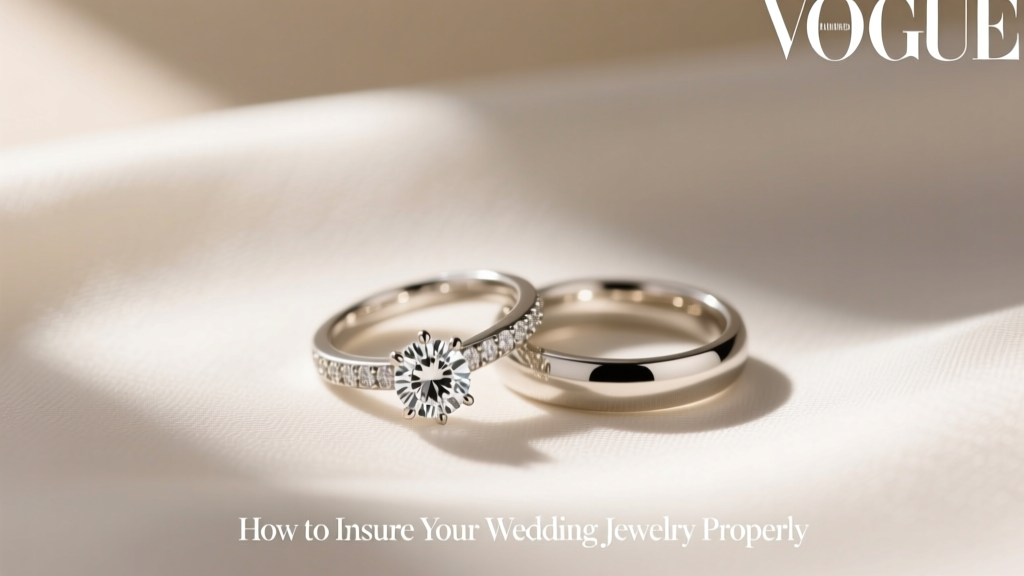
How to Insure Your Wedding Jewelry Properly
Your engagement ring and wedding bands aren’t just accessories. They’re the pieces you wear every day, the ones that appear in every close-up photo, and often the most valuable jewelry you’ll ever own. That combination—sentimental and financial value—is exactly why wedding jewelry insurance matters.
Even the most careful couples run into real-world mishaps: a prong loosens, a center stone falls out, a ring slips off at the gym, or a band gets stolen during travel. Standard warranties and routine maintenance help, but they don’t replace a lost diamond, repair a crushed platinum setting after an accident, or cover theft. Proper insurance bridges that gap.
This guide breaks down how to insure wedding jewelry the right way—what coverage you actually need, how to document quality details like cut and setting style, what to expect in costs, and the most common mistakes couples make when insuring engagement rings and wedding bands.
Why Wedding Jewelry Insurance Is Worth It
Jewelry insurance is designed to protect you from the big “what if” moments: loss, theft, mysterious disappearance, and damage. For many couples, replacing a ring out-of-pocket would be financially painful—even if the piece could be remade.
What insurance can cover (and what it usually doesn’t)
- Theft: Stolen rings from luggage, cars, lockers, or burglary (coverage depends on policy terms).
- Loss: A ring slipping off at the beach or during travel.
- Mysterious disappearance: You don’t know exactly when/where it went missing (not all policies include this, but good jewelry policies often do).
- Damage: Bent prongs, cracked stones, chipped pavé, or broken clasps on bridal jewelry pieces.
Most policies won’t cover normal wear and tear, pre-existing damage, or intentional damage. They also may require that you maintain your setting (such as periodic prong checks) to keep coverage valid.
Step 1: Understand the True Value of Your Ring (Materials, Craftsmanship, and Quality)
Insurance begins with accurate valuation. That means understanding what your ring is made of, how it’s built, and how gemstone quality affects replacement cost.
Diamonds and gemstones: what impacts replacement cost
If your engagement ring is diamond-centered (still the timeless classic), your replacement value depends on the 4Cs and more:
- Cut: Often the biggest driver of sparkle and a major value factor. For round brilliant diamonds, an Excellent/Ideal cut typically commands a premium. Popular trend cuts like oval, emerald, pear, and cushion can vary widely based on make and face-up spread.
- Carat: Larger stones increase value quickly, especially around “milestone” weights (1.00, 1.50, 2.00 carats).
- Color and clarity: These shape pricing, but many couples choose “sweet spot” grades for value (for example, near-colorless ranges and eye-clean clarity).
- Certification: A lab report from GIA or AGS (and in some cases IGI, depending on the retailer and stone type) helps insurers match quality.
For gemstone engagement rings—sapphires (a major trend), emeralds, or rubies—replacement value is influenced by origin, treatment, saturation, and durability. Heat-treated sapphires are common and acceptable, while fracture-filled emeralds may require more careful policy wording because they’re more prone to damage.
Metals: platinum vs. gold, and why it matters for insurance
Metal choice affects both durability and replacement cost:
- Platinum: Heavier, naturally white, and prized for secure stone settings. Platinum tends to cost more and may be more expensive to repair due to labor.
- 18K gold: Richer color and higher gold content; often pricier than 14K.
- 14K gold: A favorite for everyday wear thanks to durability and value—especially for thin bands and pavé styles.
- White gold: Usually rhodium plated. Re-plating is maintenance (not typically an insurance claim), but the replacement cost should reflect the correct metal and finish.
Settings and craftsmanship details insurers need
Setting style isn’t just aesthetic—it’s part of what you’re insuring. Provide clear descriptions such as:
- Solitaire: Classic, often 4- or 6-prong; replacement cost depends on head type and metal.
- Halo: Higher labor and multiple small stones; more risk of small accent loss over time.
- Pavé or micro-pavé: Trend-forward sparkle, but requires skilled craftsmanship and routine checks.
- Bezel setting: A sleek modern classic that protects the stone well; can cost more in labor but may reduce snagging and damage risk.
- Cathedral, hidden halo, and tapered shanks: Popular current engagement ring trends that should be documented for accurate replacement.
Step 2: Get the Right Documentation (Appraisal, Receipts, Photos)
Most insurance claims go smoothly when documentation is thorough. Aim to assemble a “jewelry file” you can access quickly.
What to collect
- Purchase receipt showing itemized details (stone specs, metal type, brand/designer if applicable).
- Grading report (GIA/AGS/IGI) with matching measurements and report number.
- Professional appraisal from a qualified independent appraiser or reputable jeweler.
- High-quality photos from multiple angles (top view, side profile, hallmarks, and any distinctive details like a hidden halo).
How often to update an appraisal
As a practical rule, revisit your appraisal every 2–3 years, or sooner if diamond prices shift significantly or you upgrade your center stone. Replacement costs can change, and you don’t want to be underinsured.
Step 3: Choose the Best Type of Coverage for Engagement Rings and Wedding Bands
You’ll typically choose between adding jewelry to a homeowners/renters policy or buying a specialized jewelry insurance policy.
Option A: Homeowners or renters policy “scheduled” jewelry
Scheduling adds your ring as a listed item with a specific value. It can be convenient, but watch for:
- Deductibles that may apply.
- Coverage limits and exclusions (mysterious disappearance may be limited).
- Claim impact on your homeowners/renters policy.
Option B: Standalone jewelry insurance
Specialized coverage is often more ring-friendly, particularly for loss and damage. Common features include:
- Worldwide coverage (useful for honeymoons and destination weddings).
- Repair and replacement with jewelers experienced in engagement ring settings.
- Optional deductibles to manage premium cost.
Replacement terms: “repair/replace” vs. cash payout
Policies differ in how they settle claims. Some replace through a network jeweler; others allow you to choose your jeweler or provide a cash settlement. If your ring is custom, contains a distinctive designer setting, or uses a specialty cut (like an elongated cushion or precision-cut oval), prioritize a policy that supports comparable replacement—not the “closest” substitute.
What Wedding Jewelry Insurance Typically Costs (and How to Get Better Value)
Many couples are surprised that ring insurance is usually a small percentage of the ring’s value per year. Pricing depends on where you live, your coverage type, deductible, and the ring’s value and style (more complex settings can increase repair costs).
Practical value tips
- Choose a deductible you’d actually pay: A modest deductible can lower premiums without leaving you stranded.
- Insure for realistic replacement: Over-insuring raises premiums; under-insuring risks a shortfall during a claim.
- Bundle thoughtfully: Scheduling on homeowners can look cheaper, but weigh claim consequences and coverage limitations.
- Keep documentation current: Updated appraisals reduce claim disputes and help you get the right stone quality and setting style back.
Maintenance and Care: Keep Your Ring Claim-Ready
Insurance works best paired with good upkeep. Many losses happen after a prong loosens or a ring is worn during high-impact activities.
Care habits that protect both your ring and your coverage
- Do regular prong checks: Especially for pavé, halos, and shared-prong wedding bands. Have a jeweler inspect every 6–12 months.
- Remove your ring for risky activities: Weightlifting, gardening, swimming, and cleaning with harsh chemicals.
- Clean gently at home: Warm water, mild dish soap, and a soft brush for diamonds and sapphires. Avoid harsh cleaners for emeralds and pearls.
- Store safely: Use a ring box or fabric-lined jewelry case; keep pieces separated to prevent scratching.
Common Mistakes Couples Make When Insuring Wedding Rings
- Assuming a warranty equals insurance: Warranties may cover manufacturing defects or maintenance, not theft or loss.
- Not scheduling the ring: Standard homeowners/renters coverage often has low jewelry limits and narrow theft coverage.
- Using an outdated or inflated appraisal: Inflated appraisals can raise premiums; outdated appraisals can leave you underinsured.
- Skipping photos and paperwork: If you can’t prove what you owned (stone shape, metal, setting details), you may not get a true like-for-like replacement.
- Ignoring setting-specific risks: Micro-pavé and halos are gorgeous, trend-friendly styles, but they need maintenance to avoid small-stone loss.
- Not clarifying replacement standards: If you paid for a GIA Excellent-cut round diamond or a precision-cut oval, make sure the policy supports comparable quality.
Balancing Trends and Timeless Classics When You Insure
Trends influence replacement. Right now, elongated center stones (oval, emerald, pear), hidden halos, and delicate pavé bands remain popular. Timeless classics—round solitaires, three-stone rings, and plain gold or platinum wedding bands—stay in demand year after year.
For trend-driven designs, document every detail: band width in millimeters, metal karat, the exact center stone dimensions, and accent stone quality. For classic styles, don’t assume “simple” means “easy”—a well-made solitaire with hand-finished prongs or a comfort-fit platinum band still has a replacement cost worth insuring accurately.
FAQ: Insuring Engagement Rings and Wedding Bands
Do I need an appraisal to insure my engagement ring?
Often, yes—especially above a certain value. Some insurers accept a detailed receipt and grading report for newer purchases. An appraisal is still helpful because it summarizes specs (metal, setting style, side stones) in one document.
Should I insure my wedding band too?
If it has diamonds, unique craftsmanship, or meaningful value, yes. Even plain metal bands can be expensive in platinum or 18K gold, and loss happens more often than people expect during travel or workouts.
Does ring insurance cover chipped diamonds or loose stones?
Many policies cover accidental damage, which can include chipped stones or a damaged setting. Coverage varies, and some policies may exclude wear-related issues. Keep inspection records for prongs and pavé work.
Will I get the exact same ring back if I file a claim?
A good policy aims for “like kind and quality,” but the details matter. If your ring is custom, has a designer name, or features a specific diamond cut grade or fancy shape proportions, confirm how replacements are sourced and whether you can choose the jeweler.
Is jewelry insured worldwide?
Many standalone jewelry policies include worldwide coverage, which is ideal for honeymoons and destination weddings. Homeowners/renters scheduling may also cover travel, but check for limitations and exclusions.
How fast should I insure the ring after proposing?
As soon as possible—ideally immediately after purchase or proposal. The first few weeks are when rings are most frequently removed, resized, shown to friends, or worn in unfamiliar situations.
Next Steps: Insure Smart, Wear Confidently
The best time to think about jewelry insurance is before something goes wrong. Get your documents in order, choose coverage that matches how you live (daily wear, travel, gym habits), and make sure the policy can replace your engagement ring or wedding band with comparable quality—down to the diamond cut, gemstone treatment, metal type, and setting style.
If you’re still shopping, save your future self time by keeping all paperwork from day one: receipts, grading reports, and detailed photos. Then explore more jewelry guides on weddingsift.com for help choosing engagement rings, wedding bands, and timeless pieces you’ll love for decades.
More Articles
 Amber Engagement Rings Warm Organic Fossilized Beauty
 How to Choose a Wedding Band With a Mixed Metal Design
 Colored Gemstone Engagement Rings Buying Guide
 Wedding Shower Gifts: What to Bring & How Much to Spend
 Jade Engagement Rings Eastern Tradition and Meaning
 26th Wedding Anniversary: Traditional and Modern Gift Guide
 Can I Shower With My Wedding Ring? (2026)
 How to Match Ring with Wedding Attire
 How Many Songs for a Wedding Ceremony? (2026)
 How to Choose an Engagement Ring With a Bezel Setting