Wedding Planning How to Handle the Unity Candle Ceremony
If you’re drawn to the unity candle ceremony, it’s probably for one simple reason: it feels like a moment. A pause in the wedding ceremony where the room gets quiet, your favorite people lean in, and you get to do something symbolic that says, “We’re building a life together.”
It can also feel a little stressful to plan because it’s one of the few “moving parts” inside the ceremony itself—timing, music cues, candles, lighters, wind, photographers, and the officiant’s script all have to line up. The good news: with a bit of planning, the unity candle becomes one of those smooth, memorable highlights that feels effortless.
This guide walks you through exactly how to handle the unity candle ceremony—from choosing the right setup to writing the script, staying on budget, and avoiding the most common mishaps wedding planners see.
What Is a Unity Candle Ceremony (and Why Couples Choose It)?
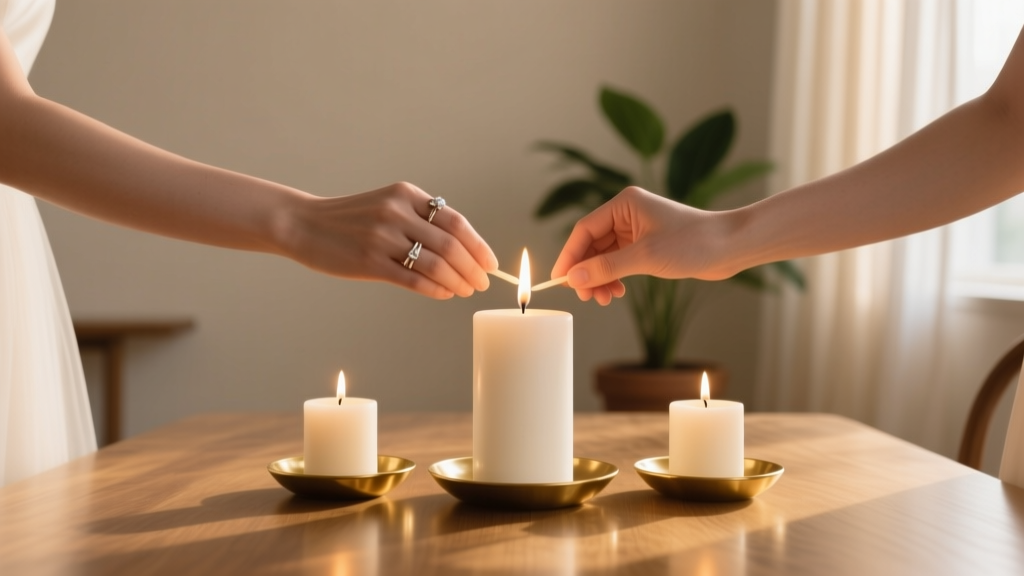
The unity candle ceremony is a traditional wedding ritual where two individuals light a single candle together, symbolizing the joining of their lives and families. Typically, two taper candles represent each partner (or their families), and the couple uses those flames to light one larger “unity” candle.
Common meanings couples attach to the unity candle
- Two lives, one shared future (most classic interpretation)
- Blending families (especially meaningful with stepchildren or close extended family)
- Honoring loved ones (incorporating a memorial candle nearby)
- Creating a calm “breathing moment” during an emotional ceremony
Is the unity candle religious?
It can be, but it doesn’t have to be. Many couples include it in a secular wedding ceremony script. If you’re having a religious ceremony, ask your officiant about any preferred wording or placement in the service.
Deciding If the Unity Candle Fits Your Ceremony
Before you commit, picture your ceremony space and flow. A unity candle works best when it feels like a natural part of your wedding ceremony timeline—not an awkward pause.
Ask yourselves these quick questions
- Are we indoors or outdoors (wind is a big factor)?
- Do we want our parents involved, or just the two of us?
- Do we have a good spot for a small table that’s visible to guests?
- Do we prefer a different unity ritual (sand ceremony, handfasting, wine box, tree planting)?
Planner tip: If you’re set on outdoors but worried about wind, consider an alternative unity ceremony or use hurricane glass sleeves and wind-resistant candles (more on that below).
Unity Candle Ceremony Options (Choose the Version That Fits Your Story)
1) Classic couple-only unity candle
Each of you lights a taper candle, then you light the unity candle together.
Best for: couples who want a simple, romantic moment without involving others.
2) Parents light the tapers (family-focused)
Your parents (or important family members) light the two taper candles, then you light the unity candle together.
Best for: couples who want to symbolically honor both families.
Real-world scenario: If you’re blending two families with strong traditions, this version feels inclusive and often eases “whose customs are we following?” tension.
3) Blended family unity candle (with children)
Kids can light smaller tapers or a family candle, then everyone lights the unity candle together (or lights multiple candles around one central candle).
Best for: second marriages or families with children who want to be visibly included.
Real-world scenario: A couple with two kids each may choose five candles total—one for each person—lighting a central candle together to symbolize a new family unit.
4) Memorial + unity candle combination
A separate memorial candle sits nearby with a note like “In loving memory.” It’s lit before guests arrive or during the ceremony by a designated person.
Best for: couples honoring a parent or loved one who has passed away.
What You Need: Unity Candle Ceremony Checklist
Here’s the practical list that saves headaches on the wedding day.
Supplies checklist
- Unity candle set: 1 pillar candle (unity) + 2 taper candles (or your preferred arrangement)
- Candle holders: stable, non-tippy holders for tapers
- Unity candle holder/plate: wide, heat-safe base to catch wax
- Lighting tool: long-reach candle lighter (recommended over matches)
- Wind protection: hurricane glass sleeves or lanterns (especially outdoors)
- Drip protection: wax drip guards for tapers or choose dripless tapers
- Small emergency kit: extra lighter, matchbook, tissues, microfiber cloth
- Unity candle table: small, sturdy table or pedestal with a neutral linen
Setup checklist
- Place the unity candle table where guests can see it (usually near the officiant, slightly off to one side).
- Avoid placing it directly under hanging florals, arches with fabric, or low branches.
- Assign one person (planner, coordinator, or trusted friend) to check:
- candles are straight
- lighter works
- table isn’t wobbling
- no décor is too close to the flame
Step-by-Step: How the Unity Candle Ceremony Typically Flows
You can adapt this to your wedding style, but this is the most common, smooth layout that photographers and officiants are familiar with.
- Officiant introduces the ritual (10–30 seconds).
Example: “These two flames represent your individual lives and families…” - Music begins softly (optional, 30–60 seconds).
Instrumental works best—lyrics can compete with the officiant’s voice. - Lighting the taper candles (10–30 seconds).
Either the couple or parents light the tapers. - Lighting the unity candle together (10–20 seconds).
Pause briefly after it’s lit—this is your photo moment. - Return to your places and the officiant continues the ceremony.
Timeline advice: Plan for 2–4 minutes total, including transitions. In a 20–30 minute ceremony, that’s a comfortable length—meaningful, not drawn out.
Where It Fits Best in the Wedding Ceremony Timeline
Most couples place the unity candle ceremony in one of these spots:
- After the opening welcome and readings (sets a tone early on)
- After vows (beautiful symbolism immediately after heartfelt words)
- Before the ring exchange (less common, but works if the script supports it)
Planner pro tip: If you’re doing personal vows that are emotional, place the unity candle right after vows as a natural “reset” moment—guests are already engaged, and you get a quiet beat before rings.
Budget Considerations: What Unity Candle Ceremonies Cost
A unity candle ceremony can be budget-friendly, but costs vary based on materials and styling.
Typical cost ranges
- Basic unity candle set: $20–$60
- Personalized unity candle: $40–$150 (names, date, custom design)
- Hurricane glass/lanterns: $15–$60 each (purchase or rental)
- Coordinator setup: often included with day-of coordination; otherwise ask your planner
Smart ways to save without it looking “cheap”
- Skip personalization and display the unity candle later with a printed sign instead.
- Use simple glass cylinder vases as wind guards (often cheaper than specialty lanterns).
- Repurpose ceremony candles for reception décor (sweetheart table or gift table).
Practical Tips for a Smooth Unity Candle Moment
Outdoor wedding? Plan for wind first
If you’re having an outdoor ceremony, assume you’ll have at least a light breeze—even if the weather app says otherwise.
- Use hurricane glass or lantern-style covers.
- Choose wind-resistant, slow-burning candles.
- Have a backup plan: if the flame won’t stay lit, your officiant can say a line acknowledging it and move forward gracefully.
Think about height and visibility
- If the table is too low, guests won’t see the action (and photos can look awkward).
- A waist-high pedestal or standard table works best.
Photography and video: make it easy for your vendors
- Tell your photographer exactly when the unity candle will happen (during your final timeline review).
- Pause for 3–5 seconds after lighting the unity candle—this is where the best shot happens.
- Keep the table area uncluttered so the candle stands out.
Officiant Script Ideas (Short and Sweet)
You don’t need a long reading for this ritual to feel meaningful. Here are a few options you can adapt.
Classic wording
“These two candles represent your individual lives, your individual families, and the paths that brought you here today. As you light the center candle together, you symbolize the joining of your lives into one shared journey.”
Blended family wording
“Today we honor not only this marriage, but this family. Each flame represents a unique person and story. Together, you light a new candle to symbolize the love, commitment, and unity you choose from this day forward.”
Non-religious, modern wording
“Lighting this candle is a small act with a big meaning: two people choosing the same team, the same home, and the same future—again and again.”
Planner tip: Print the final script for your officiant and keep a copy in your ceremony binder. Tiny wording changes can affect timing and cues.
Common Unity Candle Mistakes (and How to Avoid Them)
- Forgetting a lighter: Put a long lighter in your ceremony kit and another in your coordinator’s bag.
- Wind disaster outdoors: Always use wind protection or consider an alternative unity ceremony.
- Table is wobbly or too small: Test the setup during rehearsal or earlier on wedding day.
- Dripping wax on outfits: Use dripless tapers and drip guards; keep tapers upright.
- Unity candle placed where nobody can see: Position it closer to center but safely out of the main walkway.
- Awkward silence: Cue soft music or have the officiant speak while you move to the table.
- Overly long explanation: Keep the unity candle reading under 45–60 seconds unless it’s deeply personal.
Wedding Planner Pro Tips to Make It Feel Effortless
- Do a quick “lighting test” before guests arrive. Some candles are surprisingly hard to light.
- Assign roles clearly: who lights what, when, and where they stand afterward.
- Consider flame-free alternatives if your venue has restrictions (LED candles can still be meaningful with the right wording).
- Keep tissues near the unity candle table—not front and center, just accessible.
- Rehearse the walk: practice stepping to the table and back so you’re not guessing in the moment.
Real-World Scenarios Couples Often Face
Scenario: One set of parents is divorced (and tensions are real)
Solution: Skip the “parents light the tapers” version, or involve one representative from each side in a neutral way (like walking the lighter forward). You can also have the couple light both tapers themselves to keep the focus on your marriage—not family dynamics.
Scenario: Your ceremony is outdoors at sunset
Solution: Sunset ceremonies are beautiful for candlelight, but wind and low light can be tricky. Use hurricane glass, place a small discreet light near the table for visibility, and tell your photographer you want a clean shot of the flame.
Scenario: You want unity candle symbolism, but your venue bans open flames
Solution: Use LED candles and let the officiant frame it as a symbol rather than a literal flame. Another option is a unity sand ceremony, which is often venue-friendly.
FAQ: Unity Candle Ceremony Planning
How long should the unity candle ceremony take?
Most unity candle ceremonies take 2–4 minutes, including walking to the table, lighting, a short reading, and returning to your places.
Do we blow out the taper candles after lighting the unity candle?
Traditionally, some couples leave the tapers lit to represent keeping individuality within the marriage; others blow them out to symbolize two becoming one. Choose what feels right, and tell your officiant so it’s reflected in the script.
What if the unity candle won’t light?
It happens more than you’d think—usually due to wind or a faulty lighter. Have a backup lighter, use wind guards, and give your officiant permission to gracefully move on if it’s taking too long. Guests remember the meaning, not the mechanics.
Can we do a unity candle ceremony in a non-religious wedding?
Yes. The unity candle works beautifully in a secular ceremony—just choose wording that reflects your values and relationship rather than religious language.
Should we personalize the unity candle?
Personalization is optional. If you love keepsakes, it can be worth it—many couples display the candle at home or light it on anniversaries. If you’re watching your wedding budget, a simple candle set can look just as elegant with the right holder and styling.
Who is responsible for setting up the unity candle table?
Ideally, your planner, day-of coordinator, or venue coordinator handles setup. If you don’t have one, assign a trusted friend or family member and give them a printed checklist plus a photo of how you want it arranged.
Your Next Steps: Make It Meaningful, Not Stressful
If you want the unity candle ceremony to feel calm and intentional, focus on three things this week:
- Choose your version (couple-only, parents involved, blended family, memorial, etc.).
- Buy or rent the right setup (including wind protection if outdoors).
- Finalize the ceremony script and timing with your officiant and photographer.
You’re not just planning a candle lighting—you’re planning a moment you’ll remember when the nerves settle and you look across the flame at the person you’re choosing for life. Keep it simple, plan the logistics, and let the meaning do the heavy lifting.
Want more ceremony and wedding planning help? Explore more practical planning guides on weddingsift.com—we’re here for every step.
More Articles
 How Long Do Indian Wedding Celebrations Last (2026)
 Wedding Guest Gifts: 2026 Amounts by Region & Relationship
 When to Book Caterer for Wedding (2026 Timeline)
 How to Travel with Wedding Dress on Plane (2026)
 Freeze Wedding Cake Right: Prevent Dryness & Flavor Loss
 How to Get Witnesses for Wedding (2026)
 Bridesmaids Timeline: When to Ask (2026) | WeddingSift
 How Many Wedding Invitations to Order (2026)
 How Many Servings Wedding Cake Do You Need? (2026)
 How to Plan a Wedding in 30 Days (2026)