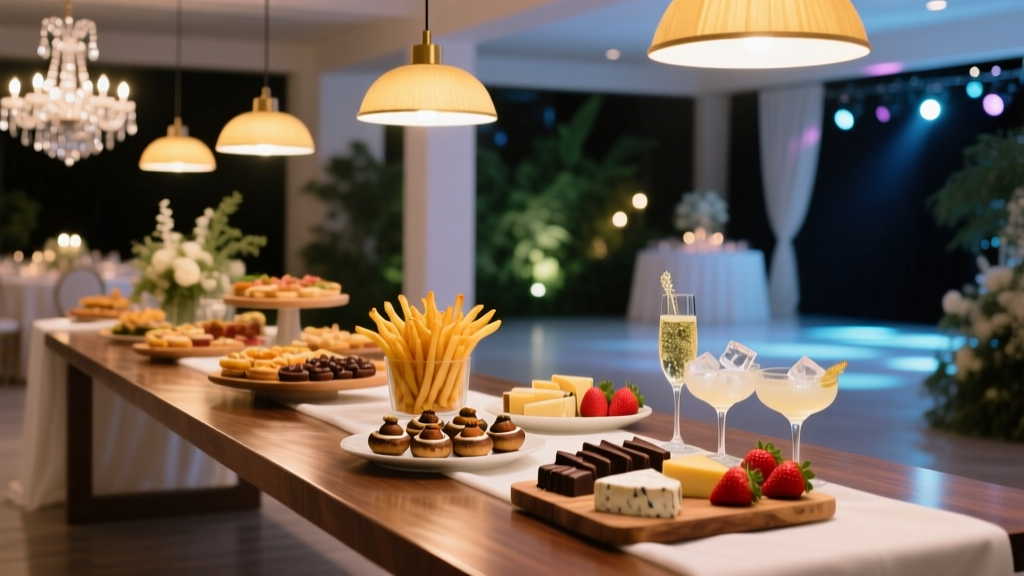
How to Plan a Wedding With a Late-Night Snack Station
You’ve planned the ceremony, the cocktails, the dinner, the first dance—then the party really starts. A late-night snack station is one of those wedding reception ideas that feels small on paper but lands big in real life. It’s comfort, energy, and a thoughtful “I’ve got you” for guests who’ve been celebrating for hours.
If you’ve ever left a wedding hungry (or watched a dance floor thin out as people hunt for food), you already understand the magic. Late-night wedding snacks keep the momentum going, soak up champagne, and create one of the most talked-about moments of the night—especially when the snacks reflect your personalities.
This guide walks you through how to plan a late-night snack station that fits your budget, timeline, venue rules, and guest list—without creating extra stress. Think of it as your wedding planner friend laying out the options, the pitfalls, and the simple steps that make it feel effortless.
Why Late-Night Snacks Work (and When They’re Worth It)
A snack station isn’t just “extra food.” It’s a strategic part of your wedding reception timeline, especially if:
- Your reception runs 4+ hours after dinner (common with long dance sets).
- Alcohol is served—even a modest bar benefits from a food checkpoint.
- Your crowd loves to party (lots of dancers, night owls, or younger guests).
- Dinner is earlier (5–6 p.m.) and you’re partying until 11 p.m. or later.
- You’re skipping a plated meal and doing cocktails/heavy hors d’oeuvres.
When you might skip it: very short receptions, brunch weddings, or micro-weddings where dinner ends right before the send-off. Even then, you could do a “farewell snack” to-go option as guests depart.
Step-by-Step: Planning Your Late-Night Snack Station
Step 1: Lock in your reception flow and timing
Late-night snacks work best when they show up right as energy dips. For most weddings, that’s 90 minutes to 2.5 hours after dinner.
Go-to timing examples:
- Dinner at 6:30 p.m. → late-night snack around 9:30–10:00 p.m.
- Dinner at 7:00 p.m. → snack around 10:00–10:30 p.m.
- Cocktail-style reception (no plated dinner) → consider a “second wave” of snacks around 2 hours in
Planner tip: Tell your DJ or band the snack drop time and ask them to make a quick announcement. A 10-second hype line (“Late-night bites are open!”) moves guests without killing the dance floor.
Step 2: Choose the snack style that matches your vibe
Decide whether you want the station to be a visual moment, a fast grab-and-go, or a passed option. Each has a different staffing and cost profile.
- Self-serve station: Great for variety and photos. Needs clear signage and smart traffic flow.
- Attended station: Higher-end feel (and more hygienic). Ideal for made-to-order items like tacos or sliders.
- Passed late-night bites: Keeps guests on the dance floor. Great if space is tight.
- To-go “exit snacks”: Perfect for sparklers/send-offs—think paper bags or custom boxes guests grab on the way out.
Real-world scenario: If your venue has a strict “no food outside the catering kitchen” rule, passed bites or a catered station is your best bet. If you’re at a backyard wedding with a food truck, a self-serve station near the patio door can be easy and fun.
Step 3: Decide how much food you actually need
You don’t need to feed everyone a second full meal. Most couples do 1–2 snack portions per guest depending on the crowd and how late the party goes.
Quick planning formula:
- Short reception (ends by 10 p.m.): 0.5–1 portion per guest
- Standard reception (ends 10:30–11 p.m.): 1 portion per guest
- Late reception (ends midnight+): 1.5–2 portions per guest
Guest list considerations:
- If you have lots of big dancers, late-night snacking goes fast.
- If you have many older guests leaving early, you can reduce quantities slightly—just don’t assume; ask your families what’s typical.
- If you’re serving open bar, plan on the higher end.
Step 4: Build a snack menu that’s crowd-pleasing and practical
The best late-night wedding snack ideas are:
- Handheld (one hand for dancing, one for eating)
- Not too messy (minimize drips on outfits)
- Fast to serve (short lines = happier guests)
- Comforting (salty, warm, familiar)
Popular late-night snack station themes
- Mini burger + fries bar: sliders, fry cones, sauces
- Taco station: chicken, carne asada, veggie + toppings
- Pizza moment: classic slices, mini pizzas, or pizza truck
- Pretzel bar: soft pretzels, beer cheese, mustard trio
- Breakfast-for-late-night: mini chicken biscuits, donut holes, waffles
- Global street food: bao buns, empanadas, dumplings
Don’t forget dietary needs
A simple way to be inclusive without overcomplicating the menu is to offer at least one option that is:
- Vegetarian (and clearly labeled)
- Gluten-free (if feasible, packaged or clearly separated)
- Nut-aware (avoid open bowls of nuts unless labeled and separate)
Real-world scenario: If you’re doing a taco station, offer corn tortillas (naturally gluten-free) and a vegetarian filling. If you’re doing pizza, add a GF option in sealed boxes and ask staff to hand it out to avoid cross-contact.
Budget Planning: What Late-Night Snacks Typically Cost
Late-night snacks can be surprisingly flexible. The cost depends on service style, staffing, and whether you’re using your caterer, a food truck, or drop catering.
Typical price ranges (rough guide):
- Drop catering (self-serve): $6–$12 per guest
- Caterer add-on (staffed station): $10–$20 per guest
- Passed bites (staffed): $12–$25 per guest
- Food truck minimums: often $1,000–$3,500 depending on region and headcount
Hidden costs to ask about:
- Extra staffing hours if your reception runs late
- Serviceware (boats, cones, napkins, forks)
- Rental needs (tables, linens, chafers, heat lamps)
- Delivery fees and late-night surcharges
- Venue required vendors or outside food fees
Budget-saving ideas that still feel special:
- Serve one hero item (like pizza) instead of a full spread.
- Do mini portions—guests want a taste, not a meal.
- Switch from a station to passed trays of one item (reduces setup and lines).
- Use your existing décor (same linens/signage style) instead of new rentals.
Timeline & Logistics: Making It Seamless
Where the station should go
Placement impacts everything. You want it close enough that guests see it, but not so close that it blocks dancing or bar access.
Best placement options:
- Near the edge of the dance floor (visible, energetic)
- In a cocktail lounge area (encourages mingling)
- Near the exit for to-go snacks
Avoid: tight hallways, doorways, or directly next to the bar line (double traffic jam).
Heat, safety, and freshness
- Hot foods need chafers, warmers, or quick turnover.
- Cold items should be iced or served in smaller batches.
- Assign someone (caterer/staff/venue coordinator) to refresh, wipe, and restock.
Planner pro tip: Ask your caterer to put out snacks in two waves. It keeps everything looking abundant and avoids dried-out fries or cold pizza.
Pair snacks with beverages
Consider a small “late-night sip” to match your bites. This can be as simple as a coffee carafe, or as fun as a mini milk-and-cookies moment.
- Pizza + beer or sparkling water
- Tacos + margaritas or aguas frescas
- Donuts + coffee or espresso martinis
Late-Night Snack Station Checklist
Use this as your planning checklist as you build out the details:
- Confirm venue rules: Outside food allowed? Approved vendors? Kitchen access?
- Set timing: Snack opens 90–150 minutes after dinner (adjust for your schedule).
- Choose service style: Station, attended, passed, or to-go.
- Pick 1–3 menu items: Crowd favorites + at least one dietary-friendly option.
- Estimate quantity: 1–2 portions per guest based on end time and bar service.
- Plan layout: Tables, signage, lighting, trash bins, traffic flow.
- Order serviceware: Napkins (extra!), plates/boats, forks, wet wipes if needed.
- Coordinate announcement: DJ/band cue or subtle signage if you prefer.
- Assign restocking responsibility: Caterer/staff + a timeline for refreshes.
- Confirm cleanup plan: Who breaks it down and when?
Real-World Examples Couples Love
Example 1: The “Dance Floor Saver” pizza drop
A couple with a 200-guest ballroom wedding served a plated dinner at 6:45 p.m., then opened the dance floor at 8:15. At 10:15, servers walked out with stacked pizza boxes and set up a quick station with pre-plated slices and napkins. The DJ announced it once, then went right back to music. Result: no long line, no mass exodus to the hotel lobby, and the dance floor stayed packed until midnight.
Example 2: Backyard wedding, cozy snack bar
For a 75-guest backyard reception, the couple wanted a casual vibe. They set up a s’mores station plus a “salty bar” with soft pretzels and mustard dips. The key was lighting (string lights over the table) and a dedicated trash can next to it so the yard stayed clean. Guests loved having something to do between dance sets.
Example 3: Cultural comfort food as a personal touch
A couple with a mix of families offered late-night empanadas and mini arepas alongside a vegetarian option. It was a nod to family traditions, it photographed beautifully, and it felt more meaningful than generic snacks.
Common Mistakes to Avoid (and How to Fix Them)
- Putting snacks out too early: If guests are still finishing dinner, it gets ignored.
Fix: Time it for the energy dip—usually around 10 p.m. - Underestimating napkins and mess: Saucy snacks + fancy outfits = stress.
Fix: Order extra cocktail napkins, add wet wipes, and choose less-drippy portions. - Creating a traffic jam: A station next to the bar can snarl the room.
Fix: Separate bar and snack lines; add two-sided access if possible. - Not labeling dietary options: Guests with restrictions won’t risk it.
Fix: Simple tent cards: “Vegetarian,” “Gluten-Free (served separately),” etc. - Over-ordering too many choices: Variety is fun, but waste is expensive.
Fix: Choose 1–2 standout items and do them well.
Wedding Planner Pro Tips for a Snack Station Guests Remember
- Make it feel intentional: A small sign with your names or a playful phrase (“Midnight Bites,” “Fuel for the Dance Floor”) elevates it instantly.
- Go mini: Mini grilled cheeses, slider-sized burgers, small cones of fries—easier to eat and less waste.
- Think about the photos: Add a little height (crate, risers) and consistent trays. It will look styled even if it’s casual food.
- Keep the dance floor alive: If you’re doing a station, ask the DJ to play a strong 2–3 song run right after the announcement.
- Don’t forget water: A hydration station (water, sparkling water) near snacks is a kindness your guests will feel.
FAQ: Late-Night Snack Stations at Weddings
What time should we serve late-night snacks at the wedding?
Most couples serve them 90 minutes to 2.5 hours after dinner—often around 10 p.m. If your wedding reception ends at 11 p.m., aim closer to 9:30–10:00 so guests actually get to enjoy them.
Do we need late-night snacks if we’re serving a full dinner?
Not always, but they’re a smart add-on if you have a long reception, an open bar, or a high-energy crowd. Even a simple option (pizza or pretzels) can make the night feel more comfortable for guests.
How much late-night snack food should we order per guest?
A good rule is 1 portion per guest for a standard reception, and 1.5–2 portions per guest if you’re partying past midnight. If many guests leave early, you can adjust slightly—but don’t cut it too close.
Can we bring in outside food like fast food or a favorite local spot?
Sometimes—venue and caterer policies vary. Ask your venue first about outside food rules, required insurance, and whether a licensed vendor is mandatory. If outside food is allowed, plan for delivery timing, warming/holding, and cleanup.
What are the best late-night snacks for a formal wedding?
Go for elevated comfort food: mini sliders, truffle fries in cones, gourmet grilled cheese bites, or a staffed taco station with polished signage and trays. The key is neat portions and smooth service.
How do we keep the snack station from looking messy?
Use smaller batches with frequent restocks, provide plenty of napkins, add clear signage, and place trash bins nearby. An attended station or passed bites also keeps the setup cleaner.
Your Next Steps: Make It Easy on Yourself
If you want a late-night snack station that feels effortless, focus on three decisions first: timing, one great menu idea, and service style. Once those are set, the rest is just logistics—and you can hand many of those details to your caterer, venue coordinator, or planner.
Start with this quick action list:
- Check your venue contract for outside food/vendor rules this week.
- Pick your snack style and a target serving time.
- Get a quote from your caterer (or a local favorite) and compare it to your overall wedding budget.
- Add the snack moment to your wedding reception timeline and tell your DJ/band.
You’re not “doing too much” by feeding people well. It’s one of the most practical ways to make guests feel cared for—and to keep your celebration exactly where you want it: full, happy, and on the dance floor.
Want more wedding planning tips like this? Explore more planning guides and reception ideas on weddingsift.com.
More Articles
 Wedding Bands Cost: Real 2026 Prices & Smart Savings
 Bride & Groom Night Before Wedding: Truth & 2026 Trends
 Do People Give Money at Weddings? (2026)
 Save Flower Petals for Wedding: 7 Color-Fresh Methods (2026)
 Vacuum Packing Wedding Dresses: Why It’s Risky
 Short Wedding Dress Guide: Etiquette, Styling & 2026 Tips
 Second Wedding Dress Color Choices (2026)
 How to Start the Wedding Ceremony (2026)
 Groom's Family Wedding Responsibilities (2026)
 September Wedding: 7 Smart Reasons & 3 Pitfalls (2026)