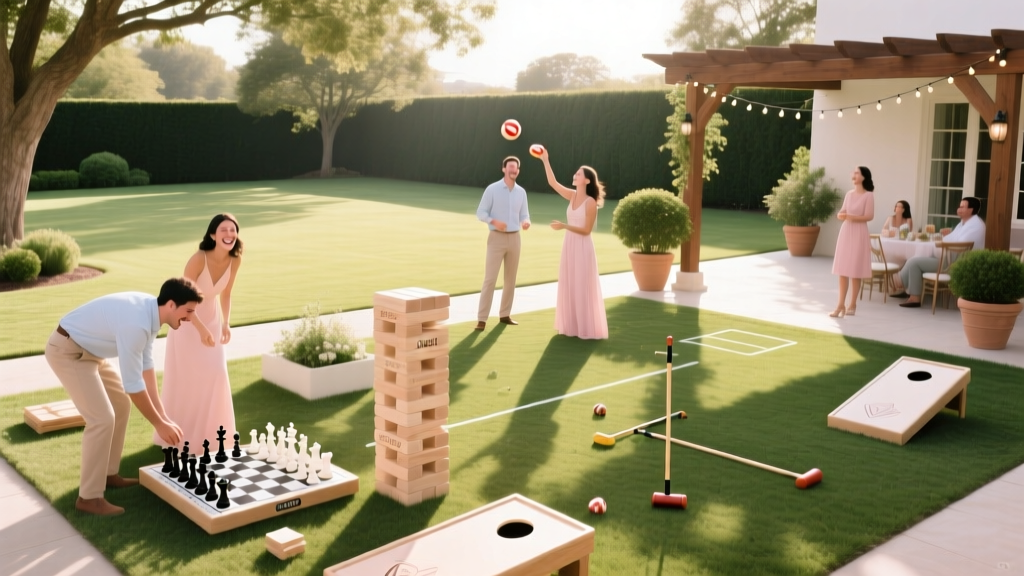
How to Plan a Wedding With a Lawn Game Area
If you’re picturing a wedding where guests are actually mingling (not just politely waiting for dinner), a lawn game area can be the secret ingredient. It gives people something easy and joyful to do—especially during those in-between moments like cocktail hour, while you’re taking photos, or as the dance floor ramps up later in the night.
Couples often tell me they want their wedding to feel “fun,” “relaxed,” and “like us.” Lawn games deliver that vibe without needing a big production. They also help bridge friend groups, keep kids entertained, and give non-dancers a place to hang out and still feel included. The key is planning it thoughtfully so it looks intentional, works with your timeline, and doesn’t accidentally compete with the big moments.
This guide walks you through choosing the right games, setting up a layout that flows, budgeting realistically, and avoiding the common hiccups wedding planners see all the time.
Why Lawn Games Work So Well at Weddings
Adding a lawn game area isn’t just “cute.” It solves real wedding-day challenges.
- They fill transition time: Guests have something to do during cocktail hour and photo time.
- They help people socialize: Games give strangers a low-pressure way to interact.
- They create candid photo moments: Think laughing, cheering, playful competition.
- They’re flexible for many venues: Backyards, barn venues, garden weddings, wineries, beachfront lawns.
- They offer an option beyond dancing: Great for mixed-age guest lists and introverts.
Step 1: Match the Games to Your Guest List and Wedding Style
Start with your guest mix
Before you rent or DIY anything, think about who’s attending and what they’ll genuinely use.
- Mostly adults, lively crowd: Cornhole, giant Jenga, ring toss, ladder toss, bocce ball.
- Lots of kids and families: Bubble stations, soft-tip lawn darts, giant Connect 4, hula hoops.
- Older guests or accessibility needs: Ring toss, bean bag toss at seated height, tabletop games on cocktail tables.
- Smaller wedding (under ~60): 2–3 games total often feels perfect—more can look empty.
- Larger wedding (100+): Consider 4–6 “stations” to spread people out and reduce lines.
Choose games that fit the formality level
Lawn games can be rustic, modern, coastal, or elegant—it’s all in the styling and selection.
- Classic garden wedding: Croquet, bocce, ring toss with a clean wood finish.
- Barn or backyard wedding: Cornhole, ladder toss, giant Jenga with stained wood.
- Modern minimalist: Sleek neutral cornhole boards, acrylic signage, simple layouts.
- Beachy vibe: Sand-friendly games like paddleball, oversized dice, ring toss with anchors/nautical touches.
Real-world scenario
Example: Mia and Jordan had 120 guests at a winery. They worried games would feel “too casual,” but their crowd included many non-dancers. They chose neutral-stained cornhole boards, bocce, and a ring toss station. During golden hour, the lawn became a social hub, and the dance floor still stayed packed later.
Step 2: Pick the Right Location and Layout (This Matters More Than the Games)
Best places for a wedding lawn game area
- Near cocktail hour: Easy win—guests naturally drift there.
- Adjacent to the bar: Keeps energy up and helps with flow.
- Near (but not on) the dance floor: Great “break zone” without pulling attention from first dance/toasts.
- Away from the ceremony: You don’t want thuds, cheers, or distractions during vows.
Layout tips wedding planners swear by
- Give each game breathing room: Cornhole needs a long lane; giant Jenga needs space around it.
- Create a clear boundary: Use rugs, low florals, lanterns, or small signs so it looks intentional.
- Mind the sound: Keep louder games farther from speeches and ceremony.
- Add seating nearby: A couple of benches, bistro chairs, or lounge pieces keep people comfortable.
- Think about lighting: If games are open after sunset, plan string lights, bistro lights, or portable uplighting.
Quick spacing guide
- Cornhole: Allow roughly 30–35 feet in length per lane (including standing space) and a few feet of width.
- Giant Jenga: A flat surface + enough room for onlookers (it draws a crowd).
- Bocce: Needs a clear area; consider a designated “lane” to avoid balls rolling into walkways.
Step 3: Build Your Wedding-Day Timeline Around the Lawn Games
Lawn games work best when they’re aligned with when guests actually want something to do.
Ideal times to have games available
- Cocktail hour: The #1 moment for lawn games.
- Between ceremony and reception start: Especially if you’re taking photos.
- During dancing: Keep 1–2 games open as an alternative activity.
- Late-night wind-down: Great if you’re doing a relaxed exit or after-party vibe.
Sample timeline (common outdoor wedding flow)
- 4:00 pm: Ceremony
- 4:30–5:30 pm: Cocktail hour + lawn games open
- 5:30 pm: Guests invited to reception space (games pause if needed)
- 6:00 pm: Dinner begins
- 7:30 pm: Toasts + first dance
- 8:00–10:00 pm: Dancing + 1–2 games open in a quieter corner
Pro tip
If you’re doing a grand entrance, first dance, or welcome toast right when guests enter the reception, consider closing or physically “turning” the games away for 15–20 minutes so people focus on the moment.
Step 4: Budgeting for Lawn Games (Rental vs. DIY)
Lawn games can be surprisingly budget-friendly, but costs add up if you go big with rentals and styling.
Typical cost ranges
- DIY (buying games): Often $50–$300 total depending on how many and the quality.
- Rentals: Commonly $25–$75 per game, plus delivery/setup fees depending on your area.
- Custom cornhole boards: Often $150–$400+ (but you can keep/sell them after).
- Styling add-ons: Signage, rugs, lanterns, and lighting can add $50–$300+.
How to choose: rental vs. DIY
- Rent if: You’re flying in, have limited storage, want a polished look without the hassle, or need a matching set.
- DIY if: You want to personalize, have time to test and prep, or plan to use the games later (or resell).
Budget-smart ideas
- Do fewer games, better: Two well-styled games look more intentional than six random ones.
- Borrow from friends: Just test them first and confirm who transports them.
- Skip the custom paint job: Neutral wood reads elevated and photographs well.
- Repurpose decor: Use ceremony lanterns or cocktail hour signage to style the game area.
Step 5: Styling and Signage That Keeps It Wedding-Appropriate
The difference between “backyard BBQ” and “wedding lawn game lounge” is the finishing touches.
Easy ways to make the game area look intentional
- A welcome sign: “Lawn Games” or “Play & Mingle” with simple instructions.
- A defined zone: Outdoor rugs, small florals, lanterns, or low fencing.
- Color cohesion: Keep boards and accessories in your palette (or stick to neutrals).
- Comfort extras: A basket of sunglasses, bug spray wipes, or small fans in hot weather.
Real-world scenario
Example: Priya and Sam hosted a backyard wedding. They worried games would look messy, so they placed two rugs on the lawn, added a small “Lawn Games” sign on an easel, and set a basket of blankets nearby for later. It looked like a curated lounge area—guests hovered there all night.
Step 6: Logistics and Guest Experience Checklist
Here’s the behind-the-scenes planning that keeps things smooth.
One-week-to-go checklist
- Confirm with your venue where games can be placed (and what’s allowed on the lawn).
- Check if the lawn will be watered/mowed (wet grass can ruin some setups).
- Decide who sets up and breaks down (planner, coordinator, rental team, friends).
- Test every game for missing pieces and stability.
- Plan for weather (shade, wind, rain backup).
Day-of setup checklist
- Place games away from high-traffic pathways (servers carrying trays need clearance).
- Add a small trash/recycling option nearby (cups accumulate fast).
- Put instructions on a sign or tag (especially for less common games).
- Assign someone to do a quick check-in once or twice (reset pieces, wipe wet boards).
Weather, Safety, and Venue Rules (Plan for the “What Ifs”)
Plan for heat, wind, and rain
- Hot weather: Choose shaded placement, provide water nearby, avoid metal pieces that get hot.
- Windy weather: Skip lightweight games (or secure signage); avoid anything that tips easily.
- Rain plan: Have an indoor backup (table games, cards, photo scavenger hunt) or a covered patio option.
Safety considerations
- Avoid games with hard projectiles near glassware or tight spaces.
- Keep the game zone out of the service path to prevent collisions.
- If alcohol is flowing, prioritize low-risk games (ring toss over lawn darts).
- For kids, consider a separate mini-area with age-appropriate options.
Venue rules to confirm
- Are stakes allowed in the lawn?
- Can you place rugs or heavy items on the grass?
- Is there a noise restriction during certain hours?
- What time must outdoor activities end?
Common Mistakes to Avoid (and How to Fix Them)
- Mistake: Putting games too close to the ceremony area.
Fix: Place them out of sight and sound, then open them at cocktail hour. - Mistake: Too many games for the guest count.
Fix: Choose 2–4 crowd-pleasers and style them well. - Mistake: Forgetting lighting for evening play.
Fix: Add string lights, battery lanterns, or venue-approved uplighting. - Mistake: Not testing DIY games.
Fix: Do a quick “game night” at home to confirm all pieces and rules. - Mistake: Games stealing attention from special moments.
Fix: Pause games during entrances/toasts, or place them around a corner.
Wedding Planner Pro Tips for a Lawn Game Area Guests Actually Use
- Curate for variety: Offer one competitive toss game, one casual “try it once” game, and one group-friendly option.
- Make it photogenic: Place games where the light is good, especially if you want golden-hour candids.
- Use simple signage: People play more when they don’t have to ask how it works.
- Consider a “scoreboard”: A small chalkboard can spark friendly competition without feeling too intense.
- Don’t forget comfort: Nearby seating turns the area into a hangout zone, not just a quick activity.
FAQ: Planning a Wedding Lawn Game Area
How many lawn games do we need for our wedding?
A good rule of thumb is 2–3 games for under 75 guests, and 4–6 games for 100–150 guests. Focus on games that can entertain multiple people at once, and avoid overloading the space.
When should we open the lawn game area?
Cocktail hour is the sweet spot. You can also keep one or two games open during dancing for guests who want a break, but pause them during key moments like toasts and first dance.
What are the best lawn games for a more formal wedding?
Choose games with a clean, cohesive look: neutral cornhole boards, bocce, croquet, or ring toss. Styling matters—add simple signage and keep the setup tidy and coordinated with your wedding decor.
What if the weather turns bad?
Have a backup plan: move smaller games under a tent or covered patio, or swap to indoor-friendly options like cards at cocktail tables, a photo scavenger hunt, or conversation prompt cards. Confirm your venue’s rain plan early.
Should we DIY or rent lawn games?
DIY works well if you have time to test, transport, and set up. Renting is often easier for destination weddings, tight timelines, or couples who want a consistent look without storing games afterward.
Will lawn games distract from dancing?
They can if placed too close to the dance floor or kept open during spotlight moments. Place the game area slightly apart and consider “closing” it briefly for entrances, first dance, and speeches.
Your Next Steps: A Simple Plan You Can Start This Week
- Choose 2–4 games that fit your guest list and venue.
- Confirm placement with your venue and map a layout with clear pathways.
- Align the timeline so games shine during cocktail hour and transitions.
- Decide rental vs. DIY based on transport, storage, and how much setup help you have.
- Create a weather backup so you’re not scrambling last minute.
When it’s planned with intention, a lawn game area becomes more than an “extra”—it’s a built-in way to help guests relax, connect, and have fun while you’re soaking in your day.
For more wedding planning tips, timelines, and guest experience ideas, explore more planning guides on weddingsift.com.
More Articles
 Wedding Toast for Your Daughter: A Heartfelt Guide
 What to Wear to a Spring Wedding (2026)
 Amazon Wedding Registry Public: 5-Step Fix (2026)
 Floral Wedding Outfits: 7 Pitfalls to Avoid (2026)
 How to Stream Wedding Live: Reliable 2026 Guide
 Wearing Black to a Fall Wedding: Etiquette Guide
 Change Wedding Date: Save Deposit & Guests (2026)
 How to Plan a Wedding Expo (2026)
 Thank You Cards Wedding: 7 Real Phrases (2026)
 Intimate Weddings Under 50 Guests