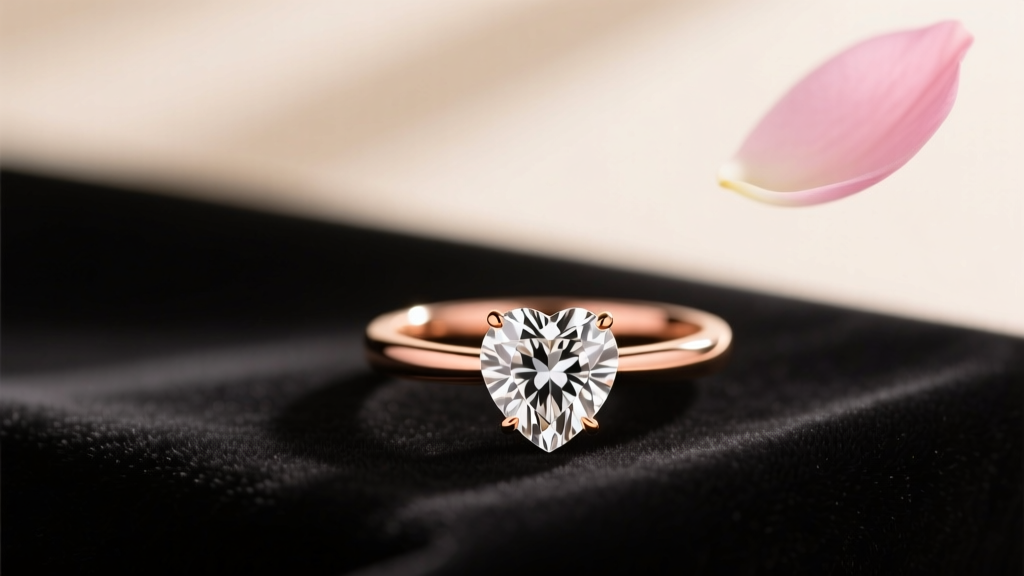
How to Choose an Engagement Ring With a Heart-Shaped Diamond
Few diamond shapes carry emotion as openly as a heart-shaped diamond. It’s romantic by design, but when chosen well, it’s also surprisingly sophisticated—crisp, balanced, and full of sparkle. The key is knowing what makes a heart diamond look elegant rather than “cartoonish,” and how the right setting and metal can elevate the shape.
Because heart-shaped diamonds are a fancy cut, they don’t follow the same “one-size-fits-all” rules as round diamonds. Small differences in symmetry, proportions, and setting style can change the look dramatically—whether the heart reads modern and sleek, vintage-inspired, or bold and glamorous. This guide walks you through the real-world factors that matter when you’re shopping for a heart diamond engagement ring and coordinating wedding bands.
What Makes a Heart-Shaped Diamond Unique
A heart-shaped diamond is essentially a modified brilliant cut. It shares sparkle potential with a round or pear shape, but it has extra visual checkpoints: the cleft at the top (the “dip”), the two rounded lobes, and the pointed tip. Those features make craftsmanship and symmetry more noticeable than in many other shapes.
Who a Heart Diamond Suits Best
- Romantic, expressive style: Heart shapes naturally read sentimental—perfect if the proposal or ring story matters to you.
- Statement lovers: Even at modest carat weights, the silhouette stands out.
- Couples who want something classic but not common: It’s timeless, yet far less ubiquitous than rounds.
Current Trends vs. Timeless Classics
- Trending now: yellow gold solitaires, east-west side accents, hidden halos, ultra-thin bands, and bezel or half-bezel settings for a clean, modern look.
- Always classic: platinum or white gold prong solitaires, three-stone designs with tapered baguettes, and delicate pavé bands that keep attention on the center stone.
How to Evaluate Heart Diamond Quality (Beyond the 4Cs)
The standard diamond 4Cs—cut, color, clarity, and carat—still apply, but with hearts, shape quality and symmetry become major deciding factors. Two diamonds with the same grade can look totally different on the hand.
Cut and Proportions: The “Pretty Heart” Checklist
Laboratories don’t issue an overall cut grade for most fancy shapes, so you’ll want to judge using proportions and visual balance. Look for:
- Symmetry between lobes: Both top curves should match in size and rounding.
- Defined cleft: A clean dip is attractive, but an overly deep cleft can look sharp or uneven.
- Centered point: The tip should align with the cleft—if it drifts, the heart can look lopsided.
- Even wings: The sides should arc smoothly; bulging or flat wings can distort the silhouette.
Helpful proportion ranges: Many well-cut heart diamonds fall around a length-to-width ratio of 0.90–1.10. Closer to 1.00 looks “true heart.” Longer ratios read slightly elongated and can look elegant and slimming on the finger.
Carat Weight vs. Face-Up Size
Heart diamonds can hide weight in the pavilion (depth), which may reduce face-up size. If “looks bigger” is a goal, compare millimeter measurements, not just carat weight. Ask for the diamond’s length and width in mm and compare across options.
Color: Choosing a Shade That Looks Bright in a Heart
Because a heart is brilliant-style faceting, it hides color fairly well, but the pointed tip and edges can show tint more than a round diamond. A practical sweet spot for many shoppers:
- Platinum/white gold: Consider G–H for a bright look, or I if you’re prioritizing size.
- Yellow/rose gold: H–J can look beautifully warm and offer strong value.
Clarity: What’s “Clean” to the Naked Eye
Heart-shaped diamonds can show inclusions near the center and along the cleft. Many couples find great value in VS2–SI1 as long as the stone is truly eye-clean. Ask the jeweler to confirm the diamond looks clean from 6–8 inches away in normal lighting.
Fluorescence and Light Performance
Medium or strong blue fluorescence can be a value opportunity in some diamonds, but in rare cases it can cause a hazy appearance. If you’re considering fluorescence, ask to see the stone in daylight and indoor lighting. For maximum sparkle, prioritize strong light return and crisp facet patterning over chasing the highest paper grades.
Best Settings for Heart-Shaped Diamond Engagement Rings
The right engagement ring setting protects the delicate tip, keeps the heart upright, and frames the shape so it reads cleanly from across the room.
Prong Settings: Classic and Sparkly
- Five-prong or six-prong: Popular for heart diamonds because you can secure each lobe plus the point.
- V-prong at the tip: Highly recommended. The point is the most vulnerable area for chipping; a V-prong acts like armor.
- Claw prongs: A modern, refined look that emphasizes the outline without heavy metal coverage.
Bezel and Half-Bezel: Sleek and Protective
Bezel settings are a top trend for couples who want clean lines and everyday durability. A full bezel offers maximum protection, while a half-bezel can keep the design lighter and show more diamond.
Halo Settings: Bigger Look, More Sparkle
A halo can amplify a heart diamond’s presence and define the shape sharply. Choose a halo that mirrors the heart outline precisely—an ill-fitting halo can make the diamond look uneven. Hidden halos (a subtle ring of diamonds under the center stone) are a modern favorite that boosts sparkle without changing the top view.
Three-Stone and Side-Stone Styles
- Tapered baguettes: Timeless and elegant, adding structure without competing with the heart shape.
- Trillion sides: More dramatic, very sparkly, and a strong match for contemporary styles.
- Pavé band: Adds shimmer, but keep pavé delicate so the center diamond remains the focus.
Choosing the Right Metal: Platinum, White Gold, Yellow Gold, or Rose Gold
Platinum
Platinum is naturally white, durable, and ideal for prongs—especially a V-prong protecting the heart tip. It develops a soft patina over time rather than wearing away quickly. Expect a higher price than gold.
14K and 18K White Gold
White gold is a popular engagement ring metal for a bright, diamond-forward look. It’s typically rhodium plated for extra whiteness. Plan on occasional re-plating every 1–3 years depending on wear.
Yellow Gold
Yellow gold is a major trend right now and pairs beautifully with heart diamonds for a warm, romantic vibe. It can also help slightly lower color grades look intentional and glowing.
Rose Gold
Rose gold feels romantic and modern, and it complements many skin tones. If your partner loves soft, vintage-inspired warmth, rose gold can be a standout choice with a heart-shaped center stone.
Pairing a Heart Diamond Engagement Ring with Wedding Bands
Heart-shaped diamond rings can sit awkwardly against a straight wedding band if the setting has a pronounced point or low profile. Consider these pairing strategies:
- Contour or curved wedding band: Designed to nest around the heart shape for a seamless look.
- Notched band: A subtle cut-out allows a flush fit without a dramatic curve.
- Spacer band: A thin plain band can prevent diamonds from rubbing against each other (helpful with pavé).
- Same metal, different texture: A polished engagement ring with a satin or hammered band can look modern and intentional.
Price Range and Value Tips
Heart-shaped diamonds can offer strong value compared to round brilliants, often delivering a distinctive look at a more approachable price per carat. Pricing depends on cut quality, carat weight, and how “perfect” the outline appears.
- Budget-friendly: Consider 0.70–0.95 ct with a great outline and eye-clean clarity in 14K gold.
- Mid-range sweet spot: 1.00–1.50 ct in G–H color, VS2–SI1 clarity, set in platinum or 18K gold.
- Premium statement: 1.50–3.00+ ct with excellent symmetry and high color/clarity, often paired with a halo or three-stone setting.
Value tips:
- Buy the outline, not just the grade: A well-shaped heart in H/SI1 can look more beautiful than a poorly shaped F/VS2.
- Compare millimeters: Face-up dimensions often matter more than carat weight.
- Choose smart clarity: Eye-clean SI1 can free budget for better setting craftsmanship or a larger center stone.
- Prioritize protective design: A V-prong and solid craftsmanship can prevent costly damage later.
Practical Buying Tips: What to Ask Before You Commit
- Request a grading report: Look for reputable labs like GIA or IGI, and verify the report number.
- See the diamond face-up and tilted: Hearts can look great straight on but reveal unevenness when moved.
- Inspect the cleft and point: Make sure the cleft is centered and the point is protected by a V-prong or bezel.
- Check for a “bow-tie” effect: Some heart diamonds show a darker band across the center; a slight bow-tie can be normal, but heavy darkness reduces sparkle.
- Confirm band compatibility: If you want a flush wedding band, choose a setting that allows it or plan a contour band.
Care and Maintenance for Heart-Shaped Diamond Rings
- Clean regularly: Soak in warm water with mild dish soap, gently brush with a soft toothbrush, rinse, and pat dry. Avoid harsh chemicals.
- Protect the tip: The point is the most delicate area—avoid banging the ring on counters or gym equipment.
- Schedule prong checks: Have a jeweler inspect prongs every 6–12 months, especially the V-prong at the tip.
- Remove during rough activities: Gardening, heavy lifting, and sports can loosen prongs or scratch metal.
- Store properly: Keep the ring in a soft pouch or separate compartment so it doesn’t scratch other jewelry.
Common Mistakes to Avoid When Shopping for a Heart Diamond
- Choosing a heart with poor symmetry: Uneven lobes and off-center points are hard to “unsee” once you notice them.
- Skipping tip protection: A heart diamond without a V-prong or protective bezel at the point is a risk for chipping.
- Overpaying for high color you can’t see: Many hearts look stunning in G–I (especially in yellow or rose gold).
- Ignoring wedding band fit: Not every setting pairs well with straight bands; plan the full bridal set.
- Buying by carat weight alone: Millimeter dimensions and face-up appearance determine how large it looks.
FAQ: Heart-Shaped Diamond Engagement Rings
Do heart-shaped diamonds sparkle as much as round diamonds?
They can sparkle beautifully, since they’re a modified brilliant cut, but they’re more sensitive to cut quality. A well-proportioned heart with strong symmetry can be very lively; a poorly cut one may show dull areas or a heavy bow-tie.
What length-to-width ratio is best for a heart-shaped diamond?
Most shoppers prefer 0.95–1.05 for a balanced “classic heart.” If you like a more elongated look, 1.05–1.10 can feel sleek and modern.
Is a halo a good idea for a heart-shaped diamond?
Yes—when the halo is precisely shaped to match the diamond. A well-made heart halo can make the center look larger and sharpen the heart outline. For a subtler look, consider a hidden halo.
Which metal is best for protecting a heart diamond?
Platinum is excellent for secure prongs, especially the V-prong at the tip. A bezel setting in any metal is also very protective. If you choose white gold, plan for periodic rhodium re-plating.
Can I wear a straight wedding band with a heart-shaped engagement ring?
Sometimes, but many heart settings leave a gap. If you want a flush look, a contour band or notched wedding band is often the easiest solution.
Are heart-shaped diamonds more affordable than round diamonds?
Often, yes. Round brilliants typically command the highest price per carat. Heart shapes can offer a distinctive look and strong value, especially if you prioritize symmetry and beauty over chasing the highest grades.
Next Steps: Choose a Heart That Looks Beautiful From Every Angle
The best heart-shaped diamond engagement ring combines a well-balanced outline, lively brilliance, and a setting that protects the point while showcasing the shape. Focus on symmetry, millimeter measurements, and a secure V-prong or bezel—then choose a metal and band style that fits your partner’s everyday life and your shared aesthetic.
If you’re building a complete bridal set, think ahead to wedding band pairing and long-term maintenance so the ring stays as stunning as it looks on proposal day. Explore more engagement ring and wedding band guides on weddingsift.com to compare diamond shapes, settings, metals, and timeless design ideas.
More Articles
 How to Remove a Stuck Wedding Ring Safely
 Wedding Band Metals Compared: Pros and Cons
 Diamond Tension Settings Modern and Minimalist Style
 How to Choose an Engagement Ring With a Cathedral Setting
 Black Onyx Wedding Bands Bold Statement
 How to Match Wedding Bands to Different Skin Tones
 Wedding Band Thickness vs Engagement Ring: 3 Rules (2026)
 How to Sell Wedding Band Safely & Profitably (2026)
 What Is a Wedding Ring and Why Does It Really Matter
 Beauty Question Essentials: What Every Jewelry Buyer and Wearer Needs to Know