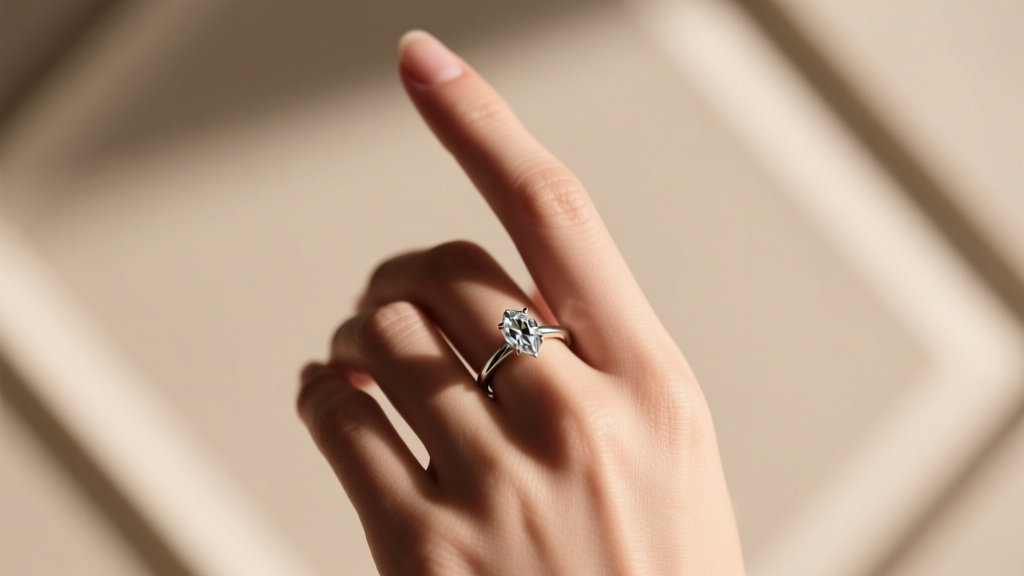
Marquise Diamonds Elongating Finger Appearance
If you love the idea of a diamond that looks larger than its carat weight and makes your fingers appear longer and more graceful, the marquise cut is one of the smartest choices in engagement rings. With its signature pointed ends and elongated silhouette, a marquise diamond naturally draws the eye up and down the finger—creating a flattering, lengthening effect that many couples specifically ask for when trying on rings.
Marquise engagement rings also sit in a sweet spot between “timeless classic” and “fresh trend.” The shape has royal history (it dates back to 18th-century France), yet it’s enjoying a strong modern revival thanks to east-west settings, ultra-thin bands, and minimalist prongs that let the stone’s unique outline shine. Whether you’re shopping for a bridal set, a wedding band to match, or a complete custom design, understanding how marquise diamonds behave—visually and structurally—will help you buy with confidence.
Why Marquise Diamonds Make Fingers Look Longer
The elongated outline creates a vertical “lift”
Compared to round, princess, or cushion cuts, a marquise diamond has more length than width. When set north-south (points aligned toward the fingertip and hand), the eye follows that line, which visually elongates the finger. This effect is especially noticeable on shorter fingers or wider hands, but it flatters most finger types.
Higher surface area: looks bigger for the carat
Marquise diamonds often appear larger than rounds of the same carat weight because the cut spreads the diamond’s weight across a wider face-up area. That “bigger look” enhances the elongating effect—your center stone reads bold and elegant without needing to jump dramatically in carat size.
Ideal length-to-width ratio for a slim, elegant look
Length-to-width ratio changes the personality of a marquise. A more elongated stone appears slimmer and more finger-lengthening; a wider marquise looks slightly softer and more oval-like.
- Classic balanced look: ~1.75–2.10
- Extra-elongated “sleek” look: ~2.10–2.30
- Wider, softer look: ~1.60–1.75
There’s no single “right” ratio—choose what looks best on your hand. If elongating the finger is the main goal, many shoppers prefer ratios around 1.90–2.20.
Marquise Cut Quality Factors That Matter Most
Bow-tie effect: what it is and how to evaluate it
Many elongated shapes (marquise, oval, pear) can show a dark “bow-tie” shadow across the center. A small bow-tie is normal; a strong bow-tie can make the diamond look less lively. The best approach is to view videos in multiple lighting conditions or see the diamond in person. Look for even brightness along the length, not a big dark band.
Symmetry and tips: critical for a clean outline
With marquise diamonds, small symmetry issues are easy to spot. Check that:
- The two pointed tips align on a straight center axis
- The “shoulders” (widest points) match on both sides
- The curves look even, not lopsided
Well-cut symmetry contributes directly to that sleek, elongating appearance.
Clarity considerations: prioritize eye-clean
Because marquise diamonds can show inclusions near the tips (where facets meet), choose a clarity grade that looks clean to the naked eye. Many buyers find great value in VS2 or SI1 if the diamond is eye-clean. For lab-grown marquise diamonds, you can often reach VS1–VVS2 more easily within budget.
Color: what looks best in marquise engagement rings
Marquise diamonds can show a bit more color at the points, especially in yellow gold settings. Popular sweet spots:
- Platinum/white gold: D–H (many choose G–H for value)
- Yellow/rose gold: D–J (many choose H–J for warmth and savings)
If you love a crisp, icy look, stay closer to the colorless range. If you like warmth—or you’re setting in yellow gold—near-colorless grades can look gorgeous and cost less.
Best Settings to Enhance the Elongating Look
North-south solitaire: timeless and the most elongating
A classic north-south marquise solitaire is the cleanest way to emphasize length. It’s a timeless engagement ring style that pairs easily with wedding bands. To keep the look modern, many couples choose a slim band (around 1.6–2.0mm) with refined prongs.
East-west marquise: trend-forward, sleek, and low-profile
East-west marquise engagement rings set the stone horizontally across the finger. This is a current jewelry trend that feels contemporary and stacks beautifully with wedding bands. It doesn’t elongate the finger as strongly as north-south, but it can make the hand look chic and balanced—especially for long fingers.
Halo settings: bigger look, but watch proportions
A halo can amplify finger coverage and sparkle, making the center diamond feel larger. For an elongating effect, keep the halo delicate and well-fitted to the marquise outline. A bulky halo can widen the overall look, reducing that slim, lengthening illusion.
Three-stone rings: choose side stones that support the shape
Three-stone marquise engagement rings are a romantic choice for couples who want symbolism and presence. Best pairings include:
- Tapered baguettes: elegant, architectural, and finger-lengthening
- Half-moons: soft and classic, adds width without overwhelming
- Trillion sides: bold and modern, best for larger center stones
Protective prongs or V-tips: essential craftsmanship detail
Marquise points are beautiful—and vulnerable. A quality setting should protect the tips with V-prongs or well-placed prongs that fully cover the points. This is non-negotiable for long-term wear, especially if you’re active with your hands.
Metal Choices: How Gold and Platinum Change the Look
Platinum: durable, premium, and naturally white
Platinum is a classic bridal jewelry metal for a reason. It’s dense, secure for prongs, and keeps a bright white tone without needing rhodium plating. It’s an excellent match for marquise diamonds because it supports delicate prong work and protects the tips.
14K vs 18K gold: balancing strength and richness
14K gold is often the best everyday choice—stronger and more scratch-resistant than 18K. 18K gold has a richer color and a more luxurious feel, but it’s slightly softer. For slim bands and fine prongs, many jewelers recommend 14K for added durability.
Rose gold and yellow gold: warm, romantic, and on-trend
Yellow gold marquise engagement rings have a vintage-meets-modern vibe, especially with a solitaire or bezel. Rose gold remains popular for its romantic warmth. If you choose a warm metal, consider a slightly higher color grade if you prefer a bright white diamond look, or embrace near-colorless warmth for a cohesive style.
Buying Tips for Marquise Engagement Rings and Wedding Bands
- Try ratios on your hand: A 2.20 ratio can feel dramatically different than a 1.75 ratio, even at the same carat.
- Prioritize cut appearance over paper stats: Videos and in-person viewing matter. Look for even sparkle and minimal bow-tie.
- Confirm tip protection: Ask for V-prongs or a setting design that shields both points.
- Plan your wedding band pairing early: Some marquise settings (especially low-set or halo) may need a curved or notched wedding band.
- Consider a bezel for an active lifestyle: A bezel or partial bezel can be sleek, modern, and protective—great for daily wear.
Care and Maintenance: Keeping a Marquise Diamond Secure and Sparkly
Cleaning at home
For most marquise diamond rings, a gentle routine works well:
- Soak in warm water with mild dish soap for 15–20 minutes
- Use a soft toothbrush to clean under the setting and along prongs
- Rinse and dry with a lint-free cloth
Avoid harsh chemicals and be cautious with ultrasonic cleaners, especially if your ring has fragile pavé or has not been inspected recently.
Professional checkups
Have a jeweler inspect prongs and tip security every 6–12 months. Marquise points can catch on fabric; routine checks help prevent stone loss and keep the setting tight.
Price Range and Value Tips
What affects marquise diamond pricing
Pricing depends on whether you choose natural or lab-grown, plus carat weight, color, clarity, and cut quality. In general, marquise diamonds can offer strong value because they’re less “standardized” than rounds, and shoppers can find excellent deals with the right guidance.
Value strategies couples actually use
- Choose a slightly lower color grade in yellow/rose gold: Near-colorless stones often look beautiful and cost less.
- Go for eye-clean SI1/VS2: Put budget into a better-looking cut rather than chasing ultra-high clarity.
- Maximize face-up size: A well-cut marquise can look larger than a round at the same carat.
- Consider lab-grown for size upgrades: Many couples choose lab-grown marquise diamonds to reach 1.5–3.0 carats with premium color/clarity.
Common Mistakes to Avoid
- Ignoring the bow-tie: A heavy bow-tie can make the center look dull. Always review video and lighting performance.
- Choosing an unprotected tip setting: Exposed points are more likely to chip. Insist on V-prongs or a protective design.
- Buying only by carat weight: Face-up size and proportions matter more than the number on the certificate.
- Overly thin bands without reinforcement: Ultra-thin bands can bend over time. If you love a delicate look, choose quality metalwork and consider a slightly thicker shank for longevity.
- Not planning the wedding band match: A marquise engagement ring may need a contoured wedding band to sit flush.
FAQ: Marquise Diamonds and Finger-Elongating Style
Do marquise diamonds really make fingers look longer?
Yes. The elongated outline creates a vertical visual line that lengthens the appearance of the finger, especially in a north-south setting with a balanced length-to-width ratio.
What is the best marquise ratio for an engagement ring?
Many people love ratios around 1.90–2.20 for a sleek, finger-elongating look. The “best” ratio depends on your hand shape and whether you prefer a softer or more dramatic silhouette.
Are marquise diamonds more likely to chip?
The pointed tips are more vulnerable than rounded corners, but a well-made setting with V-prongs (or a bezel) greatly reduces risk. Regular prong inspections also help.
What wedding band pairs best with a marquise engagement ring?
Straight bands can work with higher-set solitaires. For low-set, halo, or wider marquise settings, a curved/contoured wedding band often fits best. Popular pairings include pavé bands, plain gold bands, and stackable chevron or contour styles.
Is a marquise diamond good for a minimalist ring style?
Absolutely. A marquise solitaire on a slim 14K gold band is a modern minimalist classic. Many current designs also feature knife-edge bands, petite prongs, and subtle hidden halos for extra sparkle without bulk.
Should I choose platinum or gold for a marquise ring?
Platinum is ideal for durability and secure prongs. 14K gold is also a strong everyday choice and comes in white, yellow, or rose tones to match your style and wedding band.
A Confident Next Step for Couples Shopping Marquise
If your goal is a flattering engagement ring that looks elegant on the hand, a marquise diamond is hard to beat. Focus on a shape ratio you love, insist on excellent symmetry and tip protection, and choose a setting that supports your lifestyle and wedding band pairing. Done well, a marquise engagement ring delivers that “longer fingers, bigger diamond” look with timeless romance and a very current edge.
When you’re ready, explore more engagement ring and wedding band guides on weddingsift.com to compare diamond shapes, setting styles, and metal options—so you can choose a ring set you’ll love wearing for a lifetime.
More Articles
 Wedding Band Width: 7mm Myth vs. Comfort Fit (2026)
 Diamond Channel Settings Security and Seamless Look
 Lab-Grown vs Natural Diamonds (2026)
 Wedding Ring Care: 7 Non-Negotiable Habits (2026)
 How to Resize a Silicone Wedding Band Safely
 How to Match Wedding Bands to Different Skin Tones
 Modern Minimalist Engagement Ring Guide
 Wedding Ring Too Small? 7 Signs & Fixes (2026)
 How to Choose an Engagement Ring With a Marquise Diamond
 Red Diamond Rarest Natural Diamond Color