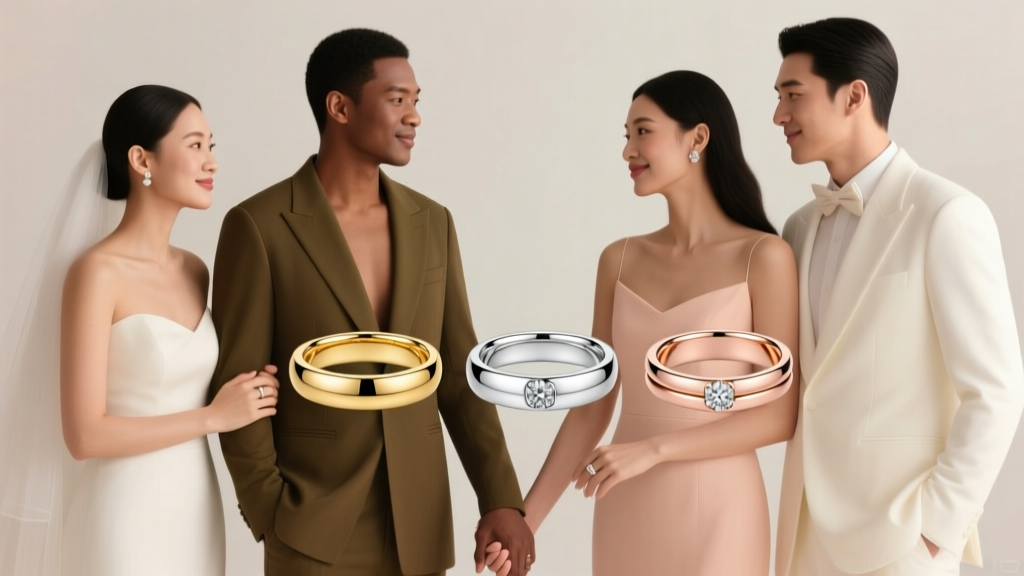
How to Match Wedding Bands to Different Skin Tones
Choosing a wedding band sounds simple until you try on a few and realize how dramatically the same ring can look on different hands. The metal can make skin appear warmer or cooler, a diamond band can either glow or look slightly “icy,” and even the finish—high polish, brushed, or hammered—changes the overall effect.
Matching wedding bands to your skin tone isn’t about rules or limitations. It’s a shortcut to finding a ring that looks natural on you every day, in every light, and in every photo. When the undertone of your skin and the undertone of the metal play well together, the ring looks intentional—like it belongs.
This guide breaks down how jewelers think about undertones, which wedding band metals and gemstones flatter each skin tone, and how to shop smart for long-term comfort, durability, and value.
Start with Undertone: Warm, Cool, or Neutral
Skin tone (light to deep) and skin undertone (warm, cool, neutral) are different. Undertone is the subtle hue beneath the surface that doesn’t change much with tanning. It’s the key factor in how a wedding band’s metal color will read against your skin.
Quick ways to identify your undertone
- Vein test: Blue or purple veins usually suggest a cool undertone; green veins suggest warm; a mix can indicate neutral.
- Jewelry test: If you consistently prefer how yellow gold looks on you, you may be warm. If white metals (platinum/white gold) look “cleaner,” you may be cool. If both look equally good, you’re likely neutral.
- White paper test: Hold white paper near your face/hand in daylight. If your skin looks more pink/rosy next to it, lean cool. If it looks golden/peachy, lean warm. If neither dominates, lean neutral.
Many people fall into “neutral-warm” or “neutral-cool.” That’s great—neutral undertones have the most flexibility.
Best Wedding Band Metals for Warm Skin Tones
Warm undertones (golden, peach, olive-leaning warm) typically look best with metals that echo that warmth. These metals help skin look vibrant rather than muted.
Yellow gold: timeless, flattering, and trending again
Yellow gold wedding bands are a classic for a reason: they complement warmth and look rich in natural light. Current trends are leaning into thicker gold bands, low-dome comfort fit profiles, and vintage-inspired milgrain edges.
- 14K yellow gold: Great daily-wear choice—durable, good value, slightly softer yellow than 18K.
- 18K yellow gold: Deeper, luxe color; a bit softer, so it can scratch a touch more easily.
Rose gold: romantic warmth that flatters many
Rose gold wedding bands are especially flattering on warm undertones, and they can also look beautiful on neutral skin. Rose gold’s blush tone comes from copper in the alloy. If you like a warm look but want something a little different from yellow gold, rose gold is a strong option.
Craftsmanship tip: Ask about alloy mix and plating. True rose gold is not plated; its color comes from the metal blend, so it stays consistent with wear.
Gemstones for warm undertones
- Champagne or cognac diamonds: Warm-toned diamonds feel cohesive with yellow/rose gold.
- Emeralds: The green pop is striking on warm skin; look for protective settings like bezels or half bezels.
- Rubies and sapphires: Warm reds and golden-yellow sapphires pair beautifully with yellow gold.
Best Wedding Band Metals for Cool Skin Tones
Cool undertones (rosy, pink, blue-leaning) usually shine in crisp, white metals. These metals emphasize clarity and contrast without competing with your undertone.
Platinum: premium, naturally white, and heirloom-worthy
Platinum wedding bands are naturally white (no rhodium plating required) and develop a soft patina over time. Platinum is dense and durable, making it ideal for lifelong wear and for secure stone settings like pavé or channel-set diamonds.
- Look and feel: Heavier on the hand, smooth, and substantial.
- Wear pattern: Platinum typically displaces rather than chips; it scratches but holds metal well.
White gold: bright and popular, with routine upkeep
White gold wedding bands are a staple choice for cool undertones. Most white gold is rhodium plated to achieve a bright white finish. Over time, the plating can wear and reveal a slightly warmer underlying tone depending on the alloy.
- Best for: Couples who want the white-metal look at a lower cost than platinum.
- Maintenance: Plan on rhodium re-plating every 12–24 months if you want it ultra-bright.
Gemstones for cool undertones
- White diamonds: Crisp and classic. Round brilliant and oval cuts are perennial favorites; emerald cut is a timeless, sleek trend.
- Blue sapphires: A cool-toned standout, especially in channel-set or bezel-set anniversary-style bands.
- Moissanite: Bright and fiery; looks especially clean in platinum or white gold.
Best Wedding Band Metals for Neutral Skin Tones
Neutral undertones are the easiest to match: yellow gold, white metals, and rose gold can all look balanced. Instead of fighting your undertone, focus on your lifestyle, your engagement ring (if you’re stacking), and the overall vibe you want.
Mixed metals and two-tone bands: a modern classic
Two-tone wedding bands are having a moment because they solve a real issue: they coordinate with both white and yellow metal jewelry. A popular approach is a yellow gold band with a platinum or white gold inlay, or a white band with yellow gold edges.
Alternative metals for neutral tones
- Palladium: Naturally white like platinum but lighter; less common, so sizing and repairs may be more limited.
- Titanium and tungsten: Modern and budget-friendly, but resizing can be difficult or impossible—choose carefully.
Match the Wedding Band to Your Engagement Ring (and Your Lifestyle)
Stacking and fit: what looks good also has to sit right
If you’re pairing a wedding band with an engagement ring, consider how they sit together. A straight band may leave a gap next to a large center stone or a low-set basket. Options include:
- Contoured or curved wedding bands: Shaped to hug the engagement ring for a seamless stack.
- Notched bands: Designed to fit around protruding settings.
- Spacer bands: Thin, simple bands that protect pavé or delicate prongs from rubbing.
Settings that suit daily wear
- Channel-set diamonds: Stones sit protected between metal rails—excellent for active lifestyles.
- Bezel-set stones: Metal surrounds the gem; secure and sleek.
- Pavé bands: Sparkly and popular, but require more maintenance—choose quality craftsmanship and avoid ultra-thin shanks.
Quality Factors That Affect Beauty and Durability
Metal karat, alloy, and finish
- 14K vs 18K gold: 14K is harder and more scratch-resistant; 18K is richer in color and slightly softer.
- Finishes: High polish is classic; brushed/satin hides minor scratches; hammered adds texture and a handcrafted look.
- Comfort fit: A rounded interior edge makes thicker bands much easier to wear daily.
Diamond and gemstone details that matter in bands
- Cut: For diamond bands, well-cut stones sparkle more than higher color grades with average cutting.
- Color: In white metals, many shoppers like diamonds in the G–H range for a bright look; in yellow/rose gold, warmer colors can still look beautiful.
- Clarity: Small accent stones can be very forgiving—SI clarity often looks clean to the eye in band settings.
- Craftsmanship: Look for even prongs, consistent spacing, smooth edges, and secure settings with no snagging.
Care and Maintenance: Keep Your Wedding Band Looking Its Best
- Weekly cleaning: Warm water, mild dish soap, soft toothbrush, rinse well, pat dry with a lint-free cloth.
- Avoid harsh chemicals: Chlorine, bleach, and abrasive cleaners can damage metals and some gemstones.
- Remove for impact activities: Gym lifting, rock climbing, heavy yard work—protect stones and settings.
- Annual checkups: Have a jeweler inspect prongs, channels, and pavé. This is especially important for diamond wedding bands.
- White gold upkeep: If you want a bright white finish, plan for rhodium plating as needed.
Price Range Considerations and Value Tips
Wedding band pricing varies widely based on metal, width, brand, and stone details. Here are realistic starting points (prices vary by market and metal costs):
- Plain 14K gold band (2–4mm): often $300–$1,000+
- Plain platinum band: often $800–$2,500+
- Diamond pavé or channel-set band: often $900–$4,000+ depending on total carat weight and craftsmanship
- Eternity bands (diamonds all the way around): often $1,500–$6,000+ and typically not resizable
- Titanium/tungsten bands: often $50–$400 (budget-friendly, but limited resizing/repair options)
How to get the best value
- Prioritize comfort and durability: A comfortable fit and a sturdy shank are worth more than trendy micro-thin designs.
- Choose 14K for everyday wear value: Especially if you’re hard on jewelry.
- For sparkle, prioritize cut quality: Well-cut accent stones outshine slightly higher color/clarity on paper.
- Consider half-eternity: Similar look to an eternity band, easier to resize, often better value.
Common Mistakes to Avoid When Shopping
- Choosing metal color without checking undertone: If a ring looks “off,” it’s often undertone mismatch—not the ring itself.
- Ignoring how the band stacks: A gorgeous band that rubs your engagement ring can wear down prongs or pavé over time.
- Buying ultra-thin bands for daily wear: Very thin shanks can warp, especially in softer metals or with lots of stones.
- Not planning for maintenance: Pavé needs inspections; white gold needs occasional plating; textured finishes may need refinishing.
- Forgetting lifestyle realities: If you work with your hands, prioritize low-profile settings and protective styles.
- Assuming alternative metals are “forever simple”: Tungsten and titanium can be difficult to resize—get the size right and understand repair limits.
FAQ: Matching Wedding Bands to Skin Tone
What metal looks best on olive skin?
Olive skin can be warm or neutral-warm. Yellow gold and rose gold often look especially flattering, while some olive undertones also look great in platinum or white gold for contrast. Try both in daylight—olive tones can shift depending on lighting.
Can I mix metals between my engagement ring and wedding band?
Yes. Mixed-metal stacks are a current trend and can look very intentional. If you mix, consider a two-tone band or add a thin spacer to reduce metal-on-metal wear, especially if one ring has pavé or delicate prongs.
Are diamonds always best in white metal bands?
Not always. White diamonds look crisp in platinum and white gold, but they can also look stunning in yellow or rose gold—often with a softer, warmer vibe. If you love contrast, try a white diamond band in yellow gold; if you want a seamless look, consider warmer diamonds (like champagne) in yellow/rose gold.
What’s better for sensitive skin: platinum or gold?
Platinum is naturally hypoallergenic for most people. For gold, choose nickel-free alloys if you have sensitivities—many jewelers offer hypoallergenic 14K/18K options. If you’ve reacted to jewelry before, ask specifically about nickel content.
Do wedding bands with gemstones hold up for everyday wear?
They can, if you choose durable stones and protective settings. Diamonds, sapphires, and rubies (corundum) are excellent for daily wear. Emeralds are more prone to chipping, so bezel settings and careful wear make a big difference.
Should I pick a trendy style or a timeless classic?
For a daily wedding band, timeless usually wins: classic domed bands, comfort fit profiles, and channel-set diamonds age beautifully. You can still nod to trends—like a subtle hammered finish, a two-tone detail, or an east-west baguette accent—without locking yourself into a look that may feel dated later.
Next Steps: Find the Metal That Makes Your Ring Feel Like “You”
If you want a wedding band that flatters your hand instantly, start with your undertone: warm skin tends to glow in yellow and rose gold, cool skin often looks crisp in platinum and white gold, and neutral undertones can confidently wear almost anything—especially modern mixed-metal designs. From there, choose a profile and setting that match your lifestyle, and prioritize craftsmanship so your ring stays secure and comfortable for decades.
For more expert tips on wedding bands, engagement ring settings, diamond shapes, and jewelry care, explore more guides on weddingsift.com.
More Articles
 Iolite Engagement Rings Violet Blue Cordierite
 How to Store Your Jewelry When Not Wearing It
 How to Wear Anniversary Band with Wedding Set
 Jewelry Making for Beginners: First Projects
 How to Remove a Stuck Wedding Ring Safely
 Rubber Wedding Bands: 7 Trusted Places to Buy (2026)
 Men's Wedding Bands Materials and Styles Compared
 Lab-Grown vs Natural Diamonds in 2026
 How to Get Off a Stuck Wedding Ring Without Panic
 Gold Ring Weight: How Many Grams? (2026)