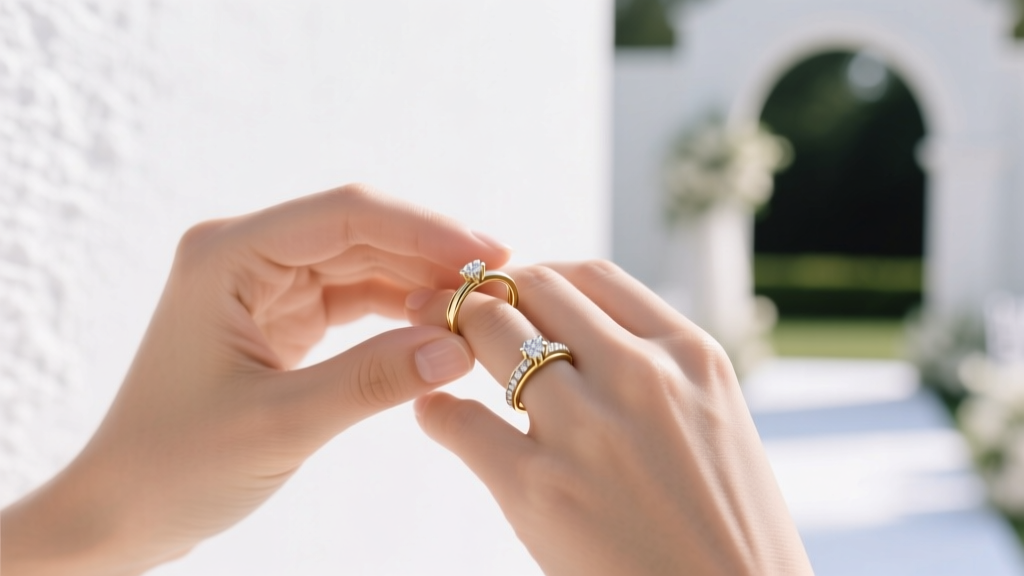
How to Choose a Wedding Band That Complements Her Ring
Choosing a wedding band sounds simple until you hold it next to her engagement ring and realize how many details need to “agree” with each other: metal color, ring height, stone shape, setting style, and even the way the band touches the prongs. A well-matched set looks intentional—like it was designed as one piece—while a mismatch can feel awkward, sit crooked, or wear down faster than it should.
The good news: you don’t need to be a gemologist to get this right. Think like a jeweler for a moment—your goal is comfort, durability, and harmony. That can mean a perfectly seamless “flush fit,” or a stylish contrast that still respects the engagement ring’s proportions and craftsmanship.
Below is a practical jewelry guide to help couples compare metals, settings, profiles, and diamond band styles so the wedding band complements her ring beautifully—today and for decades.
Start With the Engagement Ring: The Blueprint
Identify the ring’s silhouette and setting height
The engagement ring’s setting determines how close a wedding band can sit. A low-set solitaire (where the center stone sits close to the finger) often leaves less space for a straight band. A higher cathedral setting (where shoulders rise to support the center stone) usually allows more clearance.
- Low profile settings: may need a contoured, notched, or open band for a comfortable fit.
- High profile settings: can typically pair with a classic straight band, including diamond eternity styles.
Note the center stone shape and overall proportions
Center stone shapes influence what “looks right” next to them. Round brilliant diamonds pair easily with almost any band, while elongated shapes—oval, marquise, emerald, pear—often look best with bands that mirror their length and softness.
- Round & cushion cuts: balanced; match well with straight pavé or plain bands.
- Oval & marquise: trendy and flattering; pair beautifully with delicate pavé, curved bands, or spaced baguette accents.
- Emerald & Asscher cuts: crisp, architectural; often shine beside sleek metal bands or channel-set baguettes.
- Pear shape: consider a gently contoured band that frames the point without rubbing prongs.
Check the engagement ring’s metal and finish
Matching metal type and finish is the simplest route to a cohesive bridal set. If her engagement ring is platinum with a high polish, a platinum band in the same finish will look seamless. If the ring has a brushed/matte finish, repeating that texture can feel more “custom.”
Mixing metals can look modern—especially yellow gold with platinum or white gold—but it’s best done with intention (more on that below).
Choose a Band Style: Seamless Match or Designed Contrast
Classic straight bands (timeless and versatile)
A straight wedding band is the traditional choice and works well when the engagement ring sits high enough to allow a flush fit. Straight bands also stack easily for anniversaries or future milestone rings.
Best for: solitaires, cathedral settings, many halo designs with enough clearance.
Contoured, curved, and chevron bands (for a tailored fit)
Contoured bands follow the engagement ring’s outline so the two sit closer together. A subtle curve is often enough. Chevron (V-shaped) bands are a popular current trend for stacking and framing oval or pear-shaped centers.
Best for: low-set rings, larger center stones, halos that otherwise leave a gap.
Notched or open bands (gap-free without compromising the setting)
If the engagement ring has a wide head, prominent basket, or delicate prongs, a notched band can nest around it. Open bands (with a small gap) can also wrap around the center setting while maintaining comfort. These are especially useful if you want a straight look without forcing the band to press against prongs.
Tip: A band that pushes on prongs can loosen them over time—one of the most common fit mistakes.
Diamond wedding bands: pavé, channel, and eternity styles
Diamond bands bring sparkle, but the setting style matters for both looks and durability.
- Micro-pavé: tiny diamonds with minimal visible metal; very bright and delicate-looking. Best with careful wear and regular inspections.
- French pavé: V-shaped cuts in the metal allow more light; a popular “high sparkle” option.
- Channel-set: diamonds sit between metal walls; smoother on the sides and more protective—great for active lifestyles.
- Shared prong: maximizes sparkle, but can snag more than channel settings.
- Eternity bands: diamonds all the way around; stunning but harder to resize and can feel bulkier between fingers.
Metal Matters: How to Match Color, Durability, and Lifestyle
Platinum
Platinum is naturally white, dense, and very durable. It develops a soft patina over time rather than losing metal quickly. It’s a premium choice for holding diamonds securely, especially for prong-intensive styles.
Best for: daily wear, sensitive skin, heirloom longevity.
18K vs. 14K gold (yellow, white, and rose)
Gold is measured in karats; higher karat means more pure gold and a warmer color.
- 18K gold: richer color, slightly softer; great for a luxe look.
- 14K gold: excellent durability for everyday wear; very popular for bridal sets.
White gold is typically rhodium-plated for a bright white finish; it may need re-plating over the years. Yellow gold is a timeless classic currently trending again, especially with oval diamonds. Rose gold offers a romantic blush tone and pairs well with vintage-inspired settings.
Mixed metals (modern and intentional)
Mixing metals can be stylish when there’s a clear design reason—like a yellow gold band with a platinum engagement ring to tie into other jewelry. To keep it cohesive, match at least one detail: similar band width, similar finish, or a shared design element (like milgrain edges or matching diamond shapes).
Diamond and Gemstone Details: Matching Sparkle the Smart Way
Match diamond size and “visual weight”
A delicate engagement ring can be overwhelmed by a thick, high-set eternity band. On the flip side, a bold engagement ring may look incomplete next to a whisper-thin band. As a guideline, aim for a band width that complements the shank: common ranges are 1.6–2.2mm for delicate sets and 2.3–3.5mm for bolder looks.
Coordinate diamond shapes and cuts
Round brilliant melee diamonds are the most common in pavé bands because they sparkle intensely and pair easily with any center stone. Baguettes and emerald-cut accents feel more tailored and are popular in modern, minimalist bridal trends.
- Round pavé band: timeless, bright, and easy to match.
- Baguette band: sleek, modern, and great with emerald or oval centers.
- Alternating shapes (round + marquise, round + baguette): fashion-forward while still elegant.
Consider colored gemstones (a trend with personal meaning)
Sapphire wedding bands—especially deep blue or icy white sapphire—are trending for couples who want color without sacrificing durability. Rubies and emeralds can be gorgeous, but they’re better in protective settings (like bezel or channel) and may require extra care.
Durability reminder: Diamonds are a 10 on the Mohs scale; sapphires and rubies are 9; emeralds are typically more included and need gentler wear.
Fit and Craftsmanship: What Jewelers Check Before You Buy
Flush fit vs. a small gap
A completely flush fit is popular, but a tiny gap isn’t “wrong” if it protects the engagement ring’s setting. The priority is avoiding metal-on-metal pressure that can wear down prongs or deform a thin band.
Comfort fit interiors and edge profiles
Comfort-fit bands have a softly rounded interior, making them easier to wear daily—especially in wider widths. Also consider edge style:
- Softly rounded edges: smoother and less likely to catch.
- Knife-edge bands: crisp, elegant profile; can feel sharper on some hands.
Quality checkpoints
- Stone security: prongs should be even and tight; pavé beads should look uniform.
- Symmetry: diamonds should align; channels should be straight.
- Polish and finish: consistent shine or matte texture without ripples.
- Hallmarks: look for metal stamps (14K, 18K, PT950) and maker marks.
Practical Buying Tips for the Perfect Wedding Band Match
- Bring the engagement ring when shopping (or request a pairing consultation if buying online). Photos help, but an in-person fit check is best.
- Try on bands in multiple widths next to the ring. The “right” band often surprises people once it’s on the hand.
- Ask about resizing before you commit—especially for eternity bands and intricate pavé.
- Plan for wedding-day wear: Some people solder (permanently join) the rings to stop spinning and prevent rubbing; others prefer flexibility for stacking.
- Think about her lifestyle: If she works with her hands, consider a smoother profile, channel-set diamonds, or a slightly thicker shank for durability.
Care and Maintenance: Keep the Set Looking Like New
- Weekly gentle cleaning: warm water, mild dish soap, and a soft toothbrush. Rinse well and dry with a lint-free cloth.
- Avoid harsh chemicals: chlorine, bleach, and some household cleaners can damage metal alloys and loosen settings over time.
- Remove rings for impact risk: weightlifting, gardening, moving furniture, and some sports can bend prongs or chip stones.
- Professional inspections: every 6–12 months, especially for pavé or shared-prong diamond bands.
- Re-polish and rhodium: white gold may need rhodium re-plating; platinum may be re-polished if you prefer high shine over patina.
Price Range and Value Tips: Where the Money Goes
Wedding band prices vary widely based on metal, width, and diamond content. Here are realistic ranges many couples encounter:
- Plain metal band (14K/18K gold): often $300–$1,200 depending on width and brand.
- Platinum plain band: often $600–$2,000 due to metal cost and weight.
- Pavé diamond band: commonly $800–$3,500 based on total carat weight and craftsmanship.
- Eternity diamond band: commonly $1,500–$6,000+ depending on diamond size and whether it’s full eternity.
- Designer/vintage-inspired details (hand engraving, milgrain): add cost due to labor and skill.
Value tips: Choose 14K gold for excellent durability and cost-efficiency, prioritize secure settings (channel or well-executed pavé), and consider a half-eternity band if you want sparkle with easier resizing and lower price.
Common Mistakes to Avoid When Shopping
- Buying the band without testing it against the engagement ring: what looks good alone may not stack well.
- Ignoring ring height and prong clearance: pressure points can lead to loosening stones over time.
- Choosing style over comfort: sharp edges, high-set bands, or very wide rings can feel uncomfortable for daily wear.
- Overcommitting to a full eternity band without understanding resizing limits.
- Mismatching finishes unintentionally: a high-polish band can make a matte engagement ring look dull by comparison (or vice versa).
- Skipping craftsmanship checks: uneven pavé, sloppy prongs, and thin shanks can mean frequent repairs later.
FAQ: Wedding Bands That Complement Her Engagement Ring
Should the wedding band match the engagement ring metal exactly?
Matching is the easiest path to a cohesive look and similar wear over time. Mixed metals can look modern and intentional, but try to repeat a detail (finish, width, design element) so the set feels unified.
What if her engagement ring won’t sit flush with a straight band?
Look for a contoured, curved, notched, or open band designed to nest around the setting. A small gap is also acceptable if it prevents the band from pressing against prongs or the basket.
Are diamond wedding bands durable for everyday wear?
Yes, when the setting is well-made and inspected regularly. Channel-set and bezel details offer more protection, while micro-pavé requires a bit more care and routine tightening checks.
Can you resize an eternity band?
Full eternity bands are difficult or sometimes impossible to resize cleanly because diamonds go all the way around. A half-eternity or three-quarter eternity offers a similar look with more flexibility.
How wide should the wedding band be next to her engagement ring?
Many classic sets fall between 1.6–2.5mm, but it depends on the engagement ring’s shank width and the size of the center stone. Try a few widths side-by-side and look for balanced proportions rather than a strict rule.
Is it better to solder the wedding band to the engagement ring?
Soldering can prevent spinning and reduce rubbing between rings, which some couples love for daily wear. If she likes changing stacks or wearing rings separately, keeping them separate may be a better choice.
Your Next Step: Choose the Band That Makes the Ring Look Even Better
The best wedding band doesn’t compete with her engagement ring—it supports it. Start with the engagement ring’s setting height and shape, then choose a band profile that stacks comfortably, a metal that suits her lifestyle, and a level of sparkle that feels true to her style. Whether you go with a timeless plain gold band, a classic pavé diamond band, or a trend-forward chevron contour, prioritize fit and craftsmanship so the set stays beautiful for the long haul.
For more practical advice on engagement rings, wedding bands, diamond cuts, and metal choices, explore more jewelry guides on weddingsift.com.
More Articles
 Diamond Certification GIA vs IGI vs EGL Explained
 Tungsten Wedding Ring Resizing: Truth & Safe Alternatives
 Heather El Moussa’s Wedding Ring: 5-Carat Emerald Cut (2026)
 Jewelry Care FAQ: Wear and Sizing Guide
 Oval Diamonds Illusion of Larger Size
 Can I Wear My Wedding Band Before the Wedding Day?
 Smart Ring on Wedding Finger: Truth & Trade-Offs
 How to Choose a Wedding Band With a Ceramic Material
 How to Remove a Stuck Wedding Ring Safely
 De Beers Wedding Rings: Real Value & 5 Better Alternatives