How to Choose a Wedding Band With a Textured Pattern
A textured wedding band does something a polished ring can’t: it tells a story through the surface. Whether it’s a hammered finish that catches the light in tiny flashes, a brushed satin that feels modern and understated, or an engraved pattern with old-world craftsmanship, texture adds personality without needing a large center stone.
For couples shopping for engagement rings and wedding bands, textured patterns also solve a very practical problem—wear. Daily life puts rings through a lot: keyboards, gym grips, gardening, travel, and everything in between. Certain textures help disguise small scratches, while others create a deliberate contrast next to a high-polish engagement ring. Choosing the right texture means balancing style, comfort, durability, and long-term maintenance.
This guide walks through the most popular textured wedding band styles, the best metals for each finish, quality markers to look for, and how to shop confidently—whether you’re buying a classic gold band, a modern mixed-metal design, or a diamond-accented ring with engraved detail.
Why Texture Matters in a Wedding Band
Texture changes how a ring looks (and how it wears)
Two rings can be the same width and metal but look completely different based on the surface finish. Texture affects:
- Light reflection: High-polish reflects like a mirror; hammered and faceted finishes sparkle in a subtler, broken-up way.
- Visibility of scratches: Brushed, matte, and hammered finishes tend to hide fine wear better than mirror polish.
- Style tone: Texture can read modern (brushed, sandblasted), artisanal (hammered), or vintage (hand engraving, milgrain).
- Pairing with an engagement ring: Texture can complement a pavé diamond band or create contrast next to a solitaire.
Texture also affects maintenance
Some patterns are easy to refresh (like satin brush lines), while others rely on handwork (like Florentine engraving) and should be maintained by a jeweler who understands the original craftsmanship.
Popular Textured Wedding Band Styles (and Who They Suit)
Hammered finish (artisan classic)
Hammered wedding bands feature small indentations from a hammering tool, either random (organic) or uniform (controlled). They’re a favorite for couples who like a handcrafted look and want a ring that hides small scratches well.
- Best for: Rustic, boho, outdoorsy, or minimalist style with a twist
- Pairs well with: Solitaires, bezel-set engagement rings, and vintage-inspired diamond rings
- Watch for: Overly sharp “peaks” on low-quality versions; the surface should feel comfortable and intentional
Brushed/satin finish (modern and understated)
A brushed wedding band has fine linear texture (often directional), while satin is a softer, more diffused version. Both create a muted sheen that feels contemporary and gender-neutral.
- Best for: Clean, modern aesthetics; people hard on their rings
- Pairs well with: High-polish engagement rings for contrast, or matching satin bridal sets
- Watch for: Brush lines should be even; cheap finishes can look blotchy or wear unevenly
Sandblasted/matte finish (ultra-low shine)
Sandblasted or bead-blasted texture produces a velvety matte surface. It’s trending in minimalist men’s wedding bands and mixed-metal designs because it looks sleek and architectural.
- Best for: Minimalist couples, alternative styles, wider band profiles
- Pairs well with: Bezel-set diamonds, geometric engagement rings, two-tone bands
- Watch for: Matte finishes can “polish up” over time in high-contact areas; plan for periodic refinishing
Florentine/engraved texture (timeless, vintage-leaning)
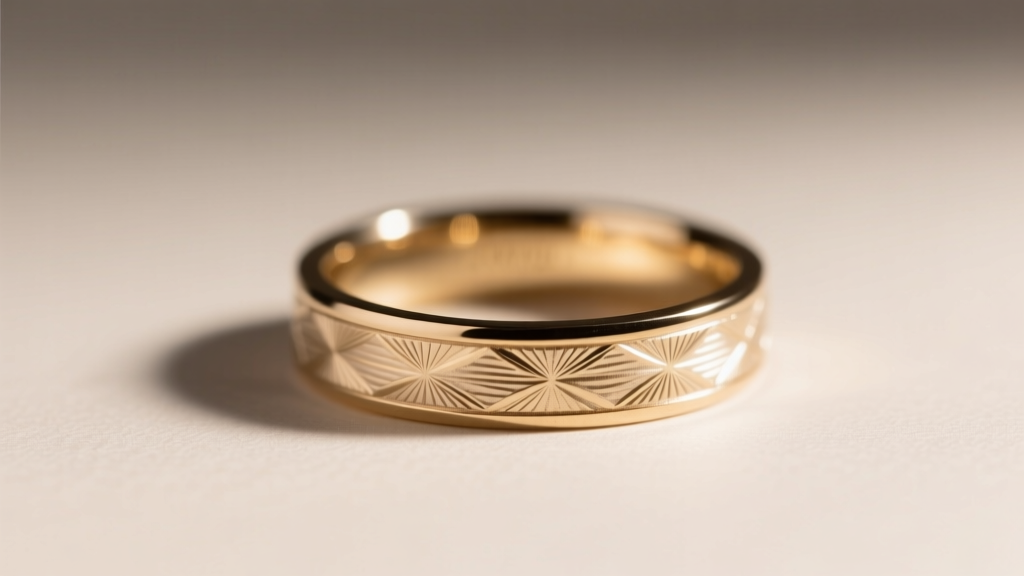
Florentine finish is a form of hand-applied engraving that creates a crosshatched shimmer. Other engraved patterns include wheat, vine, scroll, and geometric motifs. These styles feel timeless and often look best in yellow or rose gold.
- Best for: Vintage lovers, heirloom-inspired bridal jewelry
- Pairs well with: Halo engagement rings, milgrain details, antique-style settings
- Watch for: True hand engraving costs more but usually looks deeper and more precise than mass-produced stamping
Milgrain edges (delicate detail that frames the ring)
Milgrain is a beaded edge detail commonly used on vintage-inspired wedding rings. It’s not a full texture, but it adds dimension and can elevate a simple band. It’s popular right now in bridal stacks, especially paired with pavé diamond bands.
- Best for: Classic-romantic style, stacking multiple bands
- Pairs well with: Pavé engagement rings, vintage solitaires, engraved bands
- Watch for: Crisp, even beads; poorly done milgrain can look flattened or irregular
Faceted or “diamond-cut” texture (sparkle without stones)
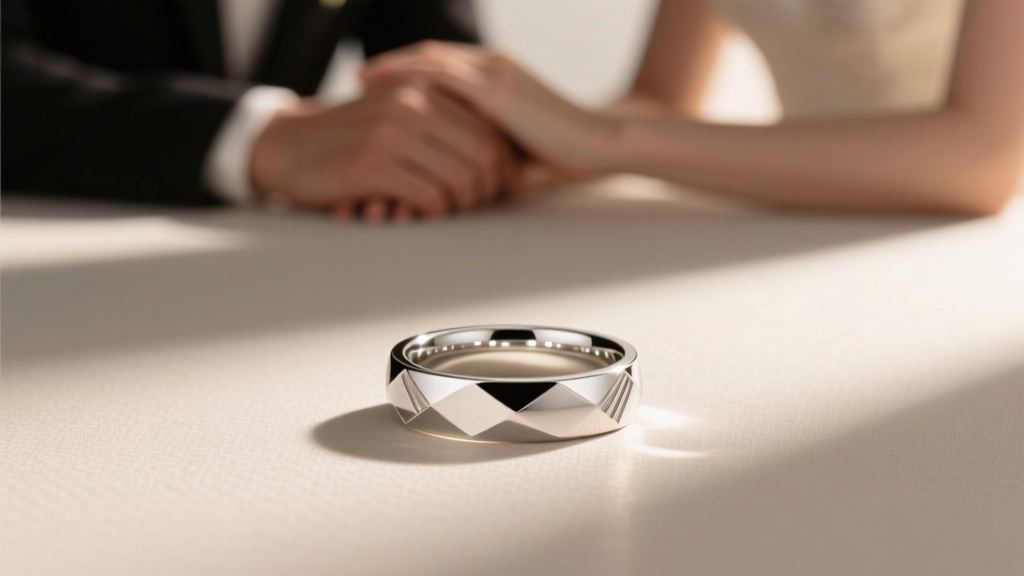
Faceted bands use angled cuts on the metal surface to reflect light like a gemstone. They’re a strong option if you want visual interest without diamonds.
- Best for: Couples who love shine but want low maintenance vs pavé
- Pairs well with: Sleek solitaires, minimalist settings
- Watch for: Comfort—some faceted edges can feel sharp; ask for a comfort-fit interior
Choosing the Right Metal for a Textured Wedding Band
14K vs 18K gold (yellow, white, or rose)
14K gold is typically the most practical choice for textured wedding bands because it’s a bit harder than 18K, helping engraving and crisp patterns hold up longer. 18K gold has richer color and a more luxurious feel, but it’s softer and may show wear sooner on raised details.
- Yellow gold: Highlights vintage textures like Florentine and milgrain; timeless and trending again in bridal jewelry
- White gold: Clean, modern look; make sure you understand rhodium plating upkeep
- Rose gold: Romantic tone; hides some wear nicely and complements warm skin tones
Platinum (premium durability and weight)
Platinum is dense and naturally white, with a satisfying weight. It develops a patina over time rather than losing metal quickly, which many people love—especially on matte or brushed finishes. It’s excellent for secure gemstone settings (like channel-set diamonds) and for long-term wear.
Palladium and alternative metals
Palladium offers a naturally white look with less weight than platinum, though availability can vary. Tungsten carbide and titanium are popular in modern men’s wedding bands and often feature matte or hammered textures. Keep in mind: alternative metals can be difficult (or impossible) to resize and may have limited setting options for diamonds.
Adding Gemstones to a Textured Band: What Works Best
Diamonds: pavé, channel, and bezel accents
Diamonds pair beautifully with textured metal, but the right setting matters. For everyday durability:
- Channel-set diamonds: Stones sit between two metal walls—sleek, secure, and great for active lifestyles.
- Bezel-set diamonds: Each diamond is wrapped in metal—very protective and modern.
- Pavé diamonds: Tiny diamonds held by beads; sparkly and on-trend for stacking, but requires mindful wear and periodic prong checks.
Look for well-matched diamond color and clarity in small stones. For most pavé and accent diamonds, G–H color and VS–SI clarity are popular value choices because they look bright without paying for grades that are hard to see at tiny sizes.
Colored gemstones (sapphires and more)
If you want something different, sapphires (especially blue, green, or white) are a durable choice for wedding ring accents. Rubies are also strong for daily wear. Softer stones like opal or emerald can be more prone to damage in a band worn every day, especially if the texture creates edges that can catch or rub.
Quality Factors to Check Before You Buy
Depth and consistency of the texture
Good texture looks intentional from every angle. Check for:
- Even patterning (unless it’s meant to be organic)
- No thin spots where texture has weakened the metal
- Smooth transitions at edges and along the inner shank
Comfort-fit interior and edge finishing
Many textured wedding bands feel best with a comfort-fit interior (slightly rounded inside). Also examine the edges: a soft bevel or rounded edge keeps a wider or heavily textured ring comfortable.
Craftsmanship and method: hand-finished vs machine-made
Machine textures can be crisp and consistent. Hand-applied finishes (hammering, engraving) tend to have more character and often cost more. Ask how the pattern is made and whether it can be refreshed later by the same shop or manufacturer.
Practical Buying Tips for Couples
- Bring your engagement ring when shopping: You’ll see how the texture and metal color interact, and whether the band sits flush.
- Decide on contrast vs match: A polished solitaire can look stunning with a brushed band; a vintage halo may pair best with engraved or milgrain detail.
- Choose the right width: Narrow textured bands (1.8–2.5 mm) look delicate; medium (3–5 mm) is balanced; wide (6–8 mm) makes texture the main feature.
- Think about resizing: Deep patterns around the full circumference can be harder to resize seamlessly. Consider a design with texture on the top half if you want flexibility.
- Ask about refinishing: Can the jeweler restore the exact brushed direction or hammered pattern? How much does it cost?
Care and Maintenance for Textured Wedding Bands
- Clean gently: Use warm water, mild dish soap, and a soft toothbrush to lift debris from grooves and engraving. Rinse well and pat dry.
- Avoid harsh chemicals: Chlorine and strong cleaners can damage metal alloys and dull finishes.
- Schedule checkups: If your band has diamonds (pavé, channel, or bezel), have settings inspected every 6–12 months.
- Refinish as needed: Brushed and matte finishes can be refreshed; ask for the original finish (satin vs sandblast) so the look stays consistent.
- Store smart: Textured rings can scratch polished jewelry. Store separately in a soft pouch or lined box.
Price Range Considerations and Value Tips
Textured wedding bands span a wide range depending on metal, width, and craftsmanship:
- Simple textured bands (14K gold): Often mid-hundreds to low-thousands, depending on width and weight.
- Platinum textured bands: Typically higher due to metal cost and density.
- Hand-engraved or specialty finishes: Expect a premium for skilled labor and detail.
- Diamond-accented textured bands: Price rises with total carat weight, setting style, and quality of melee diamonds.
Value tips: Choose 14K gold for durability and cost balance, prioritize comfort-fit construction, and pay for craftsmanship where it shows most—crisp engraving, secure stone setting, and a finish that can be maintained over time.
Common Mistakes to Avoid
- Picking texture without considering your lifestyle: Deep engraving and sharp facets can catch on fabrics; high-polish shows scratches quickly.
- Ignoring how it pairs with the engagement ring: Mismatched profiles can rub, create gaps, or wear faster where rings touch.
- Buying alternative metals without understanding resizing limits: Tungsten and titanium are durable, but many can’t be resized.
- Overlooking edge comfort: A beautiful texture won’t matter if the band feels sharp between fingers.
- Choosing pavé without planning maintenance: Pavé looks incredible but needs periodic inspections to prevent stone loss.
FAQ: Textured Wedding Bands
Do textured wedding bands scratch more easily?
They don’t always scratch more, but they can scratch differently. Brushed, hammered, and matte finishes often hide fine scratches better than high-polish. Over time, some textures will soften slightly and may need refinishing to restore the original look.
Can a textured wedding band be resized?
Most gold and platinum bands can be resized, but textures that go all the way around may be harder to match seamlessly after sizing. Ask the jeweler how resizing affects the pattern and whether they can re-texture the resized area.
What’s the best metal for a textured wedding ring for everyday wear?
For many couples, 14K gold is the best blend of durability, price, and long-term wear. Platinum is excellent if you want a heavier feel and a naturally white metal, especially for diamond-accented bands.
Will a matte or sandblasted finish stay matte forever?
No—high-contact areas can become shinier over time. The good news is that matte finishes are usually easy to refresh during routine maintenance.
Are textured bands trendy or timeless?
Both. Brushed and matte finishes are very current in modern wedding band trends, while hammered, milgrain, and engraved patterns are rooted in timeless, heritage jewelry styles. The most enduring choice is a texture you’d still love years from now—independent of trends.
Can I pair a textured wedding band with a pavé engagement ring?
Yes, and it can look stunning. To avoid excess wear, consider a band with smoother edges or a profile that sits cleanly alongside the engagement ring. A jeweler can also recommend a spacer band if needed.
Next Steps: Finding “Your” Texture
Start by choosing the overall vibe you want—modern matte, artisanal hammered, or vintage engraved—then select a metal that fits your lifestyle and maintenance preferences. If you’re adding diamonds or sapphires, prioritize secure settings like channel or bezel for daily wear. Finally, try on a few widths and profiles; comfort and proportion make the difference between a ring you like and a ring you never want to take off.
For more practical shopping advice on wedding rings, engagement ring settings, metal types, and bridal set pairing, explore our latest jewelry guides on weddingsift.com.
More Articles
 Metalsmith Guide for Wedding Ring Making
 Alternative Engagement Stones Beyond Diamonds
 Plain Wedding Band Cost Flaws: Save $1,200+ (2026)
 May Birthstone Rings: Emerald Alternatives (2026)
 How to Choose a Wedding Band With a Braided Design
 How to Wear Your Wedding Ring and Band the Right Way
 7 Year Anniversary Jewelry Gift Ideas
 Do You Wear Wedding Band On Top Or Bottom (2026)
 Wedding Band Metal Choice: Avoid Regret (2026)
 Rubber Wedding Bands: 7 Trusted Places to Buy (2026)