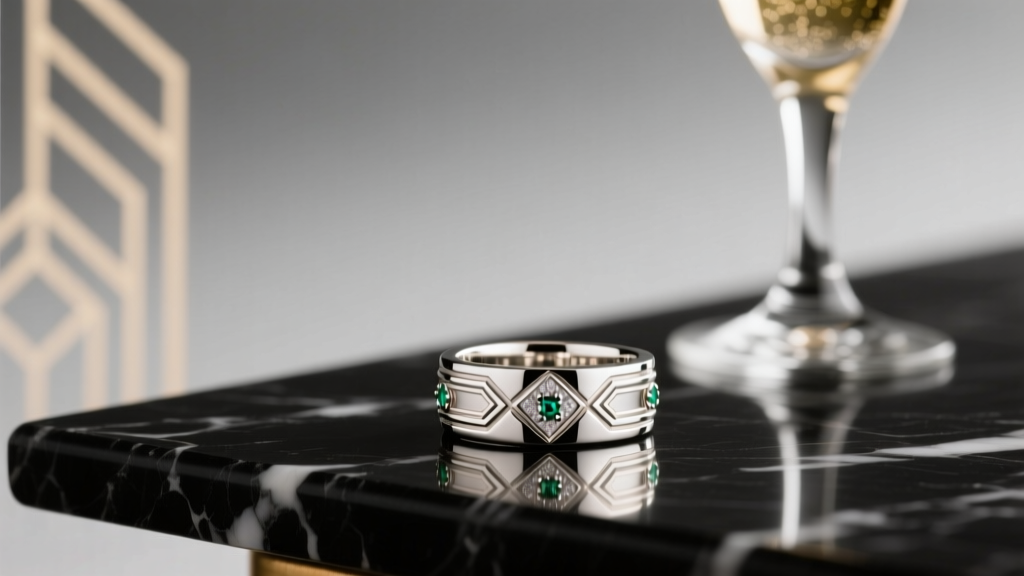
How to Choose a Wedding Band With an Art Deco Design
Art Deco wedding bands have a way of looking both crisp and romantic at the same time. The style was born in the 1920s and 1930s—an era known for bold geometry, glamorous parties, and a love of symmetry that still feels fresh today. If you’re shopping for wedding rings and want something beyond a plain band, Art Deco designs deliver personality without sacrificing elegance.
Choosing an Art Deco wedding band isn’t only about picking a “vintage-looking” ring. These bands often include specific metalwork, stone cuts, settings, and pattern details that affect comfort, durability, price, and how the band pairs with your engagement ring. A little guidance goes a long way, especially if you want the ring to wear beautifully for decades.
This guide walks you through the hallmarks of Art Deco jewelry, the best metals and gemstones for daily wear, how to judge craftsmanship, and the practical buying tips couples need when choosing a wedding band with an Art Deco design.
What Makes a Wedding Band “Art Deco”?
Art Deco jewelry is defined by structure and precision. Unlike the softer curves of Art Nouveau, Art Deco wedding bands rely on clean lines and repeating patterns. Whether you’re buying a diamond wedding band, a gemstone band, or a sleek engraved ring, look for these signature elements:
- Geometry and symmetry: rectangles, chevrons, zigzags, steps, and balanced layouts.
- Milgrain detailing: tiny beaded edges that frame stones or patterns and create a refined vintage feel.
- Engraving and filigree: hand engraving (often wheat, scroll, or linear motifs) and airy metalwork.
- Contrasting tones: white metal with dark accents (historically done with onyx or enamel; today often with black rhodium).
- Classic Deco cuts: emerald cut, Asscher cut, baguette, old European cut, and marquise shapes—often arranged in steps.
Current trends are bringing Art Deco back in a big way: slimmer stackable bands with milgrain, east-west set baguettes, negative-space geometric rings, and mixed-metal Deco-inspired stacks. At the same time, the timeless classics remain the same—channel-set baguettes and engraved platinum bands never go out of style.
Choose a Style That Fits Your Engagement Ring
Matching a Solitare or Minimal Engagement Ring
If your engagement ring is a solitaire (round brilliant, oval, cushion, or emerald cut), an Art Deco wedding band can add structure and sparkle without overwhelming the center stone. Popular pairings include:
- Channel-set baguette diamond band: clean and architectural, ideal for modern-minimal couples.
- Micro-pavé with milgrain edges: gives a vintage touch while still stacking neatly.
- Engraved metal band: timeless and comfortable, especially if you prefer minimal maintenance.
Pairing With a Halo or Vintage Engagement Ring
If your engagement ring already has Deco features—like a halo, filigree, or engraving—look for a band that echoes one detail (milgrain, stone shape, or engraving style) rather than competing with all of them. Too many textures can make the set look busy.
Consider a Contour, Notch, or Open Band
Many Art Deco engagement rings sit low or have intricate gallery work. A straight band can leave a visible gap. A contoured wedding band (curved), a notched band, or an open “bypass” band can create a cleaner fit. If you want a flush look, ask for the engagement ring’s measurements and have the band matched by a jeweler.
Metals for Art Deco Wedding Bands: Pros, Cons, and Best Uses
Platinum (950 Platinum)
Platinum is the traditional choice for many vintage and Art Deco-inspired wedding rings. It’s naturally white, dense, and excellent for secure stone settings.
- Best for: heirloom-quality pieces, detailed milgrain, and bands with diamonds or gemstones.
- Wear notes: platinum develops a soft patina over time rather than losing metal; it can be polished if you prefer shine.
- Cost: typically higher than gold due to density and labor.
White Gold (14K or 18K)
White gold is popular for Art Deco wedding bands because it’s bright, elegant, and often more budget-friendly than platinum.
- Best for: crisp Deco designs, channel settings, and engraving.
- Wear notes: most white gold is rhodium plated for extra brightness; expect re-plating every 1–3 years depending on wear.
- 14K vs 18K: 14K is typically more scratch-resistant; 18K offers richer color and a slightly heavier feel.
Yellow Gold and Rose Gold
While Art Deco is often associated with white metals, yellow gold and rose gold can look stunning in Deco geometry—especially in mixed-metal sets.
- Best for: a warmer, modern twist on vintage style; couples who want contrast with a white diamond.
- Style tip: consider milgrain and engraving to keep the Deco character strong even in warmer metals.
Two-Tone and Mixed-Metal Looks
One of today’s strongest wedding band trends is mixed-metal stacking. A two-tone Art Deco band (yellow gold plus white gold, or platinum plus rose gold accents) can tie together mismatched rings or create a bold, intentional statement.
Gemstones, Cuts, and Settings That Define Art Deco
Diamond Cuts That Read “Deco”
Art Deco is all about clean facets and step-like sparkle. These diamond cuts are especially authentic:
- Baguette cut: slim rectangles—perfect for channel-set wedding bands.
- Emerald cut: elongated steps; elegant and understated.
- Asscher cut: square step-cut with a “hall of mirrors” effect.
- Old European cut: a vintage round cut with softer brilliance; great for antique-inspired bands.
Gemstones That Suit the Art Deco Palette
Diamonds are the most common choice for an Art Deco wedding band, but colorful stones were historically popular and are trending again.
- Sapphires: deep blue is the classic Deco contrast; excellent durability for daily wear (Mohs 9).
- Emeralds: richly green and very Deco, but typically softer and more inclusion-prone—best for occasional wear or protective settings.
- Onyx: bold black contrast; often used in inlays or accent motifs.
- Rubies: striking color with strong durability (Mohs 9), great as accent stones.
Settings to Know: Channel, Bezel, Pavé, and Bar Set
- Channel setting: stones sit between two metal walls. Great protection, clean lines, and a very Art Deco look—especially with baguettes.
- Bezel setting: a rim of metal surrounds the stone. Extremely secure and ideal for active lifestyles; can look sleek and architectural.
- Pavé with milgrain: tiny diamonds set close together, often with beaded edges. Beautiful sparkle, but needs careful craftsmanship.
- Bar setting: stones separated by vertical bars—another geometric Deco favorite.
Quality Factors: How to Spot a Well-Made Art Deco Band
Craftsmanship Details That Matter
Art Deco wedding bands tend to be detail-heavy, so workmanship is everything. Look for:
- Even milgrain: consistent beading without flat spots or sharp edges.
- Crisp engraving: clean lines and depth; laser engraving can be neat, while hand engraving often has richer character.
- Secure stone setting: no rattling stones, straight alignment in channels, and smooth edges that won’t snag.
- Comfort finish: a slightly rounded interior (“comfort fit”) can make detailed bands easier to wear daily.
Diamond and Gemstone Checks
For diamond wedding bands, ask about:
- Matching: consistent color and clarity across multiple small stones.
- Cut quality: especially for baguettes—poor cutting can look glassy or uneven.
- Certification: large center stones may be certified; melee diamonds typically aren’t, but a reputable jeweler should disclose specs and sourcing.
Practical Buying Tips for Couples
- Try it on with your engagement ring: check for gaps, spinning, and whether the two rings rub aggressively.
- Think about lifestyle: if you work with your hands, consider bezel or channel settings over delicate filigree or high pavé.
- Confirm the band height: ultra-thin bands can look elegant, but a band under ~1.6–1.8mm may wear faster depending on design.
- Ask about resizing limits: eternity bands (stones all the way around) are difficult or impossible to resize. Half-eternity bands are more flexible.
- Check how it stacks: Art Deco stacks look amazing, but you want edges that don’t chew into neighboring rings.
Care and Maintenance for Art Deco Wedding Bands
Art Deco rings reward good upkeep, especially those with milgrain, engraving, and small stones.
- Cleaning at home: warm water, mild dish soap, and a soft toothbrush work well for diamonds, sapphires, and rubies. Rinse and dry with a lint-free cloth.
- Avoid harsh chemicals: bleach and chlorine can damage metal alloys and loosen settings over time.
- Be cautious with emeralds and onyx: avoid ultrasonic cleaners and aggressive scrubbing; these stones can be more sensitive.
- Regular checkups: have a jeweler inspect prongs, channels, and pavé at least once a year—twice if you wear the ring daily.
- Re-polishing and rhodium: white gold may need rhodium plating periodically; platinum can be polished if you want to restore a high shine.
Price Range and Value Tips
Art Deco wedding bands range widely based on metal, stone type, and craftsmanship. Typical price brackets:
- $300–$900: simpler engraved bands in 10K/14K gold, minimal milgrain, lighter weight.
- $900–$2,500: well-made 14K/18K gold or some platinum options, small diamond accents, half-eternity styles, milgrain details.
- $2,500–$6,000+: platinum bands, extensive hand engraving, higher-quality baguettes, larger total carat weight, custom contour bands.
Value tips: Choose a half-eternity band for the same face-up sparkle at a lower cost and easier resizing. Prioritize craftsmanship (secure settings, smooth milgrain) over extra carat weight. If you love the Deco look but want durability, consider channel-set baguettes or bezel-set accents rather than delicate exposed pavé edges.
Common Mistakes to Avoid
- Buying an eternity band without considering resizing: fingers change over time; flexibility matters.
- Overloading on detail: pairing an ornate band with an ornate engagement ring can look cluttered and feel uncomfortable.
- Ignoring comfort and snagging: milgrain and pavé should feel smooth against skin and fabric.
- Choosing the wrong metal for your routine: white gold needs re-plating; softer metals and ultra-thin designs can show wear faster.
- Not checking flush fit: a gap may be fine stylistically, but some couples hate how it looks or how it catches.
- Focusing only on the top view: look at the side profile, the inside finish, and how the band feels between fingers.
FAQ: Art Deco Wedding Bands
Are Art Deco wedding bands considered vintage or modern?
They can be either. True vintage Art Deco rings are antique pieces from the 1920s–1930s, while Art Deco-inspired wedding bands are modern rings made with the same design language—geometry, milgrain, engraving, and step-cut stones.
What’s the most durable Art Deco setting for everyday wear?
For daily wear, channel and bezel settings are typically the most protective for diamonds and gemstones. They reduce snagging and help shield stone edges, especially with baguettes.
Can I pair an Art Deco wedding band with a round brilliant engagement ring?
Yes. A round center stone looks great with a structured band—try channel-set baguettes, a milgrain pavé band, or an engraved band for a balanced mix of sparkle and clean lines.
Is platinum better than white gold for an Art Deco diamond band?
Platinum is excellent for security and longevity, especially for pavé and detailed settings. White gold can be a great choice too, particularly in 14K for durability, as long as you’re comfortable with occasional rhodium re-plating.
Do baguette diamonds sparkle less than round diamonds?
Baguettes sparkle differently. They have a sleeker “flash” with broader reflections rather than the high-scintillation glitter of round brilliant cuts. That restrained, architectural sparkle is part of what makes them feel so Art Deco.
How do I get the best match if my engagement ring sits low?
Bring your engagement ring to a jeweler or provide precise measurements and photos from multiple angles. A contoured or notched wedding band is often the cleanest solution for a flush fit without forcing the rings together.
Next Steps: Choosing the Right Art Deco Band With Confidence
The best Art Deco wedding band is the one that fits your daily life, complements your engagement ring, and shows careful craftsmanship—crisp geometry, secure settings, and comfortable finishing. If you want a timeless classic, lean toward platinum or white gold with channel-set baguettes and milgrain. If you love a modern trend, explore mixed metals, east-west baguettes, or a sleek engraved stack.
Once you’ve narrowed down the style and metal, try the band on with your engagement ring, confirm sizing and resizing options, and choose quality over extra detail that won’t wear well. For more help comparing wedding band styles, diamond settings, and vintage-inspired designs, explore more jewelry guides on weddingsift.com.
More Articles
 How Much Gold Is in a Wedding Band? (2026)
 How Wide Should a Woman's Wedding Band Be? (2026)
 3-Carat Engagement Ring Cost: What It Really Takes
 Eternity Ring vs Wedding Band: What Jewelers Won’t Tell You
 Engagement vs Wedding Ring Order: What to Know
 How to Wear Your Wedding Ring and Band the Right Way
 How to Choose a Wedding Band With a Hammered Finish
 Do Men Wear Engagement Rings Before Marriage?
 How to Choose an Engagement Ring With Ethical Sourcing
 Gold in Men’s Wedding Rings: Karat, Weight & Price (2026)