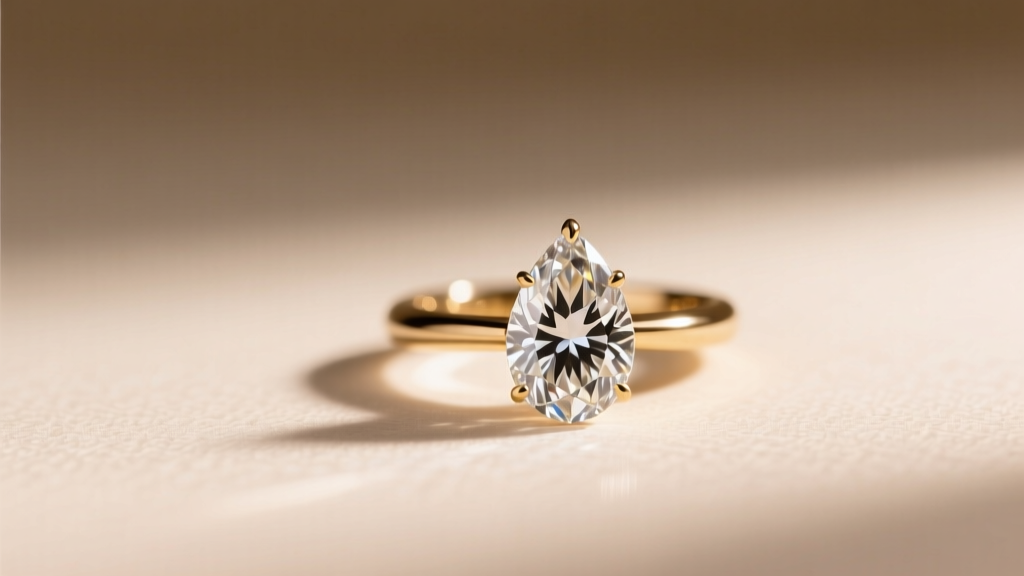
How to Choose an Engagement Ring With a Pear-Shaped Stone
Pear-shaped engagement rings have a way of looking both romantic and striking—like a teardrop of light on the hand. The shape blends the soft curves of an oval with the crisp point of a marquise, creating a silhouette that can feel vintage-inspired, modern, or completely timeless depending on the setting.
That beauty comes with a few practical considerations. Pear shapes can show color and inclusions differently than round diamonds, the pointed tip needs protection, and the ring’s orientation (point up or point down) changes the overall look. If you’re shopping as a couple, knowing what to prioritize—cut quality, length-to-width ratio, setting style, and metal choice—helps you get a ring that looks stunning every day and holds up for decades.
This guide breaks down the essential details a jeweler would walk you through: how to choose a flattering pear-shaped stone, which settings work best, how to compare diamonds vs. moissanite vs. gemstones, and how to get the best value without compromising on craftsmanship.
Why Pear-Shaped Stones Are So Popular Right Now
Pear-shaped diamond engagement rings are trending because they deliver standout sparkle with a distinctive outline. They also play well with today’s most requested styles: thin solitaire bands, hidden halos, east-west settings (turned sideways), and mixed-metal stacks with wedding bands.
At the same time, pear shapes are a classic. You’ll see them in antique-inspired rings with milgrain and halos, as well as clean, minimalist solitaires. This flexibility makes pear-shaped rings a strong choice if you want something that feels current but won’t look dated in ten years.
Understanding the Pear Cut: What Makes It Look Beautiful
Length-to-Width Ratio: Choose the Silhouette You Love
Pear stones are measured by their length-to-width (L/W) ratio. There’s no single “correct” ratio—just what you prefer on the finger.
- Classic balanced look: around 1.50–1.65
- More elongated, finger-lengthening: around 1.66–1.80+
- Wider, softer teardrop: around 1.40–1.49
If possible, try on a few ratios in person (or order try-on kits). Pear shapes can feel dramatically different even when the carat weight is the same.
Bow-Tie Effect: What to Look For
Many pear-shaped diamonds show a “bow-tie”—a darker shadow across the center caused by light leakage. A slight bow-tie is common and can be acceptable, but a strong, dark bow-tie can make the stone look dull in the middle.
Shopping tip: Review high-quality videos in motion. A well-cut pear will flash evenly across the entire surface, not just the ends.
Symmetry and Shape: Small Details, Big Impact
Pears should look symmetrical with even “shoulders” (the rounded sides) and a point that aligns with the center of the stone. If one shoulder is fuller than the other, the ring can appear slightly tilted on the hand—even when set correctly.
Choosing the Right Stone: Diamond, Moissanite, or Gemstone
Pear-Shaped Diamond: The Timeless Benchmark
Diamonds remain the top choice for engagement rings thanks to durability (10 on the Mohs scale) and classic sparkle. For pear cuts, prioritize cut quality and symmetry, since these drive brilliance.
Recommended diamond specs (a practical starting point):
- Color: G–I in white metals; J–K can look beautiful in yellow gold
- Clarity: VS2–SI1 (aim for “eye-clean”)
- Certification: GIA or AGS for natural diamonds; IGI is common for lab-grown
Pear-Shaped Lab-Grown Diamond: Maximum Size for the Budget
Lab-grown diamonds offer the same physical and optical properties as mined diamonds, usually at a significantly lower price. If you want a larger pear shape (like 1.5–3 carats) with strong color/clarity, lab-grown can be the value play.
Pear-Shaped Moissanite: High Sparkle, Great Value
Moissanite has exceptional brilliance and fire (rainbow flashes). It’s durable (around 9.25 Mohs), making it suitable for everyday wear. Pear-shaped moissanite is popular for couples who want a bigger look at a lower cost, especially in minimalist solitaire engagement rings.
Pear-Shaped Gemstones: Beautiful, But Choose Carefully
If you love color, pear shapes are gorgeous in sapphire (including peach, green, and teal), ruby, and morganite. For engagement rings worn daily, prioritize hardness and toughness:
- Great for daily wear: sapphire, ruby (corundum), spinel
- Wear with more care: emerald (more brittle), morganite (can abrade), opal (too soft for most)
Trend watch: Pear-shaped sapphires in unique hues paired with yellow gold and a diamond half-eternity wedding band are a strong modern-classic combination.
Best Settings for a Pear-Shaped Engagement Ring
Solitaire Settings: Clean and Classic
A pear solitaire lets the stone do the talking. Look for a setting that protects the pointed tip—this is non-negotiable for long-term wear.
- Prongs: 5-prong or 6-prong settings are common for pears
- V-prong at the tip: strongly recommended to protect the point
Halo and Hidden Halo: Extra Sparkle and Security
Halos make the center stone look larger and add a vintage-meets-glam feel. A hidden halo (diamonds under the center stone) is a current favorite: it adds sparkle from the side without changing the top view.
Three-Stone and Side-Stone Styles: Balanced and Bold
Pear centers pair beautifully with tapered baguettes, half-moons, or smaller pears. This style offers extra finger coverage and can visually balance a longer stone.
Bezel and Half-Bezel: Sleek Protection
A bezel setting wraps metal around the stone’s edge, offering excellent protection—especially at the tip. Full bezels feel modern and secure; half-bezels can look lighter and more delicate.
East-West Pear Settings: Modern and Unexpected
Turning the pear sideways creates an east-west engagement ring that feels fashion-forward and stacks well with curved wedding bands. It’s a trend that still reads elegant, especially in a slim band with a subtle bezel or double prongs.
Metal Choices: How They Change the Look (and Durability)
Platinum: The Durable Classic
Platinum is naturally white and very durable, making it ideal for securing prongs—especially helpful for pear shapes with a vulnerable point. It develops a soft patina over time but holds stones securely.
White Gold: Bright and Popular
14k or 18k white gold offers a crisp, bright look. Most white gold is rhodium plated, and it may need replating every so often depending on wear. It’s a common choice for diamond engagement rings and matching wedding bands.
Yellow Gold: Warm, Timeless, and Trending
Yellow gold is back in a big way, especially paired with pear diamonds and colored gemstones. It can also help slightly warmer diamonds (like J–K) look intentional and rich.
Rose Gold: Romantic and Flattering
Rose gold’s blush tone complements morganite and champagne diamonds beautifully. It’s also a strong metal due to its copper content, but it can emphasize warm tones in the center stone—something to consider if you want a very icy-white diamond.
Practical Buying Tips for Pear-Shaped Engagement Rings
- Always protect the tip: Choose a V-prong, bezel, or design that shields the point from chips.
- Check how it faces up: Pears can look larger than rounds at the same carat weight. Compare millimeter measurements, not just carats.
- Mind the wedding band fit: Many pear settings sit low or have a protruding basket. Ask whether a straight wedding band will sit flush, or plan for a contoured/curved band.
- Confirm the stone orientation: Point up is the classic look; point down can feel edgy and unique. Try both visually.
- Request real photos or videos: Especially for pear cuts, movement reveals bow-tie and light performance better than still images.
Care and Maintenance: Keeping a Pear-Shaped Ring Looking Sharp
Pear-shaped stones have edges and a point that can catch on fabric and take impact. A little routine care goes a long way.
- Clean regularly: Warm water, mild dish soap, and a soft toothbrush. Rinse thoroughly and dry with a lint-free cloth.
- Avoid harsh chemicals: Chlorine and strong cleaners can damage metals and some gemstones.
- Get prongs checked: Have a jeweler inspect prongs and the V-tip setting every 6–12 months, especially if you wear the ring daily.
- Remove for high-impact activities: Gym, gardening, moving furniture—this is where points and prongs get bent.
- Store separately: Diamonds can scratch other jewelry. Use a fabric-lined box or pouch.
Price Range and Value Tips
Pear-shaped engagement ring pricing depends on stone type, carat weight, cut quality, and setting complexity. As a broad guide:
- Lab-grown pear diamond ring (around 1.0–2.0 ct): often $1,500–$6,000 depending on color/clarity and setting
- Natural pear diamond ring (around 1.0–2.0 ct): commonly $4,000–$15,000+ depending on quality
- Pear moissanite ring: often $500–$3,000
- Pear sapphire or colored gemstone ring: varies widely, often $1,000–$8,000+ based on gem quality and origin
Value tips that actually work:
- Choose eye-clean clarity: SI1 can be a smart buy if it looks clean to the naked eye.
- Use metal to your advantage: Yellow gold can make a slightly warmer diamond look intentional and luxe.
- Prioritize cut over paper specs: A well-cut pear with slightly lower color often looks better than a higher-color stone with a heavy bow-tie.
- Consider a hidden halo: You can get extra sparkle without paying for a full halo look.
Common Mistakes to Avoid
- Ignoring the bow-tie: A strong bow-tie can make the center look lifeless. Always review videos.
- Skipping tip protection: A pear point without a V-prong or bezel is far more likely to chip.
- Buying by carat only: Two pears of the same carat can face up very differently. Compare millimeters.
- Forgetting band pairing: Some pear settings prevent a wedding band from sitting flush—plan your stack early.
- Choosing a band that’s too thin for lifestyle: Ultra-thin bands can warp over time. Many jewelers recommend at least ~1.8–2.0mm for everyday wear, depending on design.
FAQ: Pear-Shaped Engagement Rings
Do pear-shaped diamonds look bigger than round diamonds?
Often, yes. Pear shapes can have a larger face-up appearance for the same carat weight because of their elongated outline. Compare the stone’s millimeter dimensions to get a true sense of size.
Should the point face up or down?
Point-up is the traditional orientation and tends to elongate the finger. Point-down feels modern and distinctive. Choose what looks best on your hand and stacks best with your wedding band.
What’s the best setting to protect a pear-shaped stone?
A V-prong on the tip is the most common protective feature. For maximum security, consider a bezel or half-bezel, especially if you have an active lifestyle.
Are pear-shaped stones more likely to chip?
The pointed tip is the most vulnerable area, so the risk is higher than with fully rounded shapes if the setting doesn’t protect it. With a well-made setting and routine maintenance, a pear-shaped ring holds up very well for daily wear.
What wedding band pairs best with a pear-shaped engagement ring?
A classic pavé or plain band looks timeless with a pear solitaire. If your setting sits low or has a halo, a curved/contoured wedding band may fit better. Many couples also love stacking a pear engagement ring with a thin eternity band for sparkle.
Is a pear-shaped moissanite a good alternative to a diamond?
Yes—moissanite is durable, bright, and budget-friendly. It does have more rainbow fire than a diamond, so choose it if you enjoy that look. It’s a popular choice for larger center stones and minimalist engagement ring styles.
Next Steps: Choosing Your Pear-Shaped Ring with Confidence
Pick your pear shape based on the look you love (ratio and orientation), then focus on cut performance and symmetry so it sparkles evenly. Protect the point with a V-prong or bezel, choose a metal that matches your lifestyle and color preference, and plan ahead for how your wedding band will stack. When those details line up, a pear-shaped engagement ring becomes one of the most flattering, eye-catching choices you can wear every day.
For more help comparing engagement ring settings, diamond shapes, metals, and wedding band pairings, explore additional jewelry guides on weddingsift.com.
More Articles
 Spinel Engagement Rings Underrated Gemstone Beauty
 How to Match Wedding Bands to Different Skin Tones
 How to Choose a Wedding Band With a Ceramic Material
 How to Keep Wedding Ring and Engagement Ring Together
 How Heavy Is a Wedding Ring? (2026)
 Realistic Wedding Bands Drawing: Step-by-Step (2026)
 Engagement and Wedding Ring Order: The Right Way
 Plan Themes Essentials: A Metalsmith’s Practical Framework for Jewelry Design Consistency
 Is It Bad Luck to Keep Your Wedding Ring After Divorce?
 Wedding Ring Sizing: 5 Safe, Permanent Methods (2026)