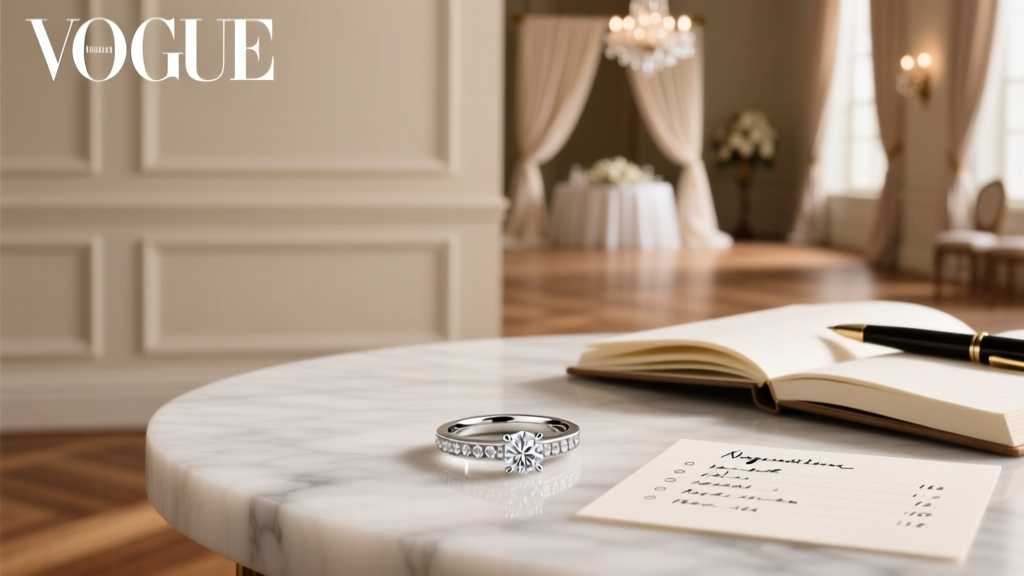
How to Negotiate the Price of an Engagement Ring
Shopping for an engagement ring is one of the most exciting parts of getting engaged—and one of the easiest moments to overspend. Between glittering display cases, emotional timing, and unfamiliar terminology (carat, clarity, prongs, pavé), it’s common for couples to feel like they’re negotiating in the dark.
The good news: engagement ring pricing isn’t mysterious once you know what drives cost and where flexibility exists. Jewelers expect informed questions, and many are willing to work with a serious buyer—especially when you’re comparing diamonds, lab-grown diamonds, moissanite, or colored gemstones and weighing options like platinum vs. 14K gold.
This guide walks you through how to negotiate the price of an engagement ring confidently, how to spot real value, and how to avoid common mistakes that can turn a “great deal” into a long-term headache.
Know What You’re Really Paying For: The Ring Price Breakdown
An engagement ring price is typically a mix of four elements: the center stone, the setting, craftsmanship/labor, and brand or retailer markup. Negotiation becomes much easier when you can separate these components.
1) Center stone cost (diamond or gemstone)
The center stone often accounts for 60–90% of the total price in a classic solitaire engagement ring. For diamond engagement rings, the 4Cs—cut, color, clarity, and carat weight—drive cost. For gemstones like sapphire, emerald, or ruby, origin, treatment, saturation, and clarity matter most.
2) Metal and setting cost
The metal (14K gold, 18K gold, platinum, or alternative metals) and the style of setting (solitaire, halo, pavé, bezel, cathedral) determine material weight and labor. A pavé engagement ring with micro-setting work costs more than a simple four-prong solitaire even with the same center stone.
3) Craftsmanship and finishing
Hand-finishing, precision prong work, secure stone-setting, and comfort-fit shaping add labor. If you’re considering a custom engagement ring, the CAD design time, prototype work, and revisions can also affect price.
4) Retailer factors
Brand name, store location, return policies, warranties, and inventory model (in-stock vs. made-to-order) all influence pricing. Two rings with similar specs can vary significantly because of overhead and branding.
Do Your Homework Before You Negotiate
Negotiation works best when you arrive with comparable information and a clear “win” for both sides. The goal isn’t to “beat” the jeweler—it’s to pay a fair price for a high-quality ring you’ll be proud to wear daily.
Learn the 4Cs—especially cut
Cut quality is the biggest driver of sparkle and can affect perceived size. A well-cut 0.90 ct round brilliant can look brighter (and sometimes larger) than a poorly cut 1.00 ct. If you’re working with a budget, prioritize cut and consider trading slightly on color or clarity:
- Round brilliant: Most expensive per carat but the most consistent brilliance.
- Oval, pear, marquise: “Elongated” shapes can look larger for the carat weight and are popular in current engagement ring trends.
- Emerald cut and Asscher: Timeless, architectural, but show inclusions more readily—clarity matters.
Understand certification (GIA, IGI, AGS)
For natural diamonds, GIA is widely trusted for grading consistency. For lab-grown diamonds, IGI is common and can be very useful when paired with video and light performance data. If a ring is priced like it has a top-tier report, ask to see the certificate number and verify it.
Compare apples to apples
When comparing quotes, keep specs identical: shape, carat weight, cut grade, color, clarity, fluorescence, polish/symmetry, and the setting metal and style. Even “small” differences can explain large price gaps.
Where Negotiation Is Most Realistic (and Where It Isn’t)
Some ring components have more wiggle room than others. Knowing where flexibility exists keeps the conversation smooth and productive.
More negotiable: settings, labor, and add-ons
- Setting price: Especially for in-house settings or when choosing between similar mountings.
- Side stones: Upgrading or adjusting total carat weight in a pavé band can shift price.
- Bundling: Adding wedding bands, a ring resizing, or a future anniversary band can open room for discounts.
- Extras: Engraving, appraisals, rhodium plating (for white gold), and warranty coverage may be included if you ask.
Less negotiable: certain loose stones
Loose diamonds with transparent market pricing may have tighter margins. That said, jewelers can often help you find a better-value stone (same look, better price) by tweaking one spec—like going from a D color to an F, or choosing 0.95 ct instead of a premium 1.00 ct “milestone” weight.
Smart Negotiation Tactics That Keep Quality High
Ask for the “best price for this exact ring”
Be direct and polite. A simple line works: “If we move forward today, what’s your best price on this ring as configured?” This signals you’re serious and gives the jeweler a chance to sharpen the pencil without a drawn-out back-and-forth.
Use alternatives to reduce cost without sacrificing beauty
- Lab-grown diamonds: A major trend for 2025 couples who want a larger look at a lower price. Ask to compare lab vs. natural pricing side by side.
- Moissanite: Brilliant, durable, and budget-friendly, with a slightly different sparkle pattern than diamond.
- Sapphires: Blue is classic, but peach, parti, and teal sapphires are trending and can be stunning in vintage-inspired settings.
Negotiate the package, not just the sticker price
If the ring price won’t move much, ask for value-adds:
- Free resizing (now and one future resize)
- Free annual prong checks and cleanings
- Complimentary engraving
- Upgrade policy (trade-in credit later)
- Wedding band discount when purchased together
Time your purchase thoughtfully
Many jewelers have seasonal promotions around major holidays, end-of-year events, or when refreshing inventory. If you’re not in a rush, ask if there are upcoming storewide events or if pricing is better for made-to-order vs. in-stock pieces.
Materials and Settings That Influence Price (and Long-Term Wear)
Metal choices: platinum vs. gold
- Platinum: Dense, naturally white, excellent for prongs. Develops a patina over time; can be repolished. Typically higher cost.
- 14K gold: Durable and popular for everyday wear; often the best value. Available in yellow, white, and rose gold.
- 18K gold: Richer color, slightly softer. A beautiful choice for classic yellow gold solitaires and vintage styles.
If your budget is tight, choosing 14K gold instead of platinum can free up funds for a better-cut diamond—often the smarter “visual upgrade.”
Settings: what costs more and why
- Solitaire (timeless classic): Less labor, focuses budget on the center stone.
- Halo (still popular): Adds sparkle and makes the center appear larger; more stones and labor.
- Pavé band: High craftsmanship; check stone security and ask about maintenance.
- Bezel (modern and practical): Great protection for active lifestyles; can cost more due to metalwork precision.
- Vintage-inspired: Milgrain, filigree, and hand engraving increase labor and price.
Price Range Considerations and Getting the Best Value
Engagement ring budgets vary widely, but value comes from choosing specs that look beautiful in real life, not just on paper.
- Under $1,500: Consider moissanite, smaller lab-grown diamonds, or cluster styles in 14K gold. Prioritize sturdy settings and comfort.
- $1,500–$4,000: Strong range for lab-grown diamond engagement rings (often 1.0–2.0 ct depending on specs) and quality craftsmanship in 14K/18K gold.
- $4,000–$10,000: Natural diamond options open up, plus premium settings (pavé, halo, custom). Platinum becomes more attainable.
- $10,000+: Larger natural diamonds, higher grades, designer settings, and specialty craftsmanship. Demand full documentation and strong aftercare terms.
Value tip: Avoid “magic weights.” A 0.90–0.98 ct diamond can cost meaningfully less than a 1.00 ct with nearly the same visual presence. The same applies at 1.50 vs. 1.49, 2.00 vs. 1.90, and so on.
Care, Maintenance, and What to Ask Before You Buy
Negotiating the price is only half the story. An engagement ring is daily-wear jewelry, so you want a plan for long-term upkeep.
- Prong checks: Ask how often to check prongs (every 6–12 months is common), especially for pavé and halo settings.
- Cleaning: At-home cleaning with warm water, mild dish soap, and a soft brush works for diamonds, sapphires, and most gold/platinum settings. Avoid harsh chemicals for softer gems.
- Rhodium plating: White gold may need replating over time. Ask if the jeweler includes it.
- Insurance appraisal: Request a detailed appraisal with stone specs and photos. This protects you if the ring is lost or stolen.
Common Mistakes to Avoid When Negotiating an Engagement Ring
- Focusing only on carat weight: Cut quality and proportions impact beauty more than a tenth of a carat.
- Ignoring the setting quality: Weak prongs or sloppy pavé work can lead to stone loss—an expensive “discount.”
- Not asking about treatments: Many gemstones are heat-treated (common and acceptable), but ask about fracture filling, diffusion, or other enhancements that affect value and care.
- Skipping the return/resizing policy: A fair price doesn’t help if you’re stuck with the wrong size or style.
- Comparing uncertified stones blindly: Without a reputable grading report, pricing comparisons can be misleading.
- Pushing too aggressively: A respectful approach gets better results—and better service after the sale.
FAQ: Negotiating the Price of an Engagement Ring
Can you negotiate engagement ring prices at jewelry stores?
Often, yes—especially on settings, bundled purchases (engagement ring plus wedding bands), and added services like resizing, engraving, or warranties. Some retailers have fixed pricing, but it’s still reasonable to ask for value-adds.
Is it better to negotiate the diamond or the setting?
Settings and labor are frequently more flexible. Loose diamonds can be tighter on margin, but you can still negotiate by comparing similar stones or adjusting specs for better value.
What diamond specs give the best “bang for your buck”?
A well-cut diamond in the near-colorless range (often G–I) and eye-clean clarity (commonly VS2–SI1 depending on shape) can look stunning without paying premiums for grades that are difficult to see in everyday wear.
How do lab-grown diamonds affect negotiation?
Lab-grown diamond pricing is competitive and can vary by retailer. Negotiation may come from comparing equivalent certificates and asking for package perks, warranties, or a better setting price.
Should we buy the wedding band at the same time?
If you’re confident in your style direction, buying engagement ring and wedding bands together can increase your negotiating power and ensures the band sits flush with the engagement ring (especially with halos and cathedral settings).
What should we ask to confirm craftsmanship quality?
Ask about prong thickness, stone-setting method (especially for pavé), whether the ring is cast or hand-finished, and what inspections/maintenance are included. A quality jeweler will explain this clearly.
Next Steps: Negotiate Confidently and Buy for the Long Haul
A great engagement ring deal isn’t just a lower number—it’s the right balance of sparkle, durability, and responsible spending. Walk in with a clear budget, prioritize cut and craftsmanship, and negotiate on the total package: the ring, the services, and the long-term support that keeps your jewelry looking its best.
When you’re ready, explore more engagement ring and wedding band guides on weddingsift.com to compare styles, metals, gemstones, and current trends with timeless classics.
More Articles
 Wedding Ring Changes: Swap, Resize, or Redesign (2026)
 Wedding Ring Cleaning: 90-Second Pro Method (2026)
 Eternity Ring vs Wedding Ring: Key Differences (2026)
 Plain Wedding Band Cost Flaws: Save $1,200+ (2026)
 De Beers Wedding Rings: 7 Hidden Truths (2026)
 Moonstone Engagement Rings Mystical Blue Sheen
 Engagement Ring Trends Predictions for Next Year
 How to Choose a Wedding Band With a Brushed Gold Finish
 How Do You Wear a Wedding Ring Set the Right Way
 Jewelry Making for Beginners: First Projects