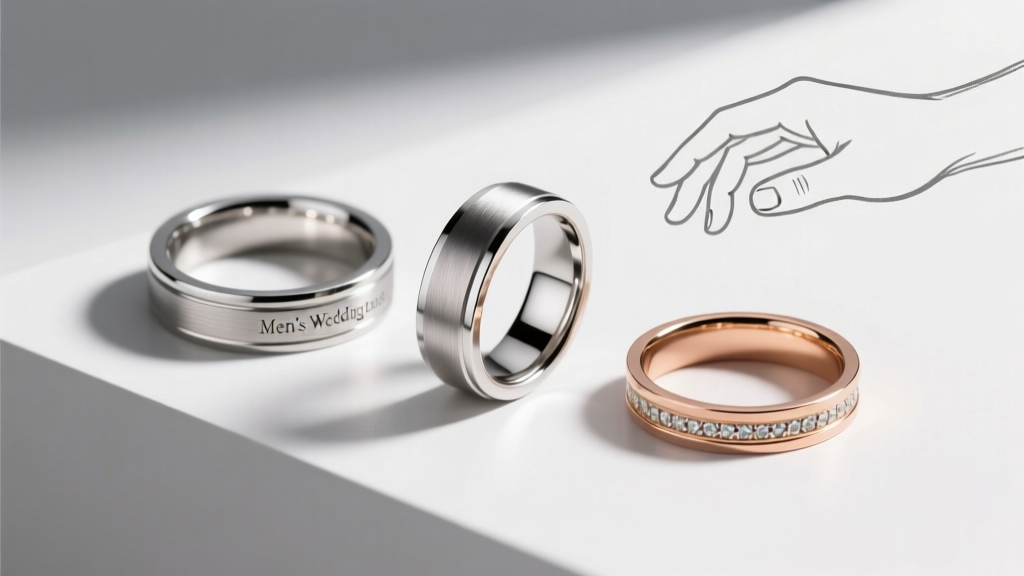
Men's Wedding Bands Materials and Styles Compared
Choosing a men’s wedding band sounds simple until you start trying them on. Suddenly, details you didn’t expect—metal weight, edge shape, finish, ring width, even how the inside feels—become the difference between “looks good” and “never want to take it off.” Since a wedding ring is worn daily, comfort, durability, and style all matter as much as the symbolism.
Today’s couples also shop differently than they did a decade ago. Many are coordinating metals with engagement rings, mixing materials for contrast, or choosing alternative metals for active lifestyles. Whether you’re looking for a timeless gold wedding band or a modern tungsten or carbon fiber ring, understanding materials and craftsmanship helps you buy once—and buy well.
This guide compares popular men’s wedding band materials and styles, explains what drives quality and price, and shares practical care tips so your ring looks great for years.
How to Choose a Men’s Wedding Band: The 5 Things That Matter Most
1) Lifestyle and wear
If you work with your hands, lift weights, garden, or do mechanical work, your ring will see impact, abrasion, and chemicals. Harder materials (like tungsten carbide) resist scratching, while tougher metals (like platinum) resist breaking and can be reshaped by a jeweler.
2) Comfort and fit
Comfort-fit bands have a slightly rounded interior, making them easier to slide on and off and more forgiving when fingers swell. Many men prefer comfort fit in widths 6mm–8mm for daily wear.
3) Style and coordination
Some couples match metals with an engagement ring (for example, platinum with platinum). Others intentionally contrast: yellow gold band with a white gold engagement ring, or a mixed-metal men’s ring paired with a classic solitaire setting.
4) Maintenance expectations
Some materials are “set and forget” (tungsten, ceramic). Others develop character over time (platinum patina) or need occasional polishing (gold, white gold rhodium plating).
5) Budget and long-term value
Upfront price is only part of value. Resizability, refinishing, and longevity can matter more over decades of wear.
Wedding Band Materials Compared
Gold (Yellow, White, and Rose)
Why couples love it: Gold is the classic choice for men’s wedding bands. It’s warm, traditional, easy to resize, and widely available in timeless silhouettes.
- Karat options: 14K and 18K are most common. 14K is more scratch-resistant (more alloy metal), while 18K has a richer gold color but is slightly softer.
- White gold: Typically alloyed with nickel or palladium and finished with rhodium plating for a bright white look. Expect re-plating every 1–3 years depending on wear.
- Rose gold: Alloyed with copper for a pink hue; durable and trend-forward, yet still classic.
Best for: Traditional tastes, easy resizing, pairing with most engagement ring metals.
Considerations: Gold scratches over time; it can be polished. White gold may require periodic rhodium maintenance. Nickel alloys can irritate sensitive skin (ask for nickel-free).
Platinum
Why couples love it: Platinum is naturally white, dense, and prestigious. It’s a favorite for heirloom-quality wedding rings and pairs beautifully with platinum engagement ring settings.
- Durability: Platinum is highly durable and tough. It can scratch, but it tends to displace metal rather than wear it away quickly, which helps maintain mass over time.
- Patina: Many men appreciate platinum’s soft, matte patina that develops with wear; it can be polished back to shine.
- Purity: Often 950 platinum (95% pure) with alloys like ruthenium or cobalt for strength.
Best for: Long-term wear, premium feel, those who want a naturally white metal without plating.
Considerations: Higher price than gold; feels heavier on the hand (a plus for many).
Palladium
Why couples love it: Palladium is in the platinum family, naturally white, and typically lighter and less expensive than platinum.
Best for: A white-metal look without rhodium plating, with a lighter feel than platinum.
Considerations: Not every jeweler works with palladium for resizing or repairs, so confirm service options upfront.
Silver (Sterling Silver)
Why couples love it: Silver has a bright look at a budget-friendly price.
Best for: Occasional wear rings or budget-focused shoppers.
Considerations: Sterling silver (925) tarnishes and scratches more easily than gold or platinum. For a daily-wear men’s wedding band, most couples prefer a more durable option.
Titanium
Why couples love it: Titanium is lightweight, modern, and corrosion-resistant—great for active lifestyles.
- Feel: Very light compared to gold or platinum.
- Finishes: Common in brushed, satin, or matte finishes; can include inlays (wood, carbon fiber) for a contemporary look.
Best for: Minimalist modern styles, comfort for those who dislike heavy rings.
Considerations: Titanium rings are often difficult or impossible to resize depending on design.
Tungsten Carbide
Why couples love it: Tungsten carbide is famous for scratch resistance and a substantial weight. It’s one of the most popular modern men’s wedding band materials.
- Hardness: Extremely hard, excellent for resisting everyday scuffs.
- Look: Often comes in gray, gunmetal, or black plated finishes; brushed tungsten is a trend favorite.
Best for: Those who want a ring that stays looking new with minimal maintenance.
Considerations: Tungsten can crack under severe impact and is typically not resizable. Choose quality tungsten (reputable makers) for better consistency and finish.
Cobalt Chrome
Why couples love it: Bright white appearance (similar to white gold/platinum), good scratch resistance, and generally more affordable than platinum.
Best for: A bright white men’s wedding ring without rhodium plating.
Considerations: Resizing may be limited; confirm policies before buying.
Ceramic and Zirconium (Black Rings)
Why couples love it: Black wedding bands are a strong trend—sleek, minimalist, and masculine. Ceramic is lightweight and scratch-resistant; zirconium can be heat-treated for a deep black surface.
Best for: Modern style, black ring trend, low maintenance.
Considerations: Some black coatings can wear if plated (like black IP plating). Ask whether the ring is naturally black (ceramic/zirconium) or coated.
Alternative Inlays: Wood, Carbon Fiber, Meteorite
Inlay styles are popular for couples who want a unique men’s wedding band. Carbon fiber adds a technical look; wood adds warmth; meteorite adds a rare pattern (Widmanstätten lines) that feels genuinely one-of-a-kind.
Considerations: Inlays require careful craftsmanship—clean seams, smooth edges, and secure bonding. Meteorite may need protective finishing to reduce oxidation, depending on the type.
Styles and Design Details: What Changes the Look (and Comfort)
Band profile: flat, domed, and beveled
- Classic dome (court shape): Timeless, comfortable, slightly traditional.
- Flat: Modern, clean lines; can feel wider on the finger.
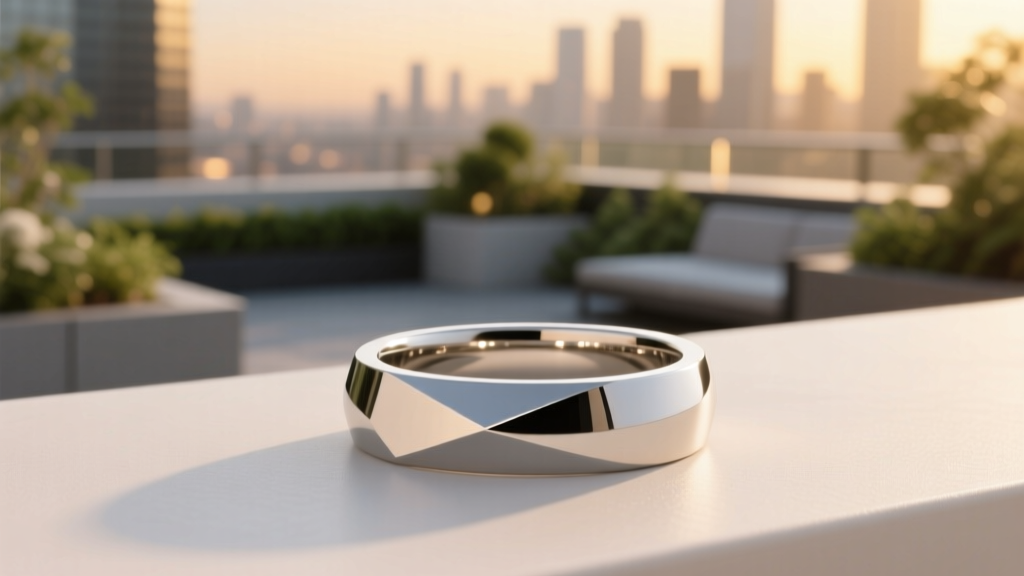
- Beveled edges: Popular contemporary look; adds definition and helps hide minor scratches.
Width: 4mm, 6mm, 8mm, 10mm
6mm–8mm is the most common sweet spot for men’s wedding bands. Wider rings show finishes and inlays better, but can feel bulky on smaller hands. If you’re between sizes or prefer subtle jewelry, try 4mm–6mm.
Finishes: polished, brushed, satin, hammered
- High polish: Bright and classic; shows scratches more quickly.
- Brushed/satin: Trend-forward and practical; disguises scuffs.
- Hammered: A handcrafted look that’s both timeless and very current in men’s wedding ring trends.
Gemstones and settings in men’s bands
Gemstone men’s wedding bands are growing in popularity—especially black diamonds, white diamonds, and sapphires. For durability, look for:
- Diamond cuts: Round brilliant is classic; princess cuts give a crisp, modern geometry.
- Setting types: Flush (gypsy) setting is best for active wear because the stone sits level with the band. Channel settings protect edges better than prongs, but still require occasional checks.
- Quality cues: Cleanly cut seats, smooth edges around stones, and even spacing in channel rows.
Quality Factors That Separate “Good” From “Great”
- Comfort-fit interior: A well-finished interior reduces pinching and improves daily comfort.
- Thickness and weight: Ultra-thin bands can warp (especially in gold). A jeweler can guide a balanced thickness for your width and metal.
- Seamless finishing: Look for crisp edges (or intentionally rounded edges), consistent brushing, and no sharp transitions.
- Hallmarks and stamps: 14K/18K, PT950, or maker’s marks help confirm metal content.
- Stone security: For diamond bands, ensure stones are tight, aligned, and protected (flush or well-made channel).
Price Ranges and Value Tips
- Budget-friendly ($50–$300): Tungsten, titanium, cobalt, ceramic. Best value for low maintenance and modern looks.
- Mid-range ($300–$1,200): 10K/14K gold bands (depending on weight), some mixed-metal designs, simpler diamond accents.
- Premium ($1,200–$3,500+): Heavier 18K gold, platinum, detailed craftsmanship (milgrain edges, hand-applied finishes), diamond channel or flush-set designs.
Value tip: If you’re deciding between 14K gold and platinum, try both on. Some men prefer platinum’s heavier feel enough to justify the cost. If you want a white look but prefer lower maintenance than white gold, consider platinum or palladium.
Another value tip: If resizing matters (weight changes, active lifestyle), choose gold or platinum rather than tungsten or ceramic.
Care and Maintenance: Keeping a Men’s Wedding Band Looking Its Best
- Daily care: Remove your ring for heavy lifting, abrasive work, and harsh chemicals (chlorine can damage alloys and finishes).
- Cleaning: Warm water, mild dish soap, and a soft toothbrush works for gold, platinum, diamonds, and sapphires. Rinse well and dry with a lint-free cloth.
- Polishing: Gold and platinum can be professionally polished; brushed finishes can be refreshed to restore the original texture.
- White gold upkeep: Plan for rhodium re-plating when the ring looks warmer or slightly yellow.
- Gemstone checks: For diamond wedding bands, have settings inspected annually (especially channel and flush settings) to prevent stone loss.
Common Mistakes to Avoid When Shopping
- Buying the wrong size for real life: Fingers swell with heat, exercise, and travel. Try on rings at different times of day, and consider comfort-fit sizing.
- Choosing a material without understanding resizing: Tungsten, titanium, and ceramic are often not resizable. Make sure you’re comfortable with that long-term.
- Prioritizing a finish over practicality: Mirror-polished rings look amazing but show scratches. If you want “always looks clean,” brushed or satin is usually happier day-to-day.
- Overpaying for coatings: Some black rings are plated and can fade. If you want a true black wedding band, ask if it’s ceramic or zirconium rather than coated.
- Ignoring edge comfort: A sharp-edged flat band can feel uncomfortable in wider widths. Try beveled edges or comfort-fit interiors.
FAQ: Men’s Wedding Band Materials and Styles
What is the most durable material for a men’s wedding band?
For scratch resistance, tungsten carbide is one of the best. For overall toughness and long-term serviceability (repairs, reshaping, resizing), platinum and 14K gold are excellent choices.
Are tungsten wedding bands safe if my finger gets injured?
In emergencies, tungsten rings can typically be cracked off with the right tools (they don’t bend like gold). Many first responders are familiar with removal methods, but it’s still worth considering if you work in higher-risk environments.
Which is better: 14K or 18K gold for a men’s wedding ring?
14K gold is generally more scratch-resistant and a popular daily-wear option. 18K gold has a richer color and more luxury feel, but can show wear a bit faster. Both are great—your lifestyle and preference for color usually decide.
Do men’s wedding bands need diamonds to be “dressy”?
No. A well-made high-polish gold or platinum band reads formal and classic without gemstones. If you like sparkle, a flush-set round diamond or a channel-set row keeps the look refined and wearable.
What width should I choose for a men’s wedding band?
Most men land on 6mm or 8mm. If you have smaller hands or prefer subtle jewelry, 4mm–6mm can look sleek. If you like a bold presence or want an inlay or detailed finish, 8mm–10mm often showcases the design best.
Can I match my wedding band to my partner’s engagement ring metal?
Yes, and it’s a popular choice—especially matching platinum with platinum or yellow gold with yellow gold. Mixed-metal sets are also on-trend, such as a yellow gold band with white gold accents for a coordinated but not identical look.
Next Steps: Find the Right Band for Your Everyday Life
If you want a timeless men’s wedding band that’s easy to resize and refinish, start with 14K/18K gold or platinum in a comfort-fit profile. If you prefer a modern, low-maintenance ring that keeps its finish, tungsten, titanium, cobalt, and ceramic offer strong value—especially in brushed, beveled, and black wedding band styles that are trending now.
Try on a few widths, pay attention to edge shape and interior comfort, and choose the material that fits how you actually live. For more expert advice on wedding rings, engagement ring settings, gemstones, and matching sets, explore more jewelry guides on weddingsift.com.
More Articles
 Cheap vs Premium Historic Jewelry: Material Integrity, Craftsmanship, and Long-Term Value
 How to Wear Anniversary Band with Wedding Set
 How to Choose the Perfect Engagement Ring for Her
 How to Stretch a Silicone Wedding Ring Safely
 Wedding Band Metal Choice: Avoid Regret (2026)
 How to Choose a Ring for a Proposal at the Beach
 Wedding Ring Stacking Rules (2026)
 How to Choose a Wedding Band With a Knife Edge Profile
 Green Diamond Extremely Rare Natural Color
 Zircon Engagement Rings Natural Sparkle Alternative