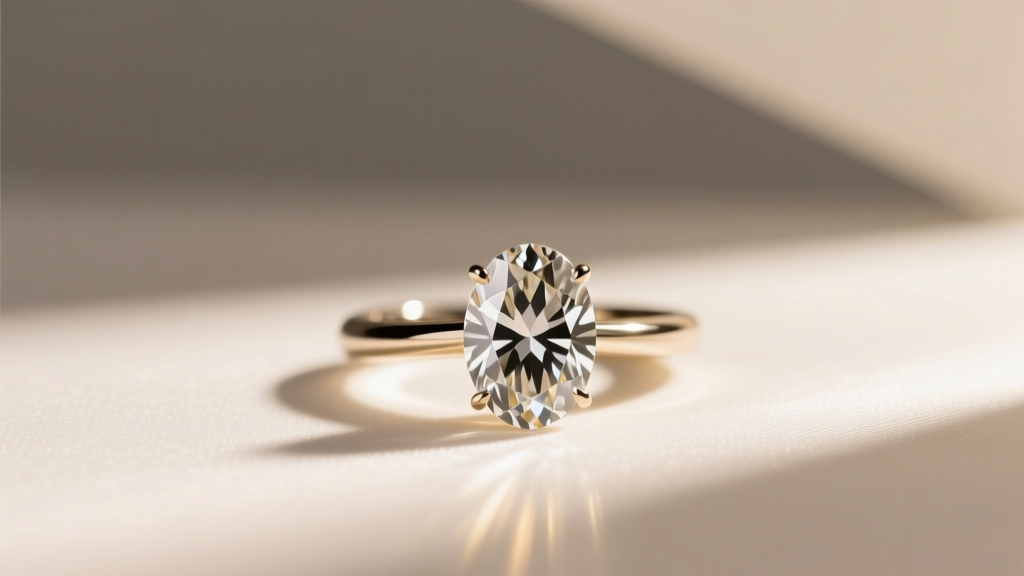
Oval Diamonds Illusion of Larger Size
Oval diamond engagement rings have become a favorite for couples who want standout sparkle without necessarily jumping into a bigger carat budget. The shape naturally looks longer on the finger, and when it’s well cut and set, an oval diamond can appear noticeably larger than other stones with the same carat weight. That “bigger look” is one reason oval-cut diamonds remain one of the strongest wedding ring trends—alongside classics like round brilliant and emerald cut.
Still, not every oval delivers that flattering, elongated presence. Cut quality, length-to-width ratio, setting style, and even the metal color can change how large (and how bright) the diamond looks. If you’re shopping for an engagement ring or planning a matching wedding band, understanding the details behind the oval diamond’s visual advantage will help you get better value and a ring that looks amazing for decades.
This guide breaks down why ovals look larger, what to prioritize in quality, and which settings maximize finger coverage—plus practical care tips, price guidance, and common mistakes to avoid.
Why Oval Diamonds Look Bigger Than Their Carat Weight
More Face-Up Surface Area Than Many Shapes
Carat weight measures mass, not visible size. Oval diamonds tend to spread their weight across a larger “face-up” area compared to deeper cuts. In plain terms: for the same carat weight, a well-proportioned oval often shows more diamond on top than a round brilliant. That creates the illusion of a larger stone, especially when viewed from arm’s length (how most people see your ring day to day).
Elongation Creates Instant Finger-Flattering Coverage
Ovals have an elongated outline that visually lengthens the finger. This makes the center stone feel larger and more prominent, even when the measurements are modest. The effect is particularly noticeable in solitaire engagement rings where the center diamond is the main event.
Settings Can Add “Visual Weight” Without Added Carats
Certain engagement ring settings—like halos, split shanks, and tapered shoulders—frame the oval and increase finger coverage. The diamond doesn’t change, but the overall look reads bigger, brighter, and more substantial.
Oval Cut Essentials: What Actually Determines Beauty (and Size Illusion)
Length-to-Width Ratio: The Most Useful “Style” Number
Ovals come in different proportions. The length-to-width (L/W) ratio shapes the personality of the diamond:
- 1.30–1.35: slightly oval, a balanced “not too long” look (very classic)
- 1.36–1.45: popular sweet spot for a noticeably elongated, elegant appearance
- 1.46–1.55+: very elongated; can look larger but may show more cut issues if not well made
If your goal is the illusion of larger size, many couples love ratios around 1.40–1.50 because they maximize length on the finger. Just keep the cut quality high so brilliance doesn’t suffer.
The Bow-Tie Effect: Know What You’re Seeing
Most oval diamonds show some degree of the “bow-tie” effect: a darker, bow-shaped area across the center caused by how light reflects inside the stone. A slight bow-tie can be normal, but a strong one can make the diamond look less lively and even smaller.
Buying tip: If you’re shopping online, prioritize HD video that shows the oval moving under light. If you’re shopping in person, tilt the diamond and check whether the center stays bright or goes noticeably dark.
Cut Quality Matters More Than a “Cut Grade” Label
Unlike round diamonds, fancy shapes like ovals typically don’t have a universal cut grade. That means two ovals with the same carat weight and color/clarity can look completely different in brightness and size impression. Look for:
- Even sparkle: lively light return across the whole stone
- Good symmetry: balanced shoulders, centered point ends
- No “mushy” areas: dull patches can reduce the big, crisp look
Quality Factors That Influence the “Bigger Look”
Color: Oval Diamonds Show Color More Than Rounds
Because of their facet pattern and larger face-up area, oval-cut diamonds can reveal color a bit more readily than round brilliants. If you want an icy look in white metal (platinum or white gold), many shoppers land in the G–I range for strong value, or D–F for a whiter look at a premium.
In yellow gold or rose gold engagement rings, you can often go slightly warmer (like H–J) while still looking bright—especially if the setting design doesn’t emphasize the side profile.
Clarity: Choose “Eye-Clean,” Not Necessarily Flawless
Ovals can show inclusions more easily than some shapes because the center area is broad. That said, you usually don’t need extremely high clarity grades to get a clean look. A great strategy:
- VS2–SI1 is often the value zone for eye-clean stones
- Ask to confirm “eye-clean from 6–8 inches” (normal viewing distance)
- Be cautious with inclusions near the tips, where the diamond is more vulnerable
Carat Weight vs. Millimeter Size: Shop by Measurements
If you’re chasing a larger look, pay attention to the diamond’s millimeter dimensions (length and width). Two 1.00 carat ovals may differ in face-up size depending on how they carry weight in depth.
Smart comparison: When comparing diamonds, line up length x width (mm) rather than carat alone. A slightly shallower stone can look larger, though it must still return light well to avoid dullness.
Settings That Make Oval Diamonds Look Bigger (and More Elegant)
Solitaire: Timeless and Size-Forward
A classic oval solitaire engagement ring is the cleanest way to showcase the stone’s spread. Choose a thin to medium band (around 1.6–2.2mm) for a modern look that keeps the center diamond visually dominant. For durability, very thin bands should be crafted carefully and matched with an appropriate setting height and metal strength.
Halo: Maximum Presence for the Budget
A halo setting surrounds the oval with small pavé diamonds, boosting the overall diameter and brilliance. This is one of the most effective ways to create a “bigger center” impression without paying for additional carat weight. Halos also pair well with curved wedding bands designed to sit flush.
Three-Stone and Tapered Side Stones: Classic with Extra Coverage
Three-stone oval engagement rings are both romantic and practical: side stones add width and sparkle. Tapered baguettes are a timeless, elegant choice, while pear side stones create a glamorous, elongated silhouette that complements the oval.
Bezel and Half-Bezel: Modern, Sleek, and Protective
Bezel-set oval diamonds are trending for couples who want a clean, contemporary look with added security. A bezel can make the outline feel bold and substantial. If you want a lighter look, a half-bezel can offer protection while keeping more of the diamond visible.
Metal Choices: How They Affect the Diamond’s Look
- Platinum: naturally white, durable, and premium; develops a soft patina over time that many people love
- 14K White Gold: bright and strong; typically rhodium-plated for a crisp white finish
- 18K Yellow Gold: rich color and classic warmth; can help slightly warmer diamonds look intentional
- Rose Gold: romantic and trendy; flattering on many skin tones and pairs beautifully with oval shapes
If you want the diamond to look as white as possible, platinum or white gold is usually the go-to. If you want contrast and warmth, yellow or rose gold can make the oval’s brilliance pop while offering a more distinctive style.
Practical Buying Tips for Oval Diamond Engagement Rings
- Prioritize cut performance: sparkle and symmetry create that crisp “large diamond” presence.
- Check the bow-tie: avoid ovals with a heavy dark band across the middle.
- Compare millimeters: look at length x width to gauge face-up size.
- Choose an eye-clean clarity: invest where it shows; don’t overpay for microscopic perfection.
- Match the wedding band early: halos and low-set designs may need a curved band or notched fit to sit flush.
- Secure the tips: prongs at the ends (north/south) help protect the oval’s most vulnerable areas.
Care and Maintenance: Keep the Oval Bright and Secure
Oval diamonds are brilliant-cut stones, which means they sparkle best when clean. Lotions, soap film, and everyday oils can dull the surface quickly.
- At-home cleaning: warm water + mild dish soap + a soft toothbrush. Rinse well and dry with a lint-free cloth.
- Avoid harsh chemicals: chlorine and abrasive cleaners can damage metal finishes and loosen settings over time.
- Professional checkups: have prongs and settings inspected every 6–12 months, especially for pavé or halo rings.
- Safe storage: store your ring in a soft pouch or separate compartment to prevent scratching other jewelry.
Price Range and Value Tips
Oval diamond prices vary widely based on carat weight, cut quality (even without an official cut grade), color, clarity, and certification. As a general shopping expectation:
- Budget-friendly sweet spot: choose strong cut performance, eye-clean clarity (VS2–SI1), and near-colorless color (G–I).
- Size strategy: consider “just under” milestones (e.g., 0.90ct vs. 1.00ct, 1.80ct vs. 2.00ct) where pricing can jump.
- Setting value: a halo or three-stone design can deliver a larger overall look than paying for more center carat weight alone.
- Certification: stick with reputable grading reports (commonly GIA or AGS where available) to compare quality consistently.
If you’re balancing budget and impact, put your money into a lively, well-cut oval and a setting that enhances presence. A beautifully cut 1.20ct oval can look more impressive than a poorly cut 1.40ct that appears dark in the center.
Common Mistakes to Avoid When Shopping for Oval Diamonds
- Buying by carat only: ignoring millimeter measurements can lead to a stone that faces up smaller than expected.
- Overlooking bow-tie: a strong bow-tie can reduce sparkle and make the diamond look smaller and duller.
- Going too thin on the band: ultra-thin shanks can bend over time, especially with larger center stones.
- Not protecting the tips: weak prong placement can increase risk of chipping at the ends.
- Forgetting the wedding band fit: some settings don’t sit flush with straight bands—plan the pair as a set.
- Chasing the highest grades everywhere: D color and IF clarity aren’t necessary for most couples; prioritize what you can see.
FAQ: Oval Diamond Engagement Rings
Do oval diamonds look bigger than round diamonds of the same carat?
Often, yes. Many ovals have a larger face-up surface area than rounds at the same carat weight, so they can appear bigger from the top view. The exact difference depends on the oval’s measurements and how well it’s cut.
What length-to-width ratio is best for an oval diamond?
There’s no single “best,” but 1.36–1.50 is a popular range for a flattering, elongated look. If you want a more classic, softly oval shape, aim closer to 1.30–1.35. If you want a longer, bolder look, consider 1.46+.
How do I avoid a noticeable bow-tie effect?
View the diamond in motion (video or in person) and look for consistent brightness across the center. Mild bow-tie is common, but avoid stones where the center stays dark in most lighting angles.
Are oval diamonds more expensive than round diamonds?
Typically, ovals can be priced lower per carat than round brilliants, while still offering strong sparkle and a larger-looking face-up size. Pricing depends heavily on cut quality, color, clarity, and demand.
Which setting makes an oval diamond look the biggest?
A halo usually creates the biggest overall look because it increases the visible footprint with a ring of small diamonds. A solitaire with a slim band can also make the center look larger by contrast, and three-stone styles add width and presence.
What wedding band pairs best with an oval engagement ring?
For solitaires, a classic straight diamond band or plain metal band often sits flush. For halos or low-set ovals, a curved or contour wedding band may fit better. Many couples choose matching engagement ring and wedding band sets for a seamless look.
Where Oval Diamonds Shine: Trend-Forward and Timeless
Oval diamonds sit in a sweet spot between current engagement ring trends and enduring style. They feel modern in minimal solitaires, romantic in vintage-inspired halos, and bold in yellow gold bezels—yet the silhouette remains a classic that won’t feel dated in wedding photos years from now. If your goal is a diamond that looks larger than its carat weight, flatters the finger, and offers plenty of flexibility in settings and wedding band pairings, an oval is one of the smartest choices on the market.
Next step: narrow down your preferred ratio, choose a setting that supports your lifestyle, and compare ovals by millimeter size and sparkle—not carat weight alone. Explore more engagement ring and wedding band guides on weddingsift.com to keep shopping with confidence.
More Articles
 How to Remove a Stuck Wedding Ring Safely
 Is Bill Maher Wearing a Wedding Ring? The Truth Revealed
 How Much to Solder Wedding Rings (2026)
 How Tight Should Wedding Band Be? Fit Guide (2026)
 How Much Is My Wedding Ring Worth? (2026)
 How to Choose a Wedding Band That Fits Your Lifestyle
 Gold Wedding Band Durability: Choose One That Lasts (2026)
 Lab-Grown Diamonds vs Natural Diamonds The Honest Truth
 Moissanite vs Lab Diamond: Honest Comparison
 Modern Minimalist Engagement Ring Guide