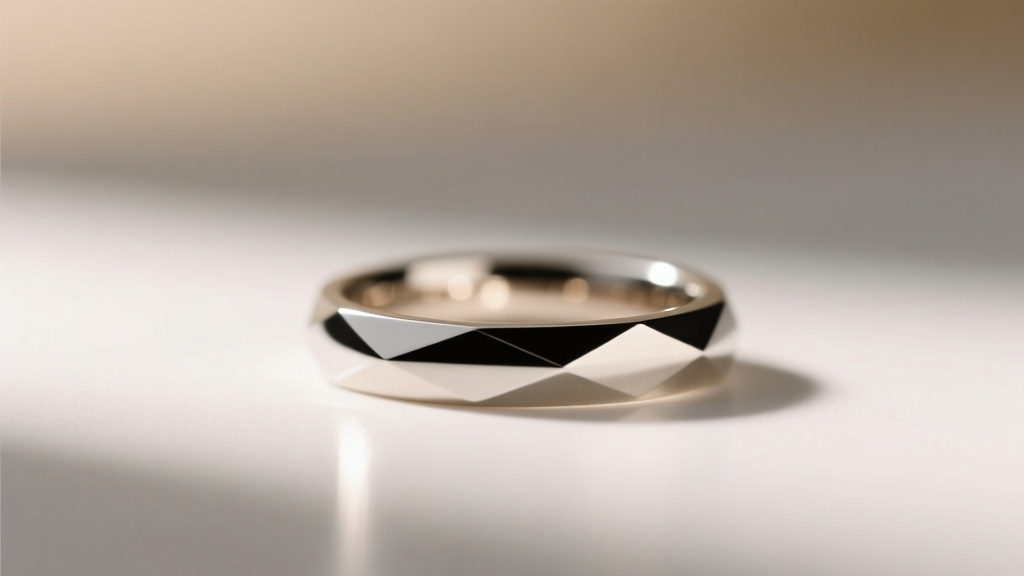
How to Choose a Wedding Band With a Beveled Edge
A wedding band is the piece of jewelry you’ll wear the most—through handshakes, workouts, travel, daily routines, and everything in between. That’s why small design details matter. One of the most practical (and surprisingly stylish) details to consider is the beveled edge: a crisp, angled transition between the band’s outer surface and its edge.
Beveled-edge wedding bands have become a modern classic for couples who want a ring that looks clean, intentional, and slightly architectural. Whether you’re shopping for a men’s wedding band, a minimalist women’s band, or a matching set, the bevel can change how the ring catches light, how it pairs with an engagement ring, and how durable it feels over years of wear.
This guide breaks down what a beveled edge is, how to choose the best metal and finish, how to judge craftsmanship, what to expect on price, and the most common mistakes to avoid—so you can buy with confidence and end up with a ring you’ll love long-term.
What Is a Beveled Edge Wedding Band?
A beveled edge is an angled cut along the outer rim of the ring. Instead of a fully rounded profile (like a classic comfort dome) or a sharp 90-degree corner (like a strict flat band), a beveled band has a defined slope at the edges. Think of it as a subtle facet that frames the ring.
Why couples choose beveled edges
- Modern look with timeless restraint: The clean line reads contemporary, but it isn’t trendy in a way that dates quickly.
- More visual definition: Even a plain metal band can look “designed” because the bevel creates contrast and reflection.
- Great for wider bands: On 5mm–8mm widths, a bevel can make a ring look slimmer and more refined.
- Practical durability: A well-made bevel can protect the ring’s face from looking overly scuffed because it breaks up wear patterns.
Beveled vs. Flat vs. Rounded: Which Profile Fits Your Style?
Beveled edge
Clean, structured, and slightly angular. It pairs especially well with minimal solitaires, modern engagement rings, and anyone who likes crisp lines. It’s also popular for men’s wedding bands because it feels substantial without looking bulky.
Flat band
Flat bands have a strong, contemporary feel, but the edges can appear harsher (and may feel sharper) unless softened. If you love a flat look, ask for softened edges or a comfort-fit interior.
Rounded (domed) band
The most traditional profile, often seen in classic yellow gold wedding rings. Rounded bands are timeless and comfortable, and they tend to hide scratches well, but they don’t have the same crisp “frame” effect as a bevel.
Choosing the Right Metal for a Beveled Wedding Band
Metal choice affects everything: color, weight, maintenance, scratch resistance, and how sharply the bevel can be finished.
Platinum (950 Platinum)
Best for: heirloom longevity, naturally white color, sensitive skin.
Platinum is dense and naturally white, making it a favorite for couples who want a premium, enduring band. It develops a soft patina over time rather than losing metal quickly. Beveled edges in platinum look substantial and refined, especially with a satin or brushed center and polished bevels.
White gold (14K or 18K)
Best for: bright white look with a lower price than platinum.
Most white gold is rhodium-plated for a bright finish. A beveled edge highlights that crisp, reflective look—especially in polished finishes. Plan on occasional rhodium replating (often every 12–36 months depending on wear and skin chemistry).
Yellow gold (14K or 18K)
Best for: timeless warmth, classic wedding ring style.
Beveled edges look striking in yellow gold because the angle catches light in a bold way. 14K offers better scratch resistance than 18K, while 18K has richer color.
Rose gold (14K or 18K)
Best for: romantic warmth, modern-meets-vintage vibe.
Rose gold’s copper content gives it durability and a distinctive blush tone. A beveled edge adds a contemporary sharpness that balances the softness of the color—one reason rose gold beveled bands remain a strong trend.
Titanium and tungsten carbide
Best for: budget-friendly, strong modern look.
Tungsten is highly scratch-resistant but can’t be resized and may chip under a hard impact. Titanium is lightweight and durable, but also typically not resizable. If you choose one of these, make sure the fit is exact and ask about warranty and replacement policies.
Band Width, Thickness, and Comfort Fit: Getting the Feel Right
A beveled wedding band’s comfort is influenced by both its outer profile and its inner shaping.
Popular widths (and how they look)
- 2mm–3mm: delicate, stacks well, ideal for pairing with an engagement ring or a wedding band set.
- 4mm–6mm: the most versatile range; beveling adds definition without looking oversized.
- 7mm–10mm: bold and contemporary; a bevel helps keep the ring from feeling like a plain slab.
Comfort-fit interior
Ask for a comfort-fit band (slightly rounded inside). It helps the ring slide over the knuckle more easily and feels smoother for daily wear. Many couples love the look of an angular bevel with the comfort of a rounded interior—best of both worlds.
Finishes and Style Options: From Timeless to Trend-Forward
Beveled edges shine (literally) when paired with the right finish. Mixing finishes is a current favorite trend because it highlights the geometry of the ring.
Polished
High-shine and classic. Polished beveled edges create bright reflections and crisp lines—great for a clean, formal look.
Brushed or satin
Modern and forgiving. A satin center with polished beveled edges is a popular “two-tone” look without changing metal color.
Hammered or matte
Texture-forward and distinctive. Hammered centers with beveled edges balance organic texture with a structured outline—ideal if you like artisan style.
Two-tone metal designs
Another trend: a white gold band with yellow gold beveled edges (or vice versa). If you love mixed metals in your everyday jewelry, this can be a cohesive choice.
Gemstones and Settings for Beveled Bands
While many beveled bands are plain metal, adding diamonds or colored gemstones can personalize the look.
Diamond accents
- Pavé rows: Small round brilliant diamonds set closely together add sparkle, but require more maintenance (checking prongs).
- Channel-set diamonds: Diamonds sit between metal walls—sleek, secure, and excellent for daily wear.
- Flush (gypsy) set: Diamonds set into the metal surface; very durable and popular in modern men’s wedding bands.
Colored gemstones
Sapphires are the most wearable colored option (Mohs hardness 9), making them a smart choice for a wedding band you won’t baby. Rubies are also durable; emeralds are more delicate and better suited for occasional wear styles. For beveled-edge designs, channel-set sapphires or flush-set stones keep the look streamlined and protect the gems.
Quality Factors: How to Spot a Well-Made Beveled Edge
- Crisp, even bevel lines: The bevel should be symmetrical around the full circumference, not wavy or inconsistent.
- Clean transitions: Where the bevel meets the center surface should look sharp and intentional, not rounded off unless that’s the design.
- Balanced proportions: On a 6mm band, a bevel that’s too large can look like the ring is all edge; too small and it disappears.
- Solid metal construction: Avoid hollow-feeling bands for everyday wear. Ask if it’s solid and what the approximate gram weight is (especially for gold and platinum).
- Stone setting security (if applicable): In pavé, check for uniform prongs; in channel, look for even alignment; in flush-set, confirm stones sit snugly with no gaps.
Price Range and Value Tips
Prices vary by metal, width, weight, and whether diamonds or custom details are included. These ranges are general guidelines for a solid, well-made beveled wedding band:
- 14K gold beveled band (plain, 4–6mm): often $400–$1,200
- 18K gold beveled band (plain, 4–6mm): often $700–$1,800
- Platinum beveled band (plain, 4–6mm): often $900–$2,500
- Titanium/tungsten beveled band: often $80–$400
- Diamond or sapphire accents: add roughly $300 to several thousand depending on total carat weight, setting style, and craftsmanship
Best value moves
- Choose 14K for daily durability if you like gold and want better scratch resistance than 18K.
- Use mixed finishes (brushed center, polished bevel) to get a “designed” look without paying for gemstones.
- Prioritize comfort-fit for long wear—small upgrade, big daily payoff.
- Ask about resizing policy before buying, especially for wider bands or alternative metals.
Practical Buying Tips (Sizing, Pairing, and Try-On Advice)
- Try on at the width you’ll actually buy: Wider rings feel tighter. Many people need a quarter to half size larger when moving from 3mm to 6mm+.
- Consider your engagement ring profile: If your engagement ring sits low, a beveled band may create a small gap. Look for a slight contour, a notched band, or a matching wedding band set.
- Think about your lifestyle: If you work with your hands, consider brushed finishes and channel/flush-set stones over pavé.
- Check how the bevel catches light: Under store lighting everything sparkles; step into natural light to see the true look.
- Confirm metal color match: “White gold” can vary in tone. If pairing with a white gold engagement ring, ask whether both are rhodium-plated and how they’ll age.
Care and Maintenance for Beveled Wedding Bands
- Cleaning: Warm water, mild dish soap, and a soft toothbrush work well for gold and platinum. Rinse thoroughly and dry with a lint-free cloth.
- Avoid harsh chemicals: Chlorine and strong cleaners can damage alloys and dull finishes.
- Refinishing: Polished bands show scuffs more clearly; brushed finishes can be refreshed easily by a jeweler. Many couples schedule a professional clean and polish once or twice a year.
- Stone checks: If you have pavé or channel-set diamonds, have settings inspected periodically, especially if you notice snagging or hear a faint rattle.
- Storage: Store separately to prevent diamonds or harder metals from scratching other jewelry.
Common Mistakes to Avoid
- Buying tungsten or titanium without understanding resizing limitations: If your finger size may change, choose gold or platinum for flexibility.
- Choosing a width based only on photos: A 8mm band can look sleek online but feel overwhelming on smaller hands. Try similar widths in person.
- Ignoring edge comfort: A bevel looks sharp, but the ring shouldn’t feel sharp. Look for softened edges or a comfort-fit interior.
- Overpaying for vague “premium” claims: Ask for specific metal karat, platinum purity, gram weight, diamond specs (if included), and warranty terms.
- Not considering how it pairs with the engagement ring: Matching metal color and finish (or intentionally contrasting) makes the set look cohesive.
FAQ: Beveled Edge Wedding Bands
Are beveled edge wedding bands comfortable?
Yes—when made well. The key is the interior profile. A comfort-fit interior makes a beveled band feel smooth, even if the exterior looks crisp and angular.
Do beveled edges scratch more easily?
Not necessarily. Scratches depend more on metal and finish. A polished band will show marks sooner than a brushed finish. Beveled edges can actually help disguise wear because they break up reflections across the surface.
What’s the best metal for a beveled men’s wedding band?
For long-term wear and easy resizing, 14K gold and platinum are top choices. For scratch resistance on a budget, tungsten is popular, but it typically cannot be resized.
Can I add diamonds to a beveled edge band?
Absolutely. Channel-set or flush-set diamonds are especially compatible with beveled designs because they keep a clean silhouette and offer strong protection for daily wear.
How do I match a beveled wedding band with an engagement ring?
Match the metal color first (yellow, white, rose, platinum). Then decide whether you want the same finish or a complementary contrast. If your engagement ring sits low, consider a contoured band or a design made to sit flush.
Is a beveled edge a trend or a timeless style?
Both. Beveled bands align with today’s preference for clean lines and mixed finishes, but the geometry is understated enough to feel classic years from now—especially in plain metal or subtle two-tone designs.
Next Steps: Choosing the Right Beveled Band for You
If you want a wedding ring that feels modern, defined, and wearable every day, a beveled edge wedding band is one of the smartest designs to consider. Start by choosing the right metal for your lifestyle, then dial in width and comfort-fit, and finally decide on finish—polished for classic shine, brushed for a contemporary look, or mixed finishes for extra dimension. If you love sparkle, channel-set or flush-set diamonds keep the ring sleek and durable.
Keep exploring more wedding band and engagement ring guides on weddingsift.com to compare styles, metals, settings, and the details that make a ring feel truly yours.
More Articles
 Gold in Wedding Rings: Karats, Weight & Real Cost
 Opal Engagement Rings Unique Beauty and Fragility
 Is Bill Maher Wearing a Wedding Ring? The Truth Revealed
 How to Choose an Engagement Ring With an East-West Setting
 How to Choose a Wedding Band With a Geometric Pattern
 Engagement and Wedding Ring Order: The Right Way
 Wedding Ring Styling Rules: 7 Fixes for 2026
 How to Choose a Wedding Band With a Matte Finish
 How to Clean Diamond Rings Without Harsh Chemicals
 Diamond Inclusions and Blemishes What to Accept