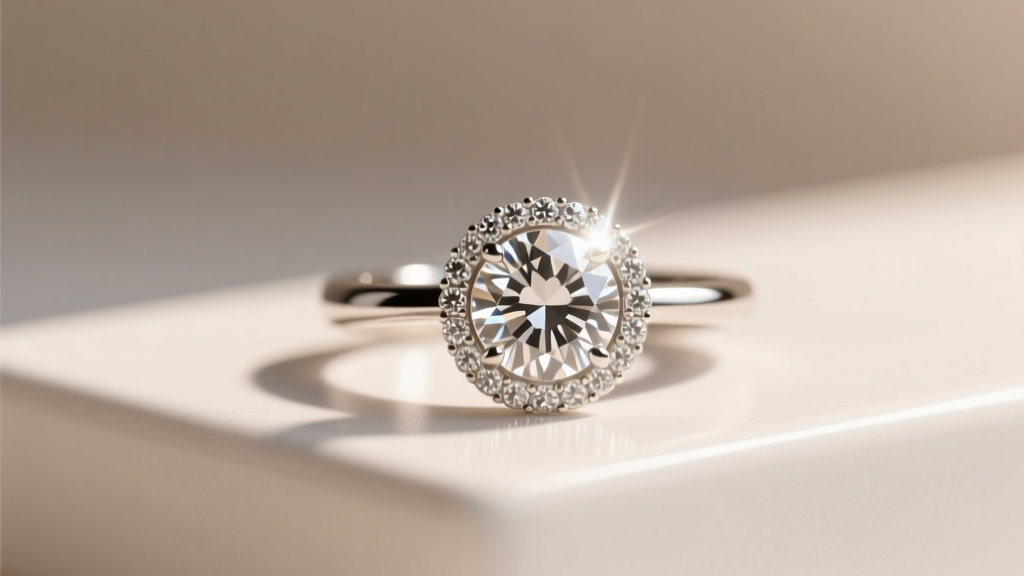
Diamond Halo Settings How They Enhance the Center Stone
A diamond halo setting is one of the most reliable ways to make an engagement ring look brighter, larger, and more detailed—without changing the center stone itself. By surrounding the main diamond (or colored gemstone) with a circle of smaller accent diamonds, a halo creates a “frame of light” that draws the eye inward and boosts overall sparkle. It’s a classic engagement ring style that continues to evolve with modern design touches, making it equally at home in timeless bridal sets and trend-forward custom rings.
For couples shopping for an engagement ring and wedding band, halo settings matter because they affect more than appearance. The halo influences how big the center diamond looks on the finger, how the ring performs in everyday wear, how the wedding band sits alongside it, and where your budget goes (center stone vs. setting). A well-made halo ring can be an excellent value—if you understand the details that separate “pretty in the case” from “beautiful for life.”
This guide breaks down how halo settings enhance the center stone, the styles that suit different shapes and lifestyles, what to look for in quality craftsmanship, and how to shop smart for the best sparkle and longevity.
What Is a Diamond Halo Setting?
A halo setting is a ring design where small diamonds (melee diamonds) encircle the center stone. The halo can be a single row (single halo) or multiple rows (double halo), and it may sit flush around the center stone or be raised slightly to allow more light and dimension.
Why halos look bigger and brighter
- Visual size boost: The halo increases the overall diameter of the “diamond face-up area,” so the ring reads larger on the finger.
- More sparkle points: Many small diamonds create frequent flashes of light, especially in indoor lighting where engagement rings are often admired.
- Contrast and framing: A crisp outline around the center stone makes it stand out, similar to how a frame enhances a photo.
How Halo Settings Enhance Different Center Stone Shapes
Halos can be tailored to nearly any diamond cut. The most flattering halo is usually one that matches the center stone’s outline (called a “cut-to-shape” halo), though some couples intentionally choose contrast for a more editorial look.
Round brilliant
A round diamond halo engagement ring is the most classic combination. Round melee diamonds echo the center’s shape, maximizing symmetry and “all-over sparkle.” A single halo often provides the best balance of brilliance and wearability.
Oval and pear
Oval and pear shapes already face up large, and a halo can exaggerate that finger-lengthening effect. Look for a halo that follows the stone closely—too much gap around the stone can make the center look smaller or slightly “floating.” For pear diamonds, a halo that perfectly hugs the point helps protect it, especially when paired with a protective prong at the tip.
Cushion and radiant
Cushion halo engagement rings are a bridal favorite because the soft corners and pillowy outline look romantic and substantial. Radiant cuts pair beautifully with halos when you want a modern, high-sparkle look with crisp edges.
Princess and emerald
Princess cuts benefit from halos that keep corners protected. Emerald cuts are a special case: because step cuts emphasize clarity and broad flashes rather than glittery sparkle, a halo adds scintillation around the perimeter and can make an emerald cut appear brighter in everyday lighting. Many couples choose a thin, refined halo to keep the center stone’s elegant “hall of mirrors” effect.
Popular Halo Styles: Timeless Classics and Current Trends
Single halo (the enduring classic)
A single halo is the most versatile and easiest to pair with wedding bands. It offers noticeable enhancement without overwhelming the center stone. This style remains a go-to for couples seeking a balanced, elegant engagement ring.
Double halo (maximum presence)
A double halo adds a second ring of diamonds for extra diameter and sparkle. It’s a glamorous look that’s trending again in bold bridal sets, especially with larger center stones or elongated shapes like oval and pear.
Hidden halo (modern favorite)
A hidden halo sits beneath the center stone (around the basket or gallery) rather than around the perimeter. It’s a top trend for 2025 because it adds detail from the side view while keeping a clean top view. Hidden halos work well for couples who want subtle sparkle and a more streamlined silhouette.
Vintage-inspired halo (timeless romance)
Milgrain edges, scalloped halos, and delicate engraving create an antique feel. This style pairs beautifully with cushion cuts, round brilliants, and even colored gemstones like sapphires or morganite. If you love heirloom looks, ask about hand-applied milgrain and engraved shanks for better definition.
Geometric or “floating” halos (contemporary edge)
Some designers use angular halos, spaced halos, or mixed diamond shapes (like baguettes and rounds) for a fashion-forward engagement ring. These can be stunning, but they rely heavily on precise craftsmanship to look intentional rather than uneven.
Metal Choices: How They Change the Halo’s Look
Metal color affects contrast, brightness, and long-term maintenance. For diamond halo settings, the most common choices are platinum and 14k/18k gold.
Platinum
- Look: Cool white, naturally bright, and ideal for emphasizing diamond whiteness.
- Durability: Excellent for prongs; platinum wears by developing a patina rather than thinning quickly.
- Best for: Active lifestyles, secure prongs, and heirloom longevity.
White gold (14k or 18k)
- Look: Bright white finish (usually rhodium plated).
- Maintenance: May need periodic rhodium re-plating to stay bright white.
- Best for: Those who want a crisp white look with a lower price than platinum.
Yellow gold and rose gold
- Look: Warm metal creates striking contrast with diamonds and can make a halo feel more vintage or romantic.
- Design tip: Many rings use a two-tone setting (white metal prongs/halo with a yellow or rose gold band) to keep diamonds looking bright while enjoying a warmer shank color.
Quality Factors That Make or Break a Halo Ring
Melee diamond quality: small stones matter
The halo’s sparkle depends on the melee. Ask about color and clarity ranges. Many well-made halo rings use melee around G–H color and VS–SI clarity for a clean, bright look. Poorly matched melee can look dull or slightly tinted compared to the center diamond.
Pavé workmanship and prong security
Most halos are pavé-set, meaning tiny diamonds are held by small beads or prongs. Look for:
- Even spacing and consistent stone size
- Smooth edges that won’t snag clothing
- Well-formed prongs that cover each melee diamond securely
Halo proportion and “gap” around the center
A halo should sit close enough to look intentional but not so tight that it crowds the center stone. A visible gap can reduce the size-enhancing effect and sometimes signals a poorly matched head or off-the-shelf assembly.
Center stone performance: cut still leads
A halo can’t fix a dull center diamond. Prioritize excellent cut quality for round brilliants and strong light performance for fancy shapes. For a halo engagement ring, many couples find the sweet spot by choosing a slightly smaller but better-cut center stone and letting the halo add presence.
Practical Buying Tips for Halo Engagement Rings and Wedding Bands
Decide where your budget should go
Halos shift some budget into the setting. If you want a larger-looking ring, you can often choose a slightly lower carat weight center diamond and invest in a well-made halo with bright melee and sturdy prongs.
Check how the wedding band will sit
Some halo settings have a low basket or wide shoulders that prevent a straight wedding band from sitting flush. If a seamless bridal set matters to you, ask for:
- A higher-set halo or a cathedral profile that allows band clearance
- A contoured or curved wedding band designed to nest beside the halo
Think about lifestyle and ring height
High halos look dramatic but can catch on hair, sweaters, and gloves. If you’re active or work with your hands, choose a lower profile halo, sturdier prongs, and consider platinum for added security.
Consider lab-grown vs. natural diamonds
Both are real diamonds. Lab-grown diamonds can offer a larger center stone for the same budget, while natural diamonds hold traditional rarity appeal. Either way, insist on a reputable grading report (commonly GIA or IGI) for the center stone.
Care and Maintenance: Keeping a Halo Ring Sparkling
- Clean regularly: Soak in warm water with mild dish soap, then gently brush with a soft toothbrush—especially around the halo where lotion and soap collect.
- Avoid harsh chemicals: Chlorine and abrasive cleaners can damage metal finishes and loosen settings over time.
- Schedule inspections: Have prongs and pavé checked every 6–12 months. Halo rings have many small stones; early tightening prevents losses.
- Store safely: Keep your halo ring in a fabric-lined box or separate pouch so it doesn’t scratch other jewelry or get prongs caught.
Price Range Considerations and Value Tips
Halo engagement rings can range widely based on metal, total carat weight, and craftsmanship. As a general guideline:
- Setting only: Many halo settings in 14k gold begin around the mid-hundreds to low thousands, while platinum and designer craftsmanship can be higher.
- Complete ring: Total price depends heavily on the center diamond’s carat, cut, color, and clarity. A halo can make a 0.70–1.00 carat center diamond look closer to a 1.00–1.30 carat presence on the hand, depending on halo width.
Best value moves:
- Prioritize cut in the center diamond for maximum brightness.
- Choose 14k gold for a strong balance of durability and price (especially for thin pavé bands).
- Ask for matched melee quality and consistent color.
- Consider a hidden halo if you want detail without paying for a full perimeter of larger melee.
Common Mistakes to Avoid When Shopping for Halo Rings
- Ignoring craftsmanship: A halo ring is only as good as its pavé work. Uneven bead setting and thin, sharp edges can lead to lost stones and snagging.
- Buying too delicate for your lifestyle: Ultra-thin pavé bands can look beautiful but may not be ideal for daily wear if you’re hard on jewelry.
- Choosing a halo that overwhelms the center: If the halo is too thick, the center diamond can look undersized. Proportion matters.
- Forgetting wedding band fit: Many couples fall in love with a halo engagement ring and only later realize the wedding band won’t sit flush.
- Assuming halos hide flaws: A halo can distract the eye, but it won’t fully disguise a cloudy center diamond. Light performance still shows.
FAQ: Diamond Halo Settings
Do halo settings make a diamond look bigger?
Yes. The halo increases the visible diameter of the ring’s top view, making the center stone appear larger. The effect depends on halo width, melee size, and how closely the halo hugs the center diamond.
Are halo engagement rings secure for daily wear?
They can be very secure when well made, but they require more maintenance than a simple solitaire because there are many small diamonds and prongs. Regular inspections help prevent lost melee stones.
What’s the difference between a halo and a hidden halo?
A traditional halo surrounds the center stone from the top view. A hidden halo sits under the center stone around the basket or gallery, adding sparkle from side angles while keeping a cleaner face-up look.
Which metal is best for a diamond halo ring?
Platinum is excellent for durability and prong security. 14k white gold is a popular value choice, though it may need rhodium plating over time. Yellow and rose gold create warm contrast and can look especially striking in two-tone designs.
Will a halo setting make my diamond look whiter?
A bright white halo in platinum or white gold can make the center appear whiter by contrast, especially if the melee diamonds are well matched in color. A warmer metal or warmer melee can emphasize warmth in the center stone.
Can I pair a halo engagement ring with a straight wedding band?
Sometimes. It depends on the height and shape of the halo and basket. Many halo rings need a contoured wedding band to sit flush, so it’s smart to try bands alongside the engagement ring before you decide.
Choosing the Right Halo Setting: Confident Next Steps
A diamond halo setting is a smart choice if you want a brilliant, eye-catching engagement ring that maximizes presence on the hand. Focus on a beautifully cut center stone, insist on clean pavé craftsmanship, and make sure the ring’s profile works with your lifestyle and wedding band plans. Whether you choose a timeless single halo, a glamorous double halo, or a modern hidden halo, the best designs look balanced, feel comfortable, and keep your diamonds secure for everyday wear.
For more guidance on engagement ring settings, diamond cuts, metal types, and wedding band pairing, explore additional jewelry guides on weddingsift.com.
More Articles
 How Much Does a Good Wedding Band Cost? (2026)
 Men's Wedding Band Fit: The 5-Second Finger Test (2026)
 Wedding Band vs Ring: What's the Difference?
 How to Choose a Wedding Ring for Wide Fingers
 Beach vs. Rustic Jewelry: Material Science, Aesthetic Logic, and Wearability Compared
 How to Choose an Engagement Ring With Ethical Sourcing
 Pave Diamond Rings Sparkle and Durability Guide
 Moissanite vs Lab Diamond: Honest Comparison
 How to Choose a Silicone Wedding Band for Active Days
 Men's Black Wedding Bands: Materials Explained