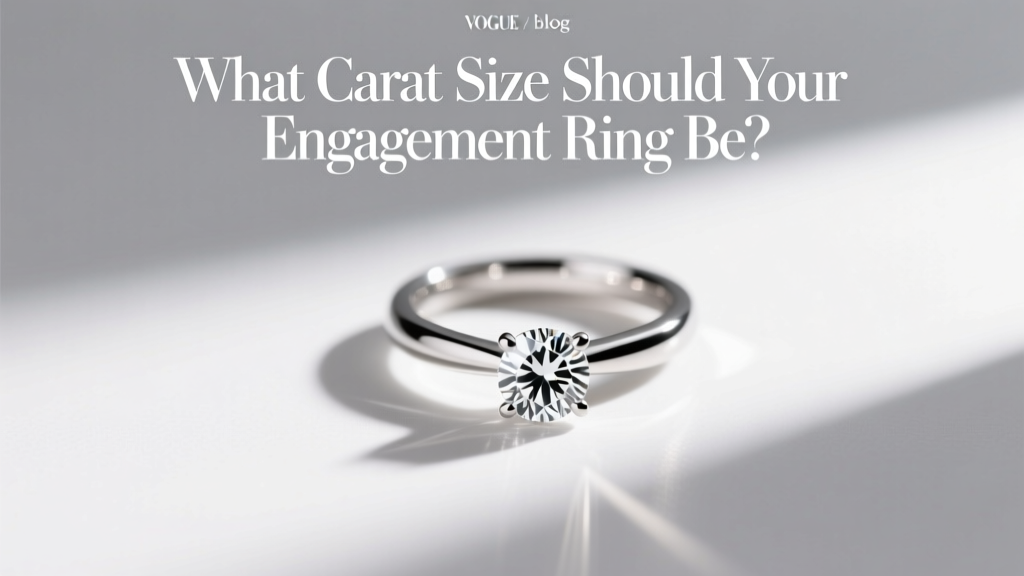
What Carat Size Should Your Engagement Ring Be
Carat size is often the first thing couples ask about when shopping for an engagement ring—and it’s easy to see why. The center stone is the focal point, the detail friends notice across a dinner table, and the sparkle you’ll see every day when you reach for your coffee or hold hands. Still, “How many carats?” isn’t a one-size-fits-all question.
The best carat size for your engagement ring depends on more than budget. Finger size, ring setting, diamond shape, lifestyle, and the overall balance of the design all influence what looks and feels “right.” A well-chosen 1.00 carat diamond can look larger than a poorly cut 1.25 carat; a slim band can make a stone appear bigger; and a halo can add presence without adding center-stone weight.
This guide breaks down how carat weight translates to visual size, how to match a diamond or gemstone to your style and daily wear, what it really costs at today’s market, and how to avoid common ring-shopping mistakes—so you can choose a carat size you’ll love for decades.
Carat Size vs. Diamond Size: What You’re Actually Buying
Carat is a unit of weight, not a measurement of face-up size. One carat equals 200 milligrams. Two diamonds can weigh the same but look different in size depending on their cut quality (how well the diamond is proportioned and how it returns light) and their shape (round, oval, emerald, etc.).
Why Cut Quality Can Make a Smaller Diamond Look Bigger
Cut quality affects brilliance (sparkle) and spread (how large a diamond looks from the top). A poorly cut diamond can carry weight in the depth, making it look smaller face-up. A well-cut diamond uses its weight efficiently and can appear larger and brighter—often the best “value trick” in engagement ring shopping.
Shape Matters: Some Cuts Look Larger Per Carat
If you want a bigger look without jumping up in carat weight, consider shapes with larger face-up dimensions:
- Oval and marquise: elongated, flattering on the finger, excellent “spread.”
- Pear: a classic-meets-modern shape that can look larger than a round at the same carat.
- Emerald: elegant and architectural; shows size well, but emphasizes clarity.
- Round brilliant: timeless and the sparkliest; typically looks smaller than ovals/pears at equal carat due to shape and cutting style.
What Carat Sizes Look Like on the Hand
Most couples are choosing a ring based on how it looks and feels, not just a number. Here’s a practical way to think about common carat sizes:
- 0.30–0.50 carat: delicate, classic, and comfortable for everyday wear; pairs beautifully with slim bands and vintage-inspired settings.
- 0.70–0.90 carat: a noticeable center stone that still feels understated; often a sweet spot for value.
- 1.00 carat: a popular “milestone” size; excellent options available across shapes and settings.
- 1.25–1.50 carats: more presence and finger coverage; may benefit from secure settings and mindful lifestyle fit.
- 2.00+ carats: statement territory; craftsmanship, prong strength, and insurance become even more important.
Finger size and proportions influence how large a diamond appears. A 1.00 carat oval can look dramatic on a size 4 finger and more moderate on a size 7. Also consider band width: a 1.8mm–2.0mm band tends to make the center stone look larger, while a 2.3mm–3.0mm band gives a more substantial, balanced look.
Settings That Change the “Look” of Carat Size
Your engagement ring setting can dramatically affect perceived size and overall style. This is one of the best areas to adjust when you want more visual impact without moving up a full carat bracket.
Solitaire (Timeless Classic)
A solitaire engagement ring showcases the center stone with minimal distractions. It’s ideal if you want the carat size to speak for itself. A 4-prong solitaire can expose more of the diamond, while 6 prongs adds security and a classic round look.
Halo (Bigger Look, Trending Again)
Halo engagement rings—especially micro-pavé halos—remain popular for couples who love maximum sparkle. A halo can make a center stone appear significantly larger and pairs well with round, cushion, oval, and pear shapes. If you’re trend-conscious, look for thin halos and hidden halos (a favorite in current bridal jewelry trends) for a modern profile.
Three-Stone (Symbolic and Balanced)
Three-stone engagement rings offer presence and meaning (past, present, future). Side stones can be tapered baguettes for a sleek, timeless look or round brilliants for extra shimmer. A smaller center diamond can still look impressive when supported by well-proportioned sides.
Bezel and Half-Bezel (Modern, Secure)
Bezel settings wrap metal around the diamond, making them a smart choice for active lifestyles. They feel contemporary and protect the girdle well. They may slightly reduce edge sparkle compared to prongs, but a high-quality cut still performs beautifully.
Quality Factors That Should Guide Carat Choices (The “4Cs” and Beyond)
If you’re choosing between, say, a 1.10 carat and a 1.25 carat diamond, the better buy is often the one with stronger overall quality. Carat weight is just one piece of the value puzzle.
Cut: The First Priority for Sparkle
For round diamonds, aim for Excellent or Ideal cut grades from reputable labs (like GIA). For fancy shapes (oval, pear, emerald), cut grading is more nuanced; look for strong light performance, pleasing proportions, and minimal issues like the bow-tie effect in ovals and pears.
Color: Choose What Works With Your Metal
- Platinum/white gold: many couples prefer D–H color for a crisp look, though well-cut I–J can still appear bright.
- Yellow/rose gold: the warm metal can make H–J (and sometimes K) appear whiter once set, offering better value.
Clarity: Don’t Overpay for What You Can’t See
Many diamonds in the VS2–SI1 range are “eye-clean,” meaning inclusions aren’t visible without magnification. For emerald cuts and other step cuts, prioritize clarity a bit more because they show inclusions easily.
Certification and Craftsmanship
For diamonds, prioritize a trusted grading report (commonly GIA or IGI). Then look at the setting craftsmanship: prong symmetry, smooth finishing, secure stone seats, and a well-made gallery can matter as much as the stone itself—especially for 1.50 carats and above.
Gemstone Alternatives: Carat Decisions Beyond Diamonds
Diamond engagement rings are classic, but modern couples are also choosing colored gemstones for personality and value. If you’re shopping sapphires, moissanite, or lab-grown options, carat size needs a slightly different lens.
Sapphire (Timeless and Durable)
Sapphire (9 on the Mohs scale) is a durable choice for everyday engagement rings. Deep blue is the classic, but pink, green, and teal sapphires are trending in contemporary bridal jewelry. Sapphires are denser than diamonds, so a 1.00 carat sapphire may look a bit smaller face-up than a 1.00 carat diamond in the same shape.
Moissanite (Big Sparkle, Strong Value)
Moissanite is known for intense brilliance and fire. It’s typically discussed in millimeters or “diamond equivalent” size. If you want a larger look at a lower cost, moissanite makes big center stones more accessible.
Lab-Grown Diamonds (Popular Trend, Same Look)
Lab-grown diamonds have become a major engagement ring trend because they offer the same optical properties as mined diamonds while often allowing you to increase carat size for the same budget. The best approach is the same: prioritize cut, then color/clarity, and select a setting built for daily wear.
Metals and Band Styles That Affect Carat Size Choice
The metal you choose influences both the ring’s look and longevity. It can also change how big the center stone appears.
- Platinum: naturally white, durable, and heavy; excellent for securing larger center stones. Develops a patina over time that many people love.
- 18K gold: richer color and slightly softer than 14K; great for a luxe feel, especially with yellow or rose gold.
- 14K gold: a practical favorite for engagement rings due to its strength and everyday wearability.
Pavé bands add sparkle but require maintenance (tiny stones and prongs). If you’re choosing a larger carat diamond, consider a band that supports it visually and structurally—often 2.0mm+ for long-term durability, depending on design.
Price Range Considerations and Smart Value Moves
Engagement ring pricing scales quickly with carat size, especially at popular “thresholds” like 1.00, 1.50, and 2.00 carats. Two diamonds that differ by only 0.10–0.20 carat can be separated by a meaningful price jump.
Value Tips That Jewelry Pros Use
- Consider “just under” milestones: 0.90–0.99 carat or 1.40–1.49 carats can offer similar visual size with better pricing than the exact milestone.
- Choose an elongated shape: oval or pear can look larger per carat than round.
- Adjust color/clarity strategically: a well-cut H–I color diamond in yellow gold can look bright while saving budget for carat.
- Use setting to your advantage: halo, cathedral, and tapered bands can enhance presence without increasing center-stone weight.
Practical Buying Tips: Finding the Right Carat Size for Your Lifestyle
- Try on multiple sizes: even if you plan to buy online, try on rings locally to learn what feels comfortable and looks balanced on your hand.
- Think about daily wear: if you wear gloves at work, work with your hands, or have an active routine, consider lower-profile settings like bezel or a secure 6-prong.
- Plan the wedding band fit: some settings sit high and pair easily; others require a curved wedding band. Ask how the engagement ring stacks with a wedding band.
- Ask for measurements: for fancy shapes, request the diamond’s millimeter dimensions, not just carat weight.
- Budget for the full set: factor in the wedding band, resizing, insurance, and future maintenance when deciding carat size.
Care and Maintenance: Keeping Your Ring Sparkling
A larger carat stone and intricate settings usually mean more cleaning and periodic checkups. Good habits keep your engagement ring and wedding band looking new:
- Clean at home: soak in warm water with a small amount of mild dish soap, then gently brush with a soft toothbrush. Rinse and dry with a lint-free cloth.
- Avoid harsh chemicals: remove your ring before cleaning products, swimming (chlorine), or heavy lotions.
- Schedule prong checks: have a jeweler inspect prongs and pavé stones every 6–12 months, especially for 1.50 carats+ or pavé bands.
- Store safely: keep it in a soft pouch or separate compartment to avoid scratching other jewelry.
Common Mistakes to Avoid When Choosing Carat Size
- Over-prioritizing carat over cut: a larger but dull diamond won’t have the brilliance most people want in an engagement ring.
- Ignoring setting height: higher settings can snag; if your lifestyle is hands-on, a lower profile may be a better match than simply going bigger.
- Skipping the millimeter dimensions: especially for ovals, pears, and emerald cuts—dimensions determine the visual size.
- Choosing a too-thin band for a large stone: ultra-thin bands are trendy, but durability matters for long-term wear.
- Not thinking about the wedding band: some engagement ring settings don’t sit flush with a band, which can surprise couples later.
- Assuming “bigger is always better”: comfort, practicality, and proportion often matter more than maximum carat weight.
FAQ: Carat Size and Engagement Rings
What is the most popular carat size for an engagement ring?
Many couples choose around 1.00 carat because it’s a classic benchmark with strong availability in every cut and setting. That said, 0.70–0.90 carat remains a popular value range, and lab-grown diamonds have increased interest in 1.50+ carat looks.
Does a 1.00 carat diamond always look bigger than a 0.90 carat?
Not always. Cut quality, shape, and millimeter dimensions matter. A well-cut 0.90 carat oval can look comparable to (or larger than) a deeper-cut 1.00 carat round in face-up presence.
Which diamond shape looks largest for the carat weight?
Marquise, oval, and pear typically look largest per carat due to elongated outlines and spread. Round brilliants usually look smaller per carat but maximize sparkle.
Should I go for a larger lab-grown diamond?
If you love the look and it fits your lifestyle, a larger lab-grown diamond can be a smart way to get more carat for your budget. Just keep the same standards for cut quality and choose a setting with strong craftsmanship.
Is it better to upgrade carat size or improve color/clarity?
Most people benefit most from prioritizing cut, then choosing the best balance of carat, color, and clarity for the setting. Often, a slightly lower color or clarity that is still eye-clean can free budget for a carat bump without sacrificing beauty.
How do I choose a carat size that won’t snag or feel too high?
Focus on the setting profile. A bezel, low basket, or well-designed cathedral setting can help the ring sit securely. Try on similar rings and pay attention to comfort during normal hand movements.
Choosing Your Ideal Carat Size: A Confident Next Step
The right carat size is the one that matches your style, fits your daily life, and delivers the sparkle you want at a price that feels comfortable. Start by deciding how bold you want the ring to look, then prioritize an excellent cut, choose a flattering shape, and use the setting and metal to fine-tune presence and durability. When in doubt, compare diamonds by millimeter dimensions and view them in different lighting—daylight, indoor, and evening—to see what truly shines.
If you’re still narrowing it down, explore more engagement ring and wedding band guides on weddingsift.com for expert tips on diamond cuts, ring settings, metals, and matching bridal sets.
More Articles
 Wedding Band Wearing Rules & Exceptions (2026)
 Wedding Bands: History, Symbolism & Modern Rules (2026)
 Old Mine Cut Diamonds Antique Charm
 7 Things Nobody Tells You Before Buying a Plain Wedding Band
 Men's Wedding Band Weight: Real-World Sizing Guide (2026)
 Jewelry FAQ: Answers From a Metalsmith
 Do Men Wear Engagement Rings Before Marriage?
 How to Accessorize a Strapless Wedding Dress
 How to Choose a Wedding Band With a Carbon Fiber Inlay
 How to Choose a Ring With the Right Diamond Clarity