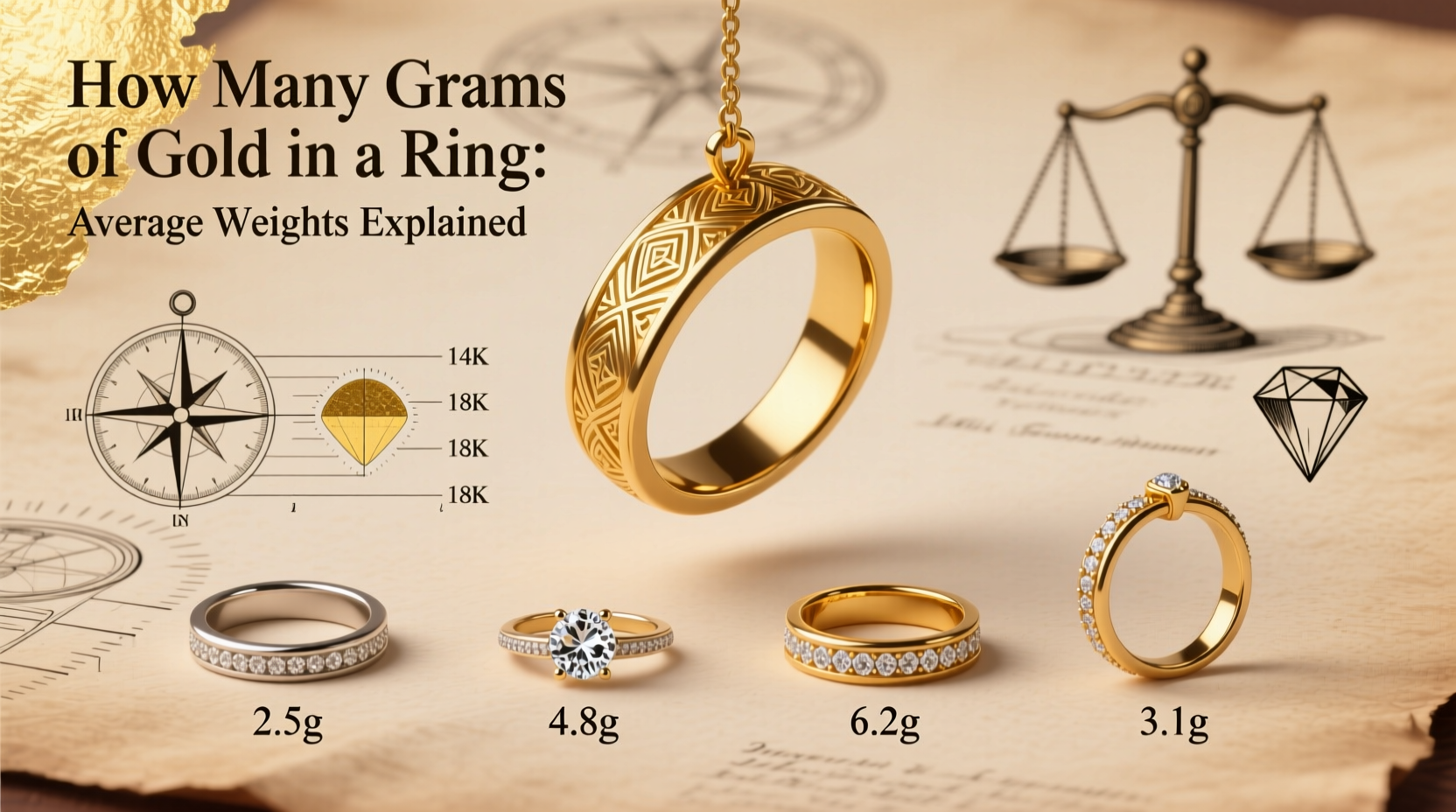
Gold Ring Weight: How Many Grams? (2026)
If you're wondering how many grams of gold are in a typical ring, the average solid gold wedding or engagement band weighs between 2 and 10 grams, depending on design, size, and karat. This guide breaks down everything that affects gold weight in rings—from finger size and metal purity to band thickness and regional preferences—so you can accurately estimate value, make informed purchases, or assess resale potential with confidence.
Why Gold Weight Matters in Jewelry
Understanding the weight of gold in a ring isn’t just about knowing how much metal you own—it directly impacts cost, durability, and long-term value. Whether you’re buying, selling, or resizing a ring, the gram weight determines its melt value and influences retail pricing. Jewelers often charge based on both the craftsmanship and the current market price of gold per gram, making it essential to know exactly what you're paying for.
Factors That Determine How Many Grams of Gold Are in a Ring
The total gold weight in a ring isn't standardized; it varies widely based on several interrelated factors. Here's a breakdown of the most influential elements:
1. Ring Size (Finger Circumference)
Larger ring sizes require more metal simply because they have a longer circumference. For example, a size 6 ring will use less gold than a size 10 ring of identical design and thickness. On average, increasing from size 6 to size 10 can add 1.5 to 3 grams of gold in a standard 4mm-wide band.
Quick Estimate: For every full size increase, expect approximately 0.2–0.4 additional grams in a medium-width band (3–5mm).
2. Band Width and Thickness
A wider or thicker band uses significantly more gold. A delicate 2mm solitaire engagement band may weigh as little as 2–3 grams, while a bold 8mm men’s wedding band could easily exceed 12 grams. The cross-sectional area (width × thickness) is proportional to weight.
For instance:
- 2mm thin band: ~2–3g
- 4mm standard band: ~4–6g
- 6mm wide band: ~7–9g
- 8mm+ statement band: ~10–14g+
3. Karat (Purity) of Gold
Karat indicates the percentage of pure gold in an alloy. Common types include 10K, 14K, 18K, and 24K. While karat doesn’t change the physical weight of the ring, it does affect the amount of pure gold present.
Example: A 6-gram 14K gold ring contains about 3.5 grams of pure gold (since 14K = 58.3% gold), whereas a 6-gram 18K ring contains roughly 4.5 grams of pure gold (75% gold).
| Karat | Pure Gold Percentage | Pure Gold in a 6g Ring |
|---|---|---|
| 10K | 41.7% | 2.5g |
| 14K | 58.3% | 3.5g |
| 18K | 75% | 4.5g |
| 22K | 91.7% | 5.5g |
| 24K | 100% | 6.0g |
4. Ring Style and Design Complexity
Intricate designs such as eternity bands, tension settings, or engraved patterns typically use more gold due to added structural support and decorative elements. Hollow-backed or comfort-fit bands may reduce overall weight slightly, saving material without sacrificing appearance.
- Solitaire Engagement Ring: 3–7g (depending on shank thickness)
- Eternity Band: 5–10g (continuous gem setting adds metal)
- Men’s Wedding Band: 6–12g (often thicker and wider)
- Women’s Wedding Band: 2–5g (slimmer profile)
5. Gemstone Settings and Mountings
Rings with diamonds or other stones require extra gold in the form of prongs, bezels, galleries, and understructures. These components add weight even if they aren’t immediately visible. A center stone mounted in a 14K gold setting can increase the total ring weight by 1–3 grams compared to a plain band.
Regional Differences in Gold Ring Weights
Gold ring weights vary across countries due to cultural preferences and manufacturing standards. In Europe, especially Italy and France, rings tend to be lighter and more refined. In contrast, American and Middle Eastern markets often favor bolder, heavier bands.
- Italy: Lightweight, artistic designs; average 3–5g for women’s bands
- USA: Durable, substantial builds; common range 5–9g
- Gulf Countries: Preference for thick, high-karat gold; men’s rings often exceed 10g
- India: Intricate 22K designs; weights vary greatly but often higher due to ornate work
This means a 14K gold ring of the same size and width might weigh differently depending on where it was made, even if it looks similar.
How to Accurately Measure the Gold Weight of Your Ring

To determine exactly how many grams of gold are in your ring, follow these steps:
- Weigh the Ring on a Precision Scale: Use a digital jewelry scale calibrated in grams (accurate to at least 0.01g). Place the ring on the scale and record the total weight.
- Check the Hallmark: Look inside the band for stamps like “14K,” “585” (14K), “750” (18K), or “916” (22K). This tells you the gold purity.
- Subtract Non-Gold Components (if applicable): If your ring has large gemstones, consult a jeweler to estimate their weight so you can deduct non-metal mass—though this is usually negligible unless the stone is very large.
- Calculate Pure Gold Content: Multiply the total weight by the gold purity percentage. For example: 5g × 0.583 = 2.92g of pure gold in a 14K ring.
Note: Only a professional appraisal or XRF (X-ray fluorescence) test can give a completely accurate analysis, especially for mixed metals or plated items.
Common Misconceptions About Gold Ring Weight
Several myths persist about how much gold should be in a ring. Let’s clarify them:
- Misconception #1: Heavier Always Means Better Quality
Not true. A heavier ring may just have a hollow core or be poorly designed. Quality depends on craftsmanship, not just weight. - Misconception #2: All 14K Rings Weigh the Same
False. Two 14K rings can differ significantly in weight based on size, width, and design—even if they appear identical. - Misconception #3: More Gold Equals Higher Durability
Actually, higher karat gold (like 18K or 22K) is softer and more prone to scratches. Many people choose 14K for daily wear because it balances gold content with strength.
How Gold Prices Are Affected by Ring Weight
The market value of a gold ring is calculated using its pure gold content and the current spot price of gold per gram. As of 2024, gold trades around $60–70 per gram (subject to change).
Example Calculation:
Total ring weight: 6g
Karat: 14K (58.3% pure)
Pure gold content: 6g × 0.583 = 3.5g
Spot price: $65/g
Melt value: 3.5g × $65 = $227.50
Keep in mind that jewelers pay less than melt value when buying scrap, typically offering 70–80% of the calculated amount. Retail prices are much higher due to labor, branding, and markup.
Tips for Buyers: How to Evaluate Gold Ring Value
When purchasing a gold ring, don’t focus solely on weight. Consider these key points:
- Ask for a Certificate of Authenticity: Reputable sellers provide documentation verifying karat and weight.
- Compare Price Per Gram: Divide the total price by the ring’s weight to see how much you’re paying for the metal alone. High premiums may reflect brand name or design complexity.
- Verify with an Independent Appraiser: Especially for expensive pieces, get a third-party evaluation before finalizing a purchase.
- Consider Long-Term Wear: Thicker bands last longer and resist deformation, but may feel bulky. Balance aesthetics with practicality.
Resizing and Its Impact on Gold Weight
Resizing a gold ring changes its weight. Making a ring larger requires adding metal, which increases the total gram weight. Conversely, resizing smaller removes gold, reducing the weight.
- Increasing one full size typically adds 0.5–1.5g, depending on band width.
- Decreasing one size removes a similar amount.
- Jewelers usually weld in a small strip of matching gold when upsizing.
If you plan to resell later, note that resized rings may have slightly altered value due to added alloy or mismatched soldering—especially if not done professionally.
Frequently Asked Questions (FAQs)
How many grams of gold are in a typical women’s wedding band?
A standard 14K women’s wedding band averages 2 to 5 grams, depending on width (2–5mm), ring size (5–7), and design. Simpler bands weigh less; those with pave diamonds or textured finishes may be heavier.
Does a 1-carat diamond ring have more gold?
Not necessarily. The diamond size doesn’t dictate gold weight. However, mounting a 1-carat stone often requires a sturdier band and setting, which can add 1–2 grams compared to a plain band.
Can I find out how many grams of gold are in my ring at home?
Yes. Use a digital jewelry scale (available online) to measure total weight. Then check the hallmark for karat type. Multiply weight by purity (e.g., 0.583 for 14K) to estimate pure gold content. For precise results, visit a certified jeweler.
Is a 10-gram gold ring considered heavy?
Yes, 10 grams is relatively heavy for most rings. It’s typical for wide men’s bands (6–8mm) or elaborate designs. Women’s rings rarely exceed 6 grams unless oversized or vintage.
Do different gold colors affect weight?
No. Yellow, white, and rose gold of the same karat and size weigh the same. Color differences come from alloy mixtures (e.g., copper or nickel), not density changes. A 14K white gold ring weighs identically to a 14K yellow gold ring of the same dimensions.
More Articles
 Princess Cut Diamonds Modern Square Brilliance
 Jewish Wedding Ring Traditions Explained
 Tourmaline Engagement Rings Rainbow Color Options
 Red Diamond Rarest Natural Diamond Color
 How to Choose a Wedding Band With a Tungsten Carbide
 Couples Rings vs. Really: Decoding the Critical Distinction in Commitment Jewelry
 Wedding Band Size: Truth About Fit & Harmony
 Can You Resize a Wedding Ring Bigger? (2026)
 Two-Piece Wedding Ring Rules (2026)
 Cheap vs Premium Wedding Venues Compared