
How to Choose a Wedding Band That Fits Your Lifestyle
Your wedding band is one of the few pieces of fine jewelry you’ll wear almost every day—for years, sometimes for life. That’s what makes it different from “special occasion” jewelry. A ring can look stunning in a display case, then feel too delicate, too bulky, or too high-maintenance once it becomes part of your daily routine.
The best wedding band isn’t just about matching your engagement ring or following current wedding ring trends. It’s about choosing a metal, width, profile, and setting that can keep up with how you actually live—whether that means typing all day, lifting weights, working with your hands, traveling often, or caring for kids.
This guide breaks down wedding band materials, styles, quality factors, and realistic price ranges, along with practical care tips and common mistakes to avoid. The goal: a band you’ll still love (and comfortably wear) long after the wedding photos.
Start With Your Lifestyle: What Does “Everyday Wear” Look Like for You?
Hands-on work, gym time, and active hobbies
If you regularly lift, climb, garden, cook professionally, work in healthcare, or use tools, focus on durability, low profile, and easy maintenance. Look for:
- Low-profile bands (minimal height off the finger) to reduce snagging.
- Comfort fit interiors (slightly rounded inside) to reduce friction during movement.
- Simpler designs like classic domed or flat bands over intricate milgrain edges that can wear down.
Office, travel, and frequent handwashing
If your day involves typing, commuting, or frequent sanitizing, comfort and corrosion resistance matter. Metals like platinum and high-karat gold handle daily wear beautifully, while some alternative metals can show wear differently (more on that below).
Sensitive skin and metal allergies
If you’ve reacted to costume jewelry, you may be sensitive to nickel. Many white gold alloys contain nickel unless specifically formulated to be nickel-free. Platinum, palladium, and titanium are often safer choices for sensitive skin.
Choosing the Right Metal: Durability, Maintenance, and Look
Gold wedding bands (yellow, white, and rose)
Gold remains a timeless classic and a top choice for couples who want tradition, warmth, and easy resizing. Gold bands come in different purities:
- 14K gold: A popular balance of durability and rich color. Great for everyday wear.
- 18K gold: Higher gold content with a deeper, more luxurious tone, but slightly softer—better for less rugged lifestyles or thicker bands.
White gold is typically plated with rhodium for a bright white finish. Over time, it can warm slightly and may need replating every 12–24 months depending on wear.
Rose gold gets its blush tone from copper. It’s durable, on-trend, and flattering on many skin tones. If you have a copper sensitivity, check alloy details.
Platinum wedding bands
Platinum is prized for durability, weight, and naturally white color. It doesn’t require rhodium plating like white gold. Instead of wearing away quickly, platinum tends to develop a soft patina over time—many people love the lived-in glow, and it can be polished back to high shine.
If you want a “forever” metal that’s low-fuss and secure for stones, platinum is hard to beat.
Palladium
Palladium is part of the platinum family and is naturally white with a lighter feel. It’s a good choice for those who want a platinum look with less weight. Availability can vary, and sizing or repairs may require a jeweler experienced with palladium.
Titanium and tungsten
These are popular for modern, minimalist wedding bands and for couples shopping with a tighter budget.
- Titanium: Lightweight, corrosion-resistant, and comfortable. Typically not easily resized.
- Tungsten carbide: Extremely scratch-resistant and has a satisfying weight. It can be brittle under a hard impact and is usually not resizable.
If you anticipate finger size changes (pregnancy, weight fluctuations, arthritis), a resizable metal like gold or platinum is often the safer long-term value.
Band Style and Profile: Comfort Meets Aesthetics
Classic silhouettes that never go out of style
- Domed (court) band: Rounded exterior for a traditional look and excellent comfort.
- Flat band: Clean, modern lines; often looks wider than the same millimeter size in a domed profile.
- Knife-edge band: A crisp center ridge that feels tailored and contemporary—great for those who like structure.
Width and thickness: how it changes the feel
Band width is usually measured in millimeters. Common wedding band widths range from 2mm to 8mm.
- 2–3mm: Delicate, stackable, great for petite hands or those who want subtlety.
- 4–6mm: Balanced, comfortable, and very popular for both men’s and women’s wedding bands.
- 7–8mm+: Bold statement; can feel heavier and may be less comfortable for smaller hands.
Thickness matters too. An ultra-thin band may bend over time, especially in softer alloys. If you’re choosing a slim style, ask about a durable thickness for daily wear.
Comfort fit vs. standard fit
Comfort fit bands have a slightly rounded interior and are often easier to wear all day, especially in wider styles. Standard fit bands can feel snugger at the same size. If you’re between sizes, try both fits before deciding.
Matching (or Not Matching) Your Engagement Ring
For couples shopping for engagement rings and wedding bands together, consider how the rings sit side by side:
- Flush fit: A band that sits tightly against the engagement ring. Some engagement ring settings (like certain cathedral or low basket styles) allow a flush fit; others need a curved band.
- Contour or curved bands: Designed to hug the engagement ring’s shape. Great for halos and unique settings, but less versatile if you ever wear the band alone.
- Spacer bands: A thin band between rings to prevent rubbing, especially helpful with pavé engagement rings.
Trend-wise, mixed metals are increasingly popular (yellow gold band with a platinum engagement ring, for example). It can look intentional and modern—just make sure the heights and profiles complement each other.
Gemstones, Settings, and Craftsmanship: What Holds Up Best?
Diamond wedding bands: pavé, channel, and bezel
Diamond wedding bands are a favorite for sparkle, but durability depends on the setting style:
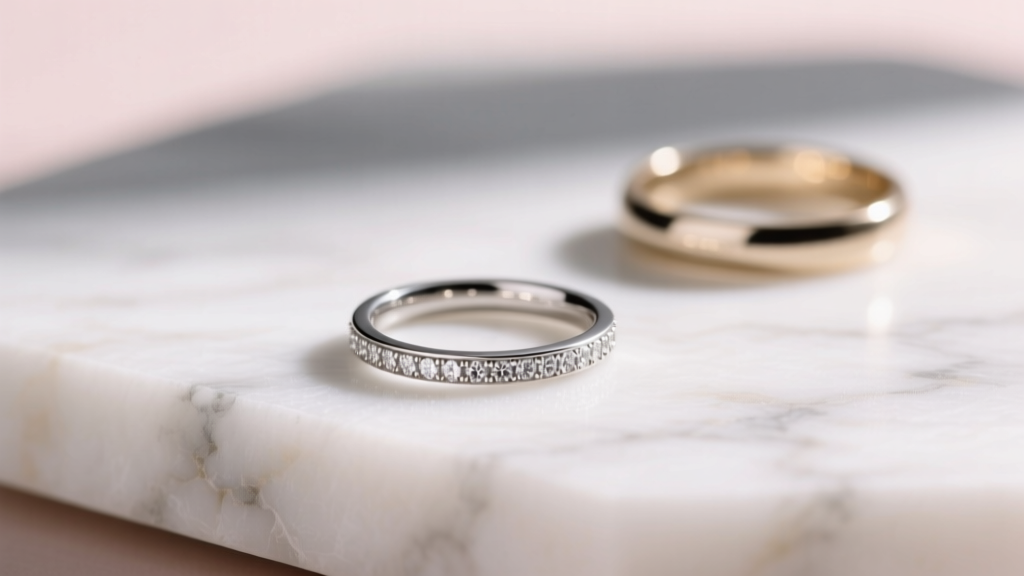
- Micropavé/pavé: Small diamonds set with tiny beads. Gorgeous and very on-trend, but requires periodic checks since the stones are more exposed.
- Channel setting: Diamonds set between two metal walls. One of the most durable choices for active lifestyles.
- Bezel setting: Each stone is framed in metal. Excellent protection, smooth against skin, and timeless.
Diamond cuts and what they mean in bands
In wedding bands, you’ll often see round brilliant diamonds (maximum sparkle), as well as princess, baguette, and emerald-cut stones for a cleaner, more geometric look. Current trends lean toward east-west baguettes and mixed-shape bands, while round pavé remains the classic.
Gemstones beyond diamonds
Sapphires (especially blue and white sapphires) are popular for color and durability. If you love emerald or opal, consider them carefully for a daily-wear band—these stones can be more prone to scratching or chipping. A protective setting (bezel or recessed) becomes even more important.
Quality checkpoints to ask about
- Stone security: How often should prongs be checked? Are stones shared-prong or set individually?
- Finish: High polish shows scratches sooner; brushed or matte finishes hide wear better and are a major current trend in men’s wedding bands.
- Craftsmanship details: Even spacing of stones, smooth edges, consistent milgrain, and a clean interior are signs of good make.
Budget and Value: What You’ll Pay and What’s Worth It
Wedding band prices vary widely depending on metal, width, and whether stones are included. Typical ranges:
- Plain 14K gold band: Often $300–$1,200 depending on width and weight.
- Plain platinum band: Commonly $800–$2,500+ depending on weight.
- Diamond pavé bands: Frequently $800–$3,500+ based on total carat weight and craftsmanship.
- Titanium/tungsten bands: Often $50–$400.
Value tips that seasoned jewelers rely on:
- Prioritize metal weight and comfort over trendy surface details you may tire of.
- Choose a setting that protects stones if you’re active—repairs can cost more than the upgrade you skipped.
- Don’t overpay for ultra-high polish if you prefer a low-maintenance look; matte and brushed finishes age beautifully.
Practical Buying Tips: Fit, Timing, and Real-Life Testing
- Try rings on at the end of the day: Fingers swell slightly; you want a size that stays comfortable.
- Test the “knuckle factor”: If your knuckles are larger, consider comfort fit or sizing beads for a more secure feel.
- Plan ahead for custom work: Custom or engraved wedding bands can take several weeks.
- Think about resizing: If you’re buying alternative metals, confirm what resizing options exist (if any).
- Match your daily jewelry: If you wear a watch or other jewelry daily, consider coordinating finishes and metal tones.
Care and Maintenance: Keep Your Wedding Band Looking Its Best
- Weekly cleaning: Warm water, mild dish soap, and a soft toothbrush. Rinse and dry with a lint-free cloth.
- Avoid harsh chemicals: Chlorine can damage gold alloys and dull finishes; remove rings for pool and hot tub use.
- Schedule checkups: For diamond or gemstone bands, have prongs and settings inspected every 6–12 months.
- Store properly: Keep rings in a soft pouch or separate compartment to prevent scratches.
- Know your finish: Brushed finishes can be refreshed; high polish can be re-polished—just don’t overdo it, especially with detailed edges.
Common Mistakes to Avoid When Shopping for a Wedding Band
- Choosing style over comfort: A ring that pinches, spins, or feels sharp won’t become more comfortable over time.
- Ignoring your engagement ring’s profile: A band that doesn’t sit well can cause rubbing, wear, and an awkward gap.
- Overdoing delicate pavé for a rough lifestyle: If you’re hard on your hands, choose channel, bezel, or fewer stones.
- Not asking about maintenance: White gold rhodium plating, stone tightening, and resizing policies should be clear upfront.
- Buying the wrong size seasonally: Fingers change with heat, cold, and activity. Try on in realistic conditions.
FAQ: Choosing a Wedding Band for Everyday Life
What’s the most durable metal for a wedding band?
For fine jewelry, platinum is a top performer for daily wear and stone security. 14K gold is also very durable and easier to resize. If scratch resistance is your top priority, tungsten resists scratches well, but it’s typically not resizable and can chip under sharp impact.
Should my wedding band match my engagement ring exactly?
Not necessarily. Matching metals and finishes create a seamless set, but mixed metal stacks are a popular modern look. The key is making sure the rings sit comfortably together and the proportions feel balanced.
Are diamond wedding bands practical for active lifestyles?
Yes, if you choose a protective setting. Channel-set and bezel-set diamond bands are generally better for active wear than delicate micropavé, which may need more frequent inspections.
How do I choose the right band width?
Try a few widths in person. As a starting point, 2–3mm feels minimal, 4–6mm is a versatile everyday range, and 7–8mm+ makes a bold statement. Comfort fit can make wider bands feel easier to wear.
How often should I get my wedding band checked or serviced?
For plain bands, a professional clean and inspection once a year is a good routine. For bands with diamonds or gemstones, consider inspections every 6–12 months, especially if you’re active or notice snagging.
Can tungsten or titanium rings be resized later?
In most cases, no—or only in very limited ways. If long-term resizing flexibility matters to you, choose gold, platinum, or palladium.
Next Steps: Choose a Ring You’ll Love Wearing Every Day
A wedding band that fits your lifestyle comes down to a few smart decisions: pick a metal that matches your daily wear and maintenance preferences, choose a comfortable profile and width, and be realistic about gemstones and settings if your hands are always in motion. Trends like mixed metals, matte finishes, and geometric diamond shapes can be beautiful, but timeless classics—well-made gold or platinum bands with thoughtful proportions—stay comfortable and elegant for decades.
If you’re narrowing down options, try on several styles back-to-back, ask about resizing and maintenance, and prioritize craftsmanship that will hold up to real life. Then explore more jewelry guides on weddingsift.com to help you choose an engagement ring and wedding band set you’ll feel confident wearing every day.
More Articles
 Old Mine Cut Diamonds Antique Charm
 Are Wedding Rings Biblical? What Scripture Says
 Men's Black Wedding Bands: Materials Explained
 What to Do If You Lose Your Wedding Ring
 Is Bill Maher Wearing a Wedding Ring? The Truth Revealed
 Does Priscilla Presley Still Have Elvis’s Wedding Ring?
 Wedding Ring vs Engagement Ring: Key Differences
 How to Wear a Wedding Set: Rules & Cultural Tips
 How to Choose a Wedding Band With a Brushed Finish
 Eternity Ring vs Wedding Band: What Jewelers Won’t Tell You