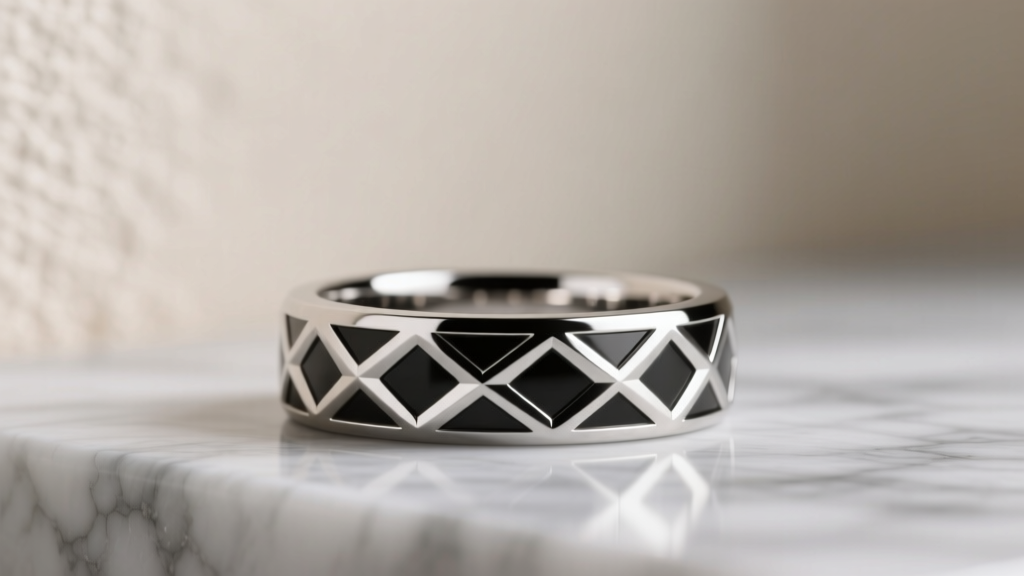
How to Choose a Wedding Band With a Geometric Pattern
Geometric wedding bands are having a moment—and for good reason. Crisp angles, repeating shapes, and architectural lines feel modern without being flashy. A geometric pattern can also be surprisingly personal: a subtle chevron can symbolize forward motion, a honeycomb motif can hint at community and partnership, and a clean faceted edge can echo the lines of an engagement ring or a partner’s style.
Still, geometric patterns aren’t all created equal. The details that make these rings look sharp—engraved grooves, milgrain edges, inlay seams, or faceted profiles—also affect comfort, durability, and long-term maintenance. Choosing the right geometric wedding band means balancing design with real-life wear: work, workouts, travel, and decades of daily use.
This guide breaks down the most popular geometric ring styles, the best metals for defined patterns, how to coordinate with an engagement ring, and what craftsmanship details separate a “looks good today” ring from one that still looks crisp on your 10th anniversary.
What Counts as a Geometric Wedding Band?
A geometric wedding band uses repeating shapes or structured lines as the primary design element. You’ll see geometry expressed through surface texture, engraving, profile, or stone layout. Common examples include:
- Chevron / V-shaped patterns (often cut or engraved around the band)
- Hexagon / honeycomb motifs (etched, milled, or inlayed)
- Faceted bands (multiple flat planes like a gemstone’s crown)
- Greek key / meander patterns (a timeless classic that reads geometric)
- Art Deco-inspired lines (step-like shapes, symmetry, and linear engraving)
- Geometric diamond settings (baguettes, princess cuts, or channel-set rounds in repeating stations)
Choose Your Geometric Style: From Subtle to Statement
1) Engraved Geometry (Clean, Classic, Easy to Pair)
Engraved geometric bands use carved lines—think chevrons, diagonal grooves, or repeating rectangles—to create pattern without adding bulk. This is a smart choice for couples who want a modern wedding ring that still feels timeless. Look for deeper, precision-cut engraving; shallow patterns can blur over years of polishing.
2) Faceted Bands (Modern Minimalism)
A faceted wedding band has angled planes that catch light like a cut gemstone. This trend has become popular in mixed-metal stacks and minimalist bridal sets because it adds texture without stones. Facets look especially sharp in platinum and white gold, where reflections emphasize the geometry.
3) Inlay Patterns (Bold Contrast and Texture)
Inlays place a different material into the band—often in geometric segments. You might see carbon fiber, meteorite, ceramic, wood, or a different metal arranged in chevrons or stripes. Inlays are striking, but they do require careful craftsmanship: seams must be perfectly flush, and the inlay material should suit your lifestyle (more on durability below).
4) Geometric Stone Bands (Sparkle With Structure)
For couples shopping for diamond wedding bands, geometry often comes through stone shape and setting style:
- Baguette diamonds (rectangular, sleek, Art Deco feel)
- Princess-cut diamonds (square shape, crisp corners)
- Hexagon or kite-shaped diamonds (trend-forward, uncommon)
- Channel settings (secure, clean lines, great for daily wear)
- Bezel settings (modern, protective, smooth edges)
If you want a geometric look that stays practical, a channel-set baguette band or bezel-set station band is often the sweet spot.
Metal Matters: Best Choices for Crisp Patterns
The metal you choose affects how sharply a geometric pattern can be cut, how it wears over time, and how often it needs refinishing.
Platinum (Premium, Heavy, Excellent for Daily Wear)
Platinum is dense and naturally white. It holds up well for lifelong wear and is a top choice for couples who want a durable wedding band. Instead of wearing away quickly, platinum tends to develop a patina (a soft, matte sheen). Engraved patterns can remain visible, but high points may soften slightly with years of contact.
- Best for: engraved geometry, faceted bands, diamond settings
- Watch for: higher price, heavier feel
Gold: 14K vs 18K (Color Choices and Practicality)
14K gold is typically the most practical for detailed geometric wedding bands because it’s harder than 18K and resists scratching a bit better. 18K gold has richer color but is slightly softer, so very fine engraving can blur faster if you’re hard on jewelry.
- Yellow gold: timeless; geometric engraving reads warm and classic
- White gold: bright and modern; usually rhodium-plated for a crisp white finish
- Rose gold: romantic, trending; looks great with chevrons and Art Deco lines
Palladium (Lightweight Alternative to Platinum)
Palladium is naturally white and lighter than platinum. Availability varies by jeweler, but it can be an excellent option for people who want a white metal without rhodium plating.
Titanium & Tungsten (Budget-Friendly, Tough, Limited Resizing)
Titanium is lightweight and strong; tungsten is very scratch-resistant but can chip if struck hard. Both are popular for geometric styles—especially faceted or grooved designs—because they keep a crisp look. The trade-off: these metals are typically difficult or impossible to resize, which matters if your finger size changes over time.
Gemstones and Cuts That Enhance a Geometric Look
If you’re adding sparkle, shape choice is where geometry really shines. For wedding ring keywords like “diamond wedding band,” you’ll most often see:
- Baguette-cut diamonds: sharp lines, elegant, very “architectural”
- Princess-cut diamonds: clean square outline; corners need protection (bezel or secure prongs)
- Emerald-cut diamonds: sophisticated step-cut flashes; pairs well with Art Deco patterns
- Round brilliant diamonds: timeless; can look geometric when arranged in repeating stations or in a channel
For color, sapphires (especially blue or white) and black diamonds are trending in geometric men’s wedding bands and mixed-metal designs. If you choose non-diamond stones, confirm hardness: sapphires (Mohs 9) are excellent for daily wear; softer stones may not be ideal for an everyday wedding band.
How to Match a Geometric Wedding Band With an Engagement Ring
Couples often worry that geometric patterns will “fight” with an engagement ring. The key is to coordinate one or two elements—metal color, pattern direction, or stone shape—without making everything identical.
- With a solitaire engagement ring: you can go bolder. A chevron or faceted band adds interest without overwhelming the center stone.
- With a halo ring: choose simpler geometry (fine engraving, milgrain edges, or a slim faceted band) so the set doesn’t look busy.
- With an emerald-cut or Art Deco engagement ring: echo the style using baguette accents or linear engraving.
- For a flush fit: ask about contoured or curved geometric bands, or consider a notched band for rings with low-set baskets.
Quality Factors: What to Check Before You Buy
Pattern Depth and Precision
Geometric designs should look crisp, symmetrical, and consistent around the entire band. Uneven spacing or shallow grooves are red flags.
Comfort Fit vs Standard Fit
A comfort-fit interior (slightly rounded inside) is especially helpful for wider geometric bands or rings with sharp-looking profiles. It improves daily wear and makes removal easier.
Edge Finishing
Many geometric rings have defined edges. Make sure the edges are well-finished—clean, not sharp—so they don’t irritate adjacent fingers.
Stone Security and Setting Choice
If you choose diamonds or gemstones, prioritize secure settings:
- Channel settings: excellent for active lifestyles; stones are protected by metal walls
- Bezel settings: very secure and sleek; great for geometric station bands
- Prong settings: more light return, but prongs require occasional checks
Practical Buying Tips (Sizing, Lifestyle, and Try-On Strategy)
- Try on multiple widths: geometric patterns can look more balanced at 4–6mm, but many people prefer 2–3mm for stacking with an engagement ring.
- Think about your daily routine: if you work with your hands, consider engraved or faceted styles without high-relief details, and choose platinum or 14K gold.
- Plan for resizing: avoid tungsten if you want future resizing flexibility. Intricate inlays can also complicate resizing.
- Ask how it’s made: CAD-and-cast rings can be excellent, but fine engraving often looks best with precision milling or hand finishing.
- Request a maintenance plan: especially for white gold rhodium replating and stone checks.
Care and Maintenance for Geometric Bands
Geometric patterns show wear differently than smooth bands—scratches can soften contrast, and debris can collect in grooves or around stones.
- Weekly cleaning: warm water, mild soap, soft toothbrush; rinse and dry with a lint-free cloth.
- Avoid harsh chemicals: chlorine and abrasive cleaners can damage metals and finishes.
- Professional checkups: every 6–12 months for stone settings; ask for prong inspection and deep cleaning.
- Refinishing strategy: polishing can reduce pattern depth over time. Ask your jeweler about light refinishing that preserves engraving and edges.
- Remove for rough tasks: gym lifting, heavy yardwork, and construction-type activities can flatten crisp details.
Price Range and Value Tips
Geometric wedding bands span a wide range depending on metal, width, and whether diamonds are involved:
- Simple engraved or faceted bands: often more affordable, especially in 14K gold or titanium.
- Platinum geometric bands: typically higher due to metal cost and weight.
- Diamond geometric bands: price climbs with total carat weight, diamond quality (cut, color, clarity), and setting complexity (channel or bezel work).
- Inlay designs: pricing varies widely; pay for clean seams and durable materials rather than novelty.
Best value moves: choose 14K gold for durability and cost balance, prioritize excellent craftsmanship over extra millimeters of width, and select a setting style (channel or bezel) that protects stones for long-term wear.
Common Mistakes to Avoid
- Choosing ultra-shallow engraving: it looks good in photos but can fade quickly with wear and polishing.
- Ignoring comfort: sharp-looking edges should still feel smooth. Always test how it feels between your fingers.
- Overcomplicating the bridal set: pairing a heavily patterned band with a very detailed engagement ring can look crowded. Let one piece lead.
- Buying a non-resizable metal without planning: tungsten and some inlay styles can be difficult to size later.
- Not checking stone security: geometric styles with baguettes or princess cuts need especially careful setting work.
FAQ: Geometric Wedding Bands
Are geometric wedding bands timeless or trendy?
Both. Faceted and chevron styles feel current, while Greek key patterns, Art Deco lines, and channel-set baguettes are classic design languages that have stayed popular for decades.
What metal is best for a geometric wedding band?
For most couples, 14K gold is the best balance of durability, price, and long-term wear. Platinum is ideal if you want a premium, naturally white metal and don’t mind the added cost and weight.
Do geometric patterns wear down over time?
All rings show wear, but pattern longevity depends on depth and craftsmanship. Deep, precision-cut grooves and well-defined facets hold their look longer than shallow engraving, especially if the ring is frequently polished.
Are baguette diamonds safe for everyday wear in a wedding band?
Yes, when set securely. A channel setting or bezel setting is a strong choice because it protects edges and corners better than minimal prongs.
Can I stack a geometric band with other rings?
Absolutely. Slim engraved or faceted bands stack beautifully with engagement rings and anniversary bands. If the pattern is bold, consider stacking with a plain metal band to keep the look balanced.
How do I clean a geometric ring with grooves or engraving?
Use warm soapy water and a soft toothbrush to reach into grooves. Avoid abrasive cleaners that can dull the finish or scratch high-polish surfaces.
Next Steps: Choose Geometry That Fits Your Life
A great geometric wedding band should feel like “you” on day one—and still make sense years later. Start by choosing a style direction (engraved, faceted, inlay, or geometric diamond), then pick a metal that matches your lifestyle and maintenance preferences. Focus on crisp pattern execution, comfort-fit details, and secure settings, and you’ll end up with a modern wedding ring that wears beautifully for the long haul.
If you’re comparing wedding bands, engagement ring pairings, or diamond setting styles, explore more jewelry guides on weddingsift.com to keep narrowing in on the perfect match.
More Articles
 How to Accessorize a Strapless Wedding Dress
 How to Choose a Silicone Wedding Band for Active Days
 How to Wear a 2-Piece Wedding Ring (2026)
 Engagement Ring Trends 2026 | What's In and Out
 Wedding Ring Resizing: Safe, Affordable & Which Metals Work
 How to Insure Your Wedding Jewelry Properly
 Diamond Certification GIA vs IGI vs EGL Explained
 Moonstone Engagement Rings Mystical Blue Sheen
 How to Choose an Engagement Ring With a Vintage Engraving
 14k Gold Wedding Ring Value: How to Calculate True Worth