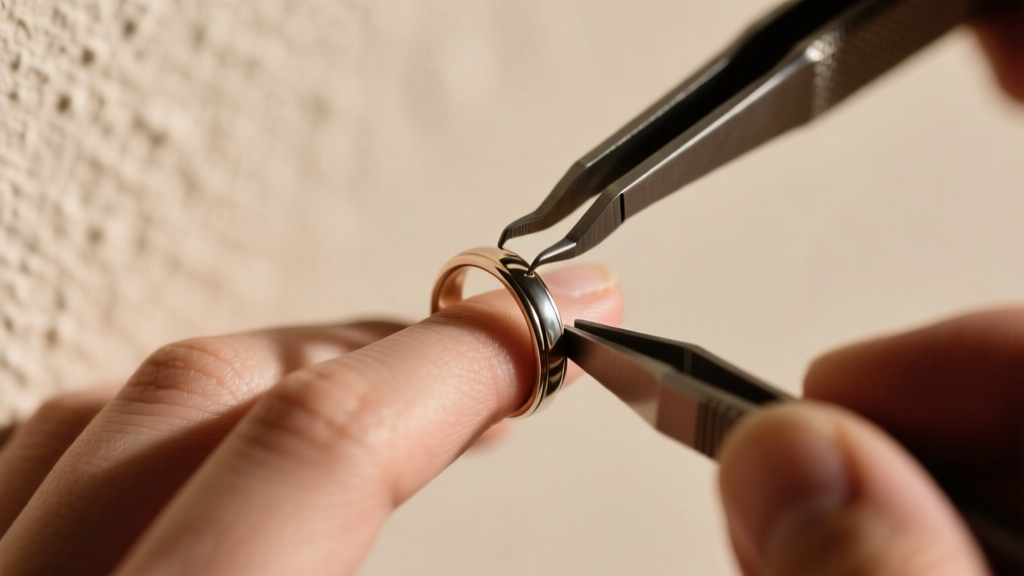
How to Remove a Stuck Wedding Ring Safely
A wedding band is meant to feel effortless—secure enough to stay put, comfortable enough to forget it’s there. But life happens: warm weather, travel, pregnancy, workouts, salty foods, arthritis, or a minor hand injury can turn a perfectly fitted ring into one that won’t budge. When a ring gets stuck, the goal is simple: protect your finger first, then protect the ring.
Couples shopping for engagement rings and wedding bands often focus on sparkle, style, and budget (as you should). Comfort and long-term wearability matter just as much. Understanding why rings get stuck—and how to remove one safely—can save you pain, prevent damage to delicate settings, and help you choose a band that still fits beautifully years from now.
This guide walks you through safe at-home techniques, when to stop and seek help, and how metal type, ring style, and craftsmanship affect both removal and future resizing. You’ll also find buying tips, care advice, and common shopping mistakes so your “forever ring” stays comfortable for the long haul.
First: Know When Not to Try At-Home Removal
If any of the following are present, skip the home remedies and get professional help immediately (urgent care, ER, or your local fire department/jeweler depending on severity):
- Severe swelling, numbness, tingling, or blue/purple discoloration (circulation may be compromised).
- Open wounds, suspected fracture, or significant trauma to the hand or finger.
- Ring is cutting into the skin or there’s visible skin breakdown.
- You’ve tried for 10–15 minutes without progress and swelling is increasing.
A stuck ring can become a medical issue quickly if swelling worsens. Professionals can remove rings with specialized tools while minimizing injury and, in many cases, preserving the ring.
Why Wedding Rings Get Stuck (and Why It’s Common)
Even a well-sized ring can get stuck because finger size fluctuates. The knuckle may be wider than the base of the finger, and swelling often collects around the joint. Common triggers include:
- Heat and humidity: Blood vessels expand and tissues retain fluid.
- Salt, alcohol, dehydration: Can cause swelling and water retention swings.
- Exercise: Increased circulation and temporary inflammation.
- Pregnancy or postpartum changes: Fluid shifts are very common.
- Arthritis: Enlarged knuckles can make removal harder even when the base fits.
- Improper sizing or top-heavy designs: Wider bands and large center stones can affect fit and comfort.
Many couples now choose wider wedding bands, chunkier profiles, or stacked sets—a major trend alongside timeless classics like a simple 2mm–3mm comfort-fit band. Wider rings feel tighter than narrow ones, even at the same size, because they cover more skin and experience more friction at the knuckle.
Safe, Step-by-Step Methods to Remove a Stuck Ring
Prep: Reduce Swelling Before You Start
Set yourself up for success. Rushing often leads to more swelling and panic.
- Remove other rings on that hand if possible.
- Elevate your hand above heart level for 5–10 minutes.
- Cool the finger with a cold pack or cool water for 2–3 minutes (not direct ice on skin for long periods).
- Dry thoroughly if you’ll use lubricants.
Method 1: Lubrication (Best First Try for Most Rings)
Lubrication reduces friction at the knuckle and is the gentlest approach for both skin and jewelry.
Good lubricant options: dish soap, hand soap, baby oil, coconut oil, petroleum jelly, or a water-based lubricant.
- Apply lubricant around the ring and up the finger, focusing on the knuckle.
- Gently twist the ring back and forth while pulling toward the fingertip.
- Work slowly. A gradual “walk” over the knuckle is safer than one hard tug.
Jeweler tip: If your ring has pavé diamonds, a halo setting, or prongs that catch easily, avoid gritty substances and don’t force rotation. A snag can bend prongs, loosen melee diamonds, or scratch softer metals.
Method 2: The “String or Floss” Wrap (Effective for Knuckles)
This technique compresses swelling and helps the ring slide off. Use waxed dental floss or a thin, smooth string. Avoid anything that can cut into skin.
- Slide one end of floss under the ring toward the palm (a needle-threader can help).
- Wrap the long end snugly around the finger from the ring upward toward the fingertip. Each wrap should sit next to the last—firm but not painful.
- Once wrapped, hold the fingertip end steady and begin unwrapping from the ring end (the end under the ring). As it unwraps, the ring should “walk” forward.
Stop immediately if you feel sharp pain, numbness, or see discoloration. This method can be very effective, but it must be done gently.
Method 3: Cold Water + Elevation (Helpful Between Attempts)
If lubrication didn’t work, pause. Re-cool and elevate for several minutes, then try again. Multiple short attempts are better than one prolonged struggle, which can worsen swelling.
Method 4: Professional Removal (Jeweler, Fire Department, or Medical Team)
When home methods fail, professionals have options:
- Manual techniques with specialized lubricants and compression tools.
- Ring cutting using a ring cutter (common at urgent care/ER and some fire departments).
- Jeweler-preserving approaches that may allow reshaping or repair after removal.
If your ring is valuable, has an intricate setting (like a cathedral, hidden halo, or micro-pavé), or is made of a harder-to-cut material, a jeweler can advise the safest route once your finger is safe.
How Metal Type and Ring Style Affect Removal (and Future Resizing)
Gold (14K and 18K)
14K gold is a popular choice for wedding rings because it’s durable and scratch-resistant compared to higher karat gold. 18K gold has a richer color but is slightly softer. Both are usually resizable, which is great for long-term comfort and value.
Platinum
Platinum is a timeless classic, prized for its naturally white color and density. It can be resized by skilled jewelers, though it often costs more to work with. Platinum tends to develop a soft patina over time rather than losing metal quickly—many couples love that lived-in look.
White Gold (Rhodium-Plated)
White gold is typically plated with rhodium for a bright white finish. Over time it can warm slightly and need replating. It’s generally resizable, but repeated sizing and polishing should be done carefully to preserve engraving or pavé.
Titanium, Tungsten, and Ceramic
These contemporary metals are trendy for men’s wedding bands and minimal modern styles. They’re durable, often budget-friendly, and scratch-resistant (especially tungsten), but most are not resizable. If a tungsten ring must be removed in an emergency, it’s usually cracked rather than cut. If your lifestyle or climate causes frequent swelling, consider a resizable metal or a comfort-fit profile.
Band Width, Comfort Fit, and Stackable Sets
- Wider bands (6mm–8mm): Feel tighter than 2mm–4mm bands in the same size.
- Comfort-fit interiors: Slightly rounded inside edges that slide over the knuckle more easily.
- Stacked rings: Trend-forward (mixing metals, adding anniversary bands), but stacking increases overall snugness and friction.
Settings and Craftsmanship Considerations
Engagement rings with prong settings (especially delicate claw prongs), pavé, micro-pavé, or a halo require extra care during removal. Twisting hard or pulling abruptly can shift stones, loosen prongs, or create tiny bends that become future snag points. A well-made ring has smooth finishing, secure prongs, and even pavé beadwork—details that reduce irritation and help the ring glide more comfortably.
Buying Tips to Prevent a Stuck Wedding Ring
- Get sized at the right time of day: Fingers often swell later in the day. Midday sizing is usually more realistic than early morning.
- Ask about seasonal fit: If you size in winter, you may need a slightly different fit for summer.
- Choose comfort-fit for daily wear: Especially for wider wedding bands and men’s bands.
- Consider your setting: If you love a high-set solitaire or a hidden halo, plan for a band that sits flush to reduce pressure points and spinning.
- Plan for lifestyle changes: Pregnancy, strength training, and travel can affect fit. A resizable metal is often a smart “future-proof” choice.
Care and Maintenance: Keep Your Ring Comfortable and Safe
- Remove rings for swelling-prone activities: long flights, heavy workouts, and yard work (when safe to do so).
- Clean regularly: Soap residue and lotion can build up, making rings feel tighter. A gentle clean with warm water, mild dish soap, and a soft toothbrush helps.
- Schedule inspections: For diamond engagement rings (round brilliant, oval, cushion, emerald cut, etc.), have prongs and pavé checked every 6–12 months.
- Replate white gold as needed: Keeps the finish bright and reduces surface roughness that can add friction.
Price Range Considerations and Value Tips
Budget matters, but value comes from choosing a wedding ring that’s comfortable, durable, and serviceable long-term.
- Basic gold or platinum bands: Often the best value over time because they’re typically resizable and repairable. Price varies by metal market, band width, and weight.
- Pavé and diamond-set bands: Cost more due to labor and stone quality. Look for well-matched melee diamonds (good color consistency, secure bead setting, clean finishing) and ask about maintenance.
- Tungsten/titanium bands: Usually lower upfront cost, but limited resizing can mean replacing the ring if your size changes—an important “hidden cost” to consider.
- Craftsmanship premium: Comfort-fit shaping, hand-finishing, precise stone setting, and durable prongs can cost more but often pay off in wearability and fewer repairs.
Common Mistakes to Avoid When Shopping for Wedding Rings
- Buying a ring that’s “a little tight” to prevent spinning: Spinning can often be solved with sizing beads, a slightly wider band, or a different profile.
- Ignoring band width effects: A 7mm band may need a larger size than a 3mm band for the same comfort.
- Choosing non-resizable metals without considering life changes: Great for some, frustrating for others.
- Stacking multiple rings without rechecking size: A bridal set plus an anniversary band can turn a perfect fit into a stuck ring.
- Overlooking setting height and edges: Sharp gallery details or exposed prongs can irritate skin and increase friction.
- Skipping maintenance: Loose prongs or warped bands can catch and make removal harder.
FAQ: Stuck Wedding Ring Removal
How long should I try to remove a stuck ring at home?
Limit attempts to about 10–15 minutes total, with breaks to elevate and cool your hand. If swelling increases or you notice numbness or color change, stop and seek professional help.
Can I damage my diamond engagement ring while trying to remove it?
Yes. Twisting forcefully can bend prongs or loosen pavé stones, especially in delicate micro-pavé or halo settings. If the ring has multiple small diamonds, go slowly and prioritize lubrication and gentle motion.
What if my ring is tungsten or titanium?
Most tungsten, titanium, and ceramic rings can’t be resized. If they’re stuck and swelling is significant, professional removal is safest. Tungsten is often cracked off with specialized tools rather than cut.
Will resizing prevent my ring from getting stuck again?
Resizing can help, but the best solution depends on why it got stuck. Seasonal swelling, a wider band, stacking, or a large knuckle may require a comfort-fit band, sizing beads, or a slightly different size strategy.
Does ring size change over time?
It can. Weight changes, pregnancy, aging, arthritis, and even lifestyle shifts (like strength training) can affect finger size. Choosing a resizable metal and planning for periodic fit checks is a practical approach.
Should I sleep with my wedding ring on?
Many people do without issues, but if you wake up with swelling or your rings feel tight in the morning, consider removing them at night. This is especially helpful for those with fluid retention or arthritis.
Next Steps: Keep Comfort as Part of “Forever”
A stuck wedding ring is usually a comfort-and-fit issue, not a failure of the ring or the relationship. Use gentle methods first—cooling, elevation, lubrication, and the floss wrap—and don’t hesitate to get professional help when swelling or pain is involved. When you’re shopping for engagement rings and wedding bands, prioritize comfort-fit profiles, thoughtful band width, and metals that match your lifestyle and long-term needs.
For more practical, jeweler-informed advice on choosing the right metal, ring settings, diamond cuts, and wedding band styles—plus cleaning and maintenance tips—explore more jewelry guides on weddingsift.com.
More Articles
 Tsavorite Garnet Vivid Green Gemstone Alternative
 7 Year Anniversary Jewelry Gift Ideas
 Jewish Wedding Ring Traditions Explained
 How to Choose an Engagement Ring for Small Hands
 Two-Piece Wedding Ring Rules (2026)
 De Beers Wedding Rings: Real Value & 5 Better Alternatives
 Moonstone Engagement Rings Mystical Blue Sheen
 Wedding Band Resizing: Safe, Trusted & Cost Breakdown (2026)
 How to Keep Wedding Ring from Spinning (2026)
 How to Choose an Engagement Ring for Long Fingers